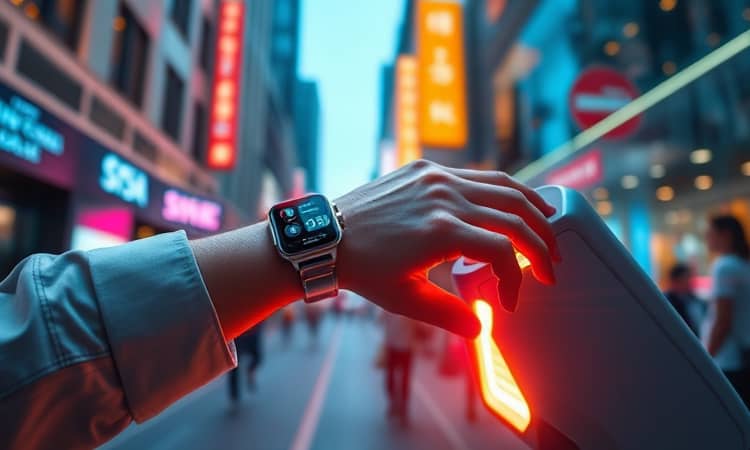
Imagine tapping your wrist to pay for coffee, boarding a train with a flick of your finger, or settling a quick grocery run with a simple wave of your ring—no wallet, no pockets, no hassle. In a world where time is precious and security paramount, wearable payment devices are redefining convenience for consumers and businesses alike. As global demand for contactless transactions surges, these innovative accessories blend fashion, functionality, and financial freedom. This article explores the market trajectory, core technologies, real-world benefits, challenges, and the road ahead for wearable payments, offering practical insights and inspiration for those ready to embrace a tap-and-go future.
Market Growth and Future Outlook
The wearable payments market has witnessed explosive growth in recent years, driven by hygiene concerns during the COVID-19 pandemic and rapid NFC adoption. Estimates vary, but consensus points to a leap from USD 43.0 billion in 2021 to over USD 82.0 billion by 2026 at a CAGR of 13.6%. Other forecasts see the market reaching USD 94.4 billion by 2026, then soaring to USD 186.25 billion by 2030, or even USD 273.52 billion by 2033 as innovation accelerates.
Regional dynamics are equally compelling. North America and Europe led early adoption, but APAC—propelled by low-cost manufacturing and high population—has become the fastest-growing region, accounting for nearly 45% of new deployments. As transit authorities, retailers, and event organizers invest in contactless infrastructure, the stage is set for wearable payments to become ubiquitous.
Market Segmentation at a Glance
With such diverse segments, consumers should assess their lifestyle needs when choosing a device. A commuter might prioritize a rugged NFC wristband, while fitness enthusiasts may opt for a sleek smartwatch that integrates payments with health tracking. Budget-conscious buyers can explore rings or basic wristbands that focus solely on secure transactions.
Key Features and Technologies
At the heart of wearable payments lies a suite of advanced components and protocols designed for speed and security. Here are the core technologies powering this revolution:
- secure short-range NFC taps enabling transactions within 4 centimeters
- tamper-proof storage for credentials in an embedded secure element
- one-time encrypted token per transaction through robust tokenization
- dynamic CVVs and transaction limits for fraud mitigation
- biometric authentication methods including fingerprint and facial scans
- compatibility with multiple payment networks like Visa, Mastercard, Apple Pay, and Google Pay
Additional safeguards such as two-factor authentication, data encryption, and remote lock/disable features ensure that even a lost device poses minimal risk. Regular firmware updates and secure firmware-over-the-air delivery further enhance resilience against emerging threats.
Benefits of Wearable Payments
As users integrate wearables into daily routines, several advantages stand out:
- hands-free speedy checkouts ideal for rush-hour lines and on-the-go lifestyles
- reduced germ transmission at POS promoting healthier interactions
- harder for skimmers and hackers thanks to encryption and biometric locks
- seamless integration into daily life combining payments, fitness, and notifications
- effortless transit and event entry without paper tickets or cards
Whether you’re a parent juggling groceries and strollers, an athlete tracking performance metrics, or a business traveler racing through airports, wearable payments eliminate friction and empower you to stay focused on what matters.
Challenges and How to Overcome Them
Despite the promise, certain barriers remain. Understanding and addressing these can smooth the path to widespread adoption:
- device theft and unauthorized access mitigated by enabling remote lock and requiring PIN entry
- privacy concerns over location tracking addressed through granular app permission settings
- interoperability issues across regions requiring adherence to global NFC standards
- battery life and device dependency manageable with low-power chips and auto-sleep modes
- high initial costs and limited acceptance improving as OEMs scale production and merchants upgrade terminals
Practical steps for users include regularly updating device software, choosing multi-factor authentication, and registering devices with the issuer’s fraud alert services. Retailers can accelerate acceptance by installing NFC-enabled terminals and training staff on troubleshooting common issues.
Future Trends and Opportunities
The road ahead for wearable payments is rich with possibility. Transit agencies are piloting wristbands that serve as both fare cards and building identifiers. Retailers are exploring integration with loyalty programs and personalized offers delivered directly to a user’s device.
Insurance companies may leverage wearables to verify identity and detect fraudulent claims in real time, while healthcare providers could expand use cases to secure access to medical records and patient monitoring systems.
Further innovation in digital identity is poised to transform wearables into universal credentials—not just for payments but for unlocking doors, authenticating online services, and verifying legal documents.
Meanwhile, the APAC region’s unique blend of high-volume manufacturing and rapidly growing middle class will keep it at the forefront of adoption, ensuring that global standards evolve to support ease of use and interoperability.
Finally, as security firms refine Bluetooth capabilities to counter threats and standard bodies enforce stronger encryption protocols, consumer trust will deepen, laying the groundwork for the next wave of smart accessories.
Conclusion
Wearable payment devices are more than flashy gadgets—they represent a shift toward effortless, secure financial interactions woven into everyday objects. From the grocery aisle to the concert gate, these devices promise unparalleled convenience and secure transactions that align with modern lifestyles. By staying informed about market trends, choosing devices that match personal needs, and adopting best practices for security, users and businesses can fully harness the transformative power of contactless wearables. The future of payment is on your wrist, your ring, and your buckle—ready to tap you into a world where every transaction is seamless, swift, and secure.