In today’s financial landscape, vast stores of value remain locked away in assets that are hard to trade, slow to settle, and available only to a select few. From prime real estate to rare artwork, many investments suffer from illiquidity, complex paperwork, and limited investor pools. Yet, a technological revolution is reshaping this reality.
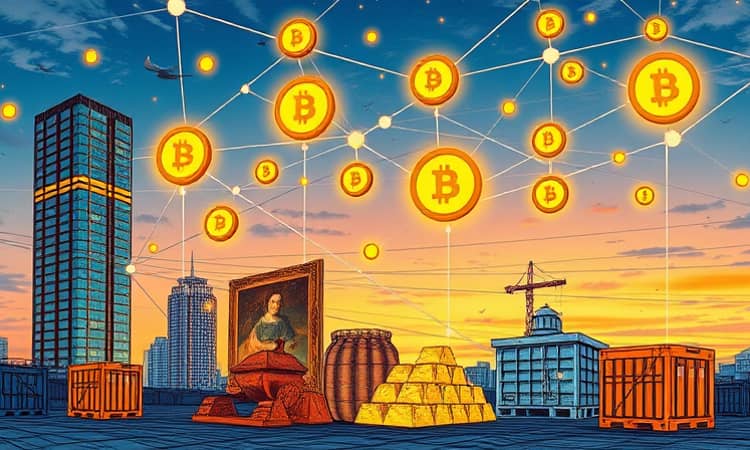
By harnessing blockchain and distributed ledger technology, tokenization offers a path toward a future where every asset—big or small—can become part of vibrant, accessible markets. Fractional shares of a Manhattan tower, slices of private credit, or units of a treasured painting can all trade safely and efficiently, empowering individuals around the globe.
The Promise of Tokenizing Physical Wealth
Traditional markets often demand hefty minimum investments, require time-consuming legal checks, and involve multiple intermediaries. These frictions stifle trade frequency and lock capital out of circulation for weeks or months. Real estate sales can drag on for months, art auctions close their doors after brief windows, and private equity stakes are notoriously hard to offload before maturity.
Tokenization seeks to dismantle these barriers by representing legal or beneficial rights in physical or financial assets as digital tokens on a blockchain. Each token can stand for a portion of the asset, conferring rights to income, price appreciation, or other benefits. The result is instant, peer-to-peer transfers, democratized access, and a broadened investor base.
Key Mechanisms Driving Change
- Fractional ownership: Divide a high-value asset into thousands or millions of tokens, enabling anyone to invest with as little as ten dollars.
- 24/7 global markets: Trade tokens across borders at any hour, eliminating the delays of local business hours and regional settlement cycles.
- Programmable settlement: Use smart contracts to automate interest payouts, dividends, voting, and compliance checks, reducing manual errors and costs.
- On-chain transparency: Maintain immutable records of ownership and transaction history, which fosters trust and reduces information asymmetry.
- Consolidated infrastructure: Merge trading, clearing, settlement, and custody into a single layer, cutting out redundant middlemen.
Consider an office building valued at $25 million. By tokenizing it into 2,500,000 units priced at $10 each, a broad spectrum of investors can participate. Instead of waiting weeks to complete a real estate deal, token holders can buy or sell on a secondary platform within moments, all with transparent audit trails.
The Tokenization Journey: From Asset to Token
- Asset selection and structuring: Identify the property, bond, artwork, or commodity, and decide what rights the token will represent—ownership, revenue share, or price exposure.
- Legal and regulatory design: Secure title, draft documentation outlining token-holder rights, compliance requirements, KYC/AML procedures, and governance rules.
- Valuation and due diligence: Appraise the asset, set token supply and initial price, and perform thorough financial, legal, and technical audits.
- Technical implementation: Choose a blockchain platform, develop smart contracts, embed transfer restrictions and compliance logic, then mint tokens after proof-of-reserve verification.
- Custody and collateralization: Place the underlying asset with a regulated custodian or SPV, and link on-chain tokens to off-chain holdings through enforceable legal frameworks.
- Primary distribution: Conduct private placements, public offerings, or direct sales on regulated security platforms, ensuring investor eligibility checks are complete.
- Secondary trading and lifecycle management: List tokens on compliant exchanges or DeFi protocols, automate corporate actions, and handle events like dividends, redemptions, or asset sales.
This structured approach not only ensures legal enforceability but also instills confidence in investors, regulators, and service providers.
Navigating the Regulatory Landscape
Tokenization does not exist in a regulatory vacuum. Issuers must comply with securities laws, commodities regulations, and data protection standards in each jurisdiction. In some regions, tokens can serve as direct records of title. Elsewhere, an SPV holds the asset while the token represents shares in that entity.
Creating robust legal frameworks and collaborating with regulators is essential. Well-defined token standards, third-party attestations, and built-in compliance features can accelerate adoption and prevent ambiguity about rights and responsibilities.
Market Potential and Real-World Impact
Estimates place the theoretical tokenization market in the hundreds of trillions of dollars, since virtually anything of value—from corporate bonds to fine wine—can join the blockchain. Early pilots have tokenized skyscrapers, art collections, and private equity fund interests, demonstrating not only technical feasibility but tangible liquidity improvements.
Consider a global art fund that tokenizes a Picasso. By offering fractional NFTs tied to the painting, collectors from different continents can gain exposure with modest capital. Secondary trading ensures investors aren’t permanently locked in, while the fund benefits from a wider pool of buyers and more dynamic price discovery.
Embracing a More Inclusive Financial Ecosystem
Tokenization heralds a shift toward truly inclusive finance. By lowering entry thresholds, reducing operational frictions, and fostering transparent markets, previously illiquid assets become accessible to everyday investors, not just institutions.
For asset owners, tokenization can unlock capital that was once dormant. For innovators, it opens new avenues to design financial products and services that are more efficient and resilient. And for society, it paves the way to a future where wealth creation and opportunity are distributed more equitably.
Charting the Future of Liquid Assets
As blockchain platforms mature and regulators clarify frameworks, tokenization will accelerate. Market infrastructure—exchanges, custodians, data providers—will converge around standards that balance innovation with investor protection.
Ultimately, the tokenization of real-world assets represents more than a technological breakthrough; it embodies a vision of democratized finance, where capital flows freely, assets are liquid, and participation knows no boundaries. By unlocking liquidity in every corner of the economy, tokenization promises to transform the way we own, trade, and value the wealth that surrounds us.