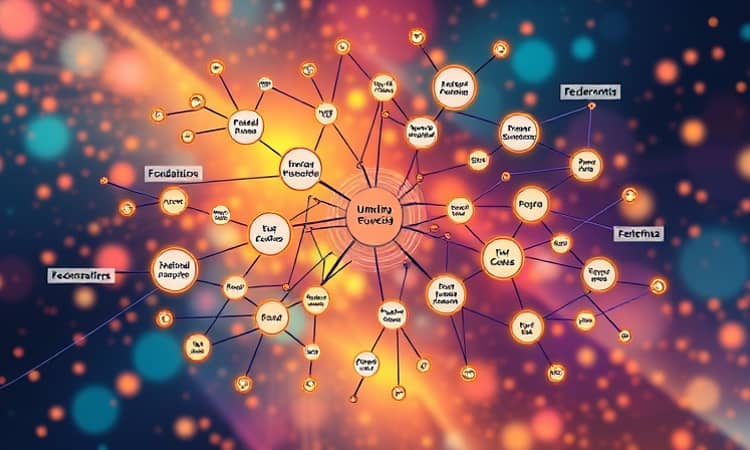
The landscape of funding for ambitious projects can feel daunting, like traversing a labyrinth with hidden pathways and secret doors. Yet, when we envision these sources as strands in a vast web, the picture becomes clearer: each funding category connects, overlaps, and supports the others. By embracing this interconnected network of funding sources, innovators can chart a course toward realizing their boldest ideas.
Mapping the Landscape of Funding Opportunities
In today’s dynamic environment, projects often draw support from multiple origins—federal grants, foundation endowments, impact capital, and intramural institutional funds. Viewing these as separate silos can limit potential, but recognizing their intersections transforms obstacles into avenues for growth.
Each funding strand has unique release patterns, eligibility rules, and strategic goals. Identifying overlaps—such as a foundation that complements a federal initiative—unlocks new funding pathways and broadens access to resources.
Funding Sources and Their Characteristics
At the heart of the Wealth Web lie distinct categories, each with unique features and requirements.
This table highlights key distinctions among federal grants, foundations, impact investing, and internal institutional funding.
Strategies for Discovery and Navigation
To navigate this intricate web, project leaders need systematic approaches and reliable resources.
- Centralized databases with advanced filters: leverage platforms like Pivot or Candid to narrow searches by criteria, location, and funding type.
- Timely agency newsletters and alerts: subscribe to federal agency bulletins to receive immediate notifications about new announcements.
- Targeted networking and consortium building: cultivate relationships within professional communities to uncover intramural or foundation-specific opportunities.
- Collaborative proposal development processes: document and share promising leads with team members to foster joint planning.
Key Tools to Streamline Your Search
Equipping yourself with the right tools transforms the hunt for funding from a chore into a strategy session. Three indispensable resources stand out:
- Grants.gov federal search and application portal: offers full summaries and application modules, integrated with SAM for verification.
- System for Award Management (SAM) profile integration: pre-fills essential organization data and encrypts financial details for swift transactions.
- Specialized foundation databases like Candid and Pivot: aggregate donor lists, grant cycles, and historical award information.
Vetting Opportunities Effectively
Once potential funding sources emerge, rigorous evaluation ensures alignment with project goals and eligibility criteria. Adopt a checklist approach:
- Review the synopsis or summary to capture core objectives and scope.
- Confirm all eligibility requirements thoroughly to avoid last-minute disqualifications.
- Note all critical submission deadlines for letters of intent, full proposals, and registrations.
- Understand match or cost-share obligations to assess financial feasibility.
- Examine terms and definitions such as program income usage or middle-mile infrastructure criteria.
- Ensure genuine alignment between projects and funders to craft persuasive, authentic proposals.
Weaving the Wealth Web in Practice
Consider a rural broadband initiative seeking to bridge the digital divide. The BEAD Program offers $42.45 billion under the Infrastructure Investment and Jobs Act, prioritizing regions with fewer than 25 Mbps download speeds. Applicants must submit Letters of Intent, develop five-year action plans, and navigate a nine-step process. By pairing this federal opportunity with foundation grants targeting community technology inclusion, project leaders can secure matching funds, technical assistance, and stakeholder engagement resources. Adding impact investors focused on sustainable infrastructure can supply patient capital, measured by measurable social and environmental benefits alongside modest financial returns.
Similarly, a research consortium exploring clean energy solutions might tap into DOE solar funding via competitive solicitations, NIH NOFOs for interdisciplinary health studies, and institutional seed grants. Each source requires different proposal formats, but they all intersect at shared goals: advancing innovation and public good. A centralized repository tracks deadlines, document templates, and team roles, ensuring no opportunity slips through the cracks.
Building Lasting Collaborations
Behind every successful funding partnership lies a network of relationships cultivated well before grant announcements. By engaging stakeholders through conferences, academic consortia, and online forums, project leaders lay the groundwork for pre-established institutional and consortium relationships. These ties open doors to intramural funding streams and co-funding arrangements, amplifying impact and credibility. Moreover, involving potential funders early in the planning process fosters trust and leads to more tailored, compelling proposals.
Impact investors—ranging from banks and pension funds to philanthropic foundations—seek projects that blend returns with purpose. Demonstrating community engagement, solid governance structures, and rigorous metrics transforms a bright idea into a sponsor’s next strategic investment. Collaborative grant writing workshops, peer reviews, and shared databases enable teams to refine concepts and leverage diverse expertise.
Conclusion
Weaving the Wealth Web is both an art and a science. It demands imagination to spot creative funding matches and discipline to navigate complex requirements. Embracing centralized, standardized databases for efficient searching and fostering authentic connections empowers innovators to transform bold visions into tangible outcomes. By approaching funding as an interwoven ecosystem, rather than isolated streams, project leaders unlock new funding pathways that amplify social, environmental, and economic impact.
Whether you are pursuing federal grants, foundation support, or impact investment, the guiding principle remains constant: always seek genuine synergies between your mission and the priorities of your funders. With strategic planning, robust networks, and thoughtful execution, the Wealth Web becomes a powerful engine for progress and change. The web is yours to weave—begin spinning today.