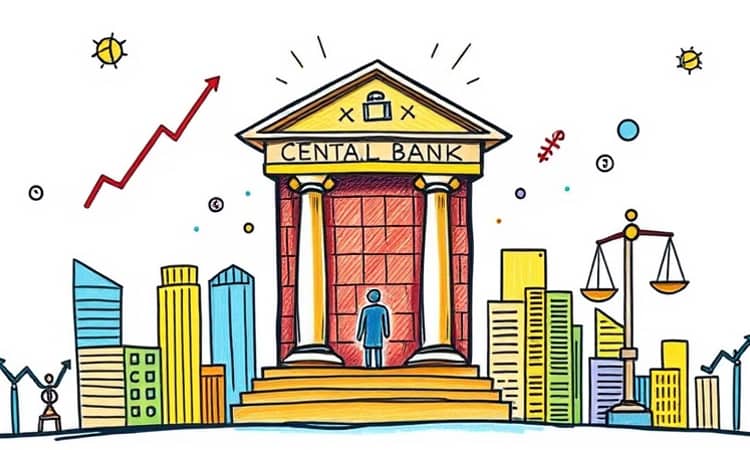
In the intricate world of global finance, central banks emerge as the steadfast guardians of economic stability, orchestrating policies that ripple through every facet of our lives.
Their journey from humble beginnings to pivotal institutions underscores a relentless commitment to fostering sustainable growth and resilience in the face of uncertainty.
Today, with tools ranging from interest rates to quantitative easing, they navigate the delicate balance between controlling inflation and stimulating economies, ensuring that prosperity remains within reach for all.
This article delves into the multifaceted roles of central banks, exploring how they have become indispensable to modern economies.
We will uncover their historical evolution, core functions, and the critical tools they wield to maintain stability.
Through vivid examples and empirical evidence, we will see how their independence and transparency build credibility that shapes market confidence.
As we journey through their crisis responses and preventive measures, the profound impact of central banks on our daily financial well-being becomes clear.
Historical Evolution of Central Banks
Central banks originated centuries ago to fund governments and stabilize currencies, evolving into complex entities that regulate inflation and promote growth.
Post-2007-09 financial crisis and the pandemic, their roles expanded dramatically, incorporating macroprudential tools and stress testing.
Balance sheets in major economies like the US and Eurozone swelled to 35-65% of GDP, reflecting their enhanced crisis stabilizer functions.
This evolution highlights their adaptability in responding to global economic shifts.
Primary Functions and Mechanisms
Central banks perform several core roles that underpin financial systems.
These functions ensure that economies operate smoothly and securely.
- Monetary policy targets around 2% inflation for price stability.
- Financial stability involves acting as a lender of last resort and supervising banks.
- Currency issuance gives them exclusive control over money supply.
- Regulation and supervision enforce capital requirements and stress tests.
- Payments system management fosters safe and efficient transactions.
To illustrate these functions, consider the following table that outlines key tools and examples.
This framework empowers central banks to mitigate systemic risks effectively.
Key Policy Tools in Action
Central banks utilize a range of tools to influence economic conditions.
Each tool is designed to address specific challenges in the financial landscape.
- Interest rates are adjusted to boost spending or curb overheating, with the Fed funds rate at 5-1/4 to 5-1/2% since July 2023.
- Reserve requirements set minimum holdings for banks to ensure liquidity.
- Quantitative easing and asset purchases support markets during crises like the GFC and pandemic.
- Macroprudential measures include countercyclical buffers to moderate economic cycles.
These tools enable central banks to respond swiftly to economic fluctuations.
The Importance of Independence and Transparency
Independence from political pressures allows central banks to make long-term decisions, such as rate hikes, even when unpopular.
This builds credibility and monetary discipline over time.
Reforms boosting central bank independence have been linked to lower excess money growth and improved credibility by about 13% after a decade.
High transparency, like the Fed's detailed minutes, amplifies policy shocks by 40%, enhancing efficacy.
Communication clarifies policy paths, aiding market predictability and trust.
Thus, autonomy and clear communication are vital for effective governance.
Role in Crises and Prevention Strategies
In times of crisis, central banks act as first responders, providing liquidity and cutting rates aggressively.
They play a crucial role in preventing systemic failures through proactive measures.
- Treatment during crises includes supporting markets to avoid collapses.
- Prevention strategies involve monitoring risks and reducing leverage incentives.
- Examples include preventing bank runs and repairing markets post-GFC and pandemic.
By avoiding direct government deficit financing, they preserve their integrity and maintain financial system health.
Recent Data and Global Examples
As of early 2026, recent data showcases the impact of central bank policies.
In the US, inflation eased without a spike in unemployment, with core PCE at 2.5% and GDP growth of 3.1% in 2023.
Globally, central bank independence reforms in 155 countries have been linked to better inflation performance.
Balance sheets remain elevated, peaking at 35% of GDP in the US and 65% in the Eurosystem.
Inflation targeting frameworks, combined with independence, have improved outcomes post-Great Moderation.
This evidence underscores the tangible benefits of sound policies.
Empirical Evidence and Measured Outcomes
Studies provide robust evidence on the effectiveness of central bank actions.
For instance, a 1% increase in the central bank independence index reduces excess money growth.
Credibility boosts by 13% after 10 years, with effects persisting for about 8 years.
Transparency leads to a 40% larger impact on nominal and real interest rates.
Post-crisis resilience has improved with higher capital and liquidity rules.
However, challenges remain, such as varying effects by political constraints.
In autocracies, growth and credibility gains are often insignificant, highlighting the need for democratic oversight.
Potential Criticisms and Limitations
Despite their successes, central banks face criticisms that must be acknowledged for a balanced perspective.
Delayed reform effects and the need for public confidence are ongoing concerns.
In some contexts, the link between independence and inflation control has weakened post-2000.
Balance sheet expansions raise worries about normalization and long-term impacts.
Fiscal dominance risks can undermine their effectiveness if not carefully managed.
Thus, continuous adaptation and vigilance are essential for their role.
Prominent Central Banks Around the World
Several key institutions exemplify the global impact of central banking.
Each plays a unique role in their respective economies.
- The US Federal Reserve oversees monetary policy and financial stability in the United States.
- The European Central Bank manages eurozone stability and inflation targets.
- The Bank of England is responsible for pound management and UK economic health.
- Other notable banks, like the Bank of Thailand, focus on macroprudential policies and risk monitoring.
Global coordination through bodies like the BIS enhances their collective efforts.
This network ensures collaborative crisis management and policy alignment.
In conclusion, central banks are indispensable guardians of stability, wielding tools and independence to shape our economic futures.
Their evolution and actions demonstrate a profound commitment to resilience and growth.
By understanding their roles, we can better appreciate the stability they bring to our financial lives.