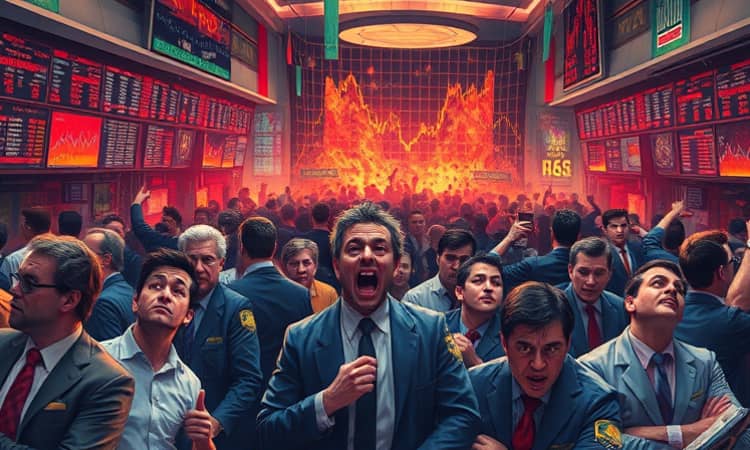
In the volatile world of finance, few events capture the raw intensity and emotional turmoil of a short squeeze.
This dramatic market phenomenon can turn cautious traders into panicked participants in moments.
Understanding its psychological underpinnings is not just academic; it's a survival skill for anyone in the markets.
At its core, a short squeeze is a rapid price surge fueled by mass panic among short sellers.
These traders borrow and sell shares, betting on a decline, only to face unexpected reversals.
When prices rise, their losses mount, triggering a cascade of forced buying that amplifies the upward move.
This process detaches from fundamentals, driven purely by crowd psychology and market mechanics.
It's a vivid reminder that markets are as much about human behavior as they are about numbers.
The Mechanics Behind the Madness
A short squeeze begins with short sellers who anticipate a stock's price will fall.
They borrow shares and sell them, hoping to repurchase later at a lower price for profit.
An unexpected positive catalyst, such as strong earnings or social media hype, reverses the trend.
As the price climbs, short sellers face mounting losses and margin calls from brokers.
This forces them to buy back shares to cover their positions, adding to demand.
With limited supply, the buying pressure creates a self-reinforcing upward spiral.
The key steps in this process are straightforward but emotionally charged.
- Borrowing and selling shares based on bearish expectations.
- Watching prices rise erode potential profits or turn them into losses.
- Covering positions by repurchasing shares at higher prices.
- Collective buying accelerates the squeeze, feeding on itself.
Each step is laced with psychological triggers that can overwhelm rational decision-making.
Psychological Drivers in Play
Before a squeeze, negative sentiment often builds disproportionately among traders.
This leads to high short interest as many bet on further declines, creating a crowded trade.
When prices unexpectedly surge, shorts experience fear of mounting losses.
This fear quickly morphs into panic covering to limit financial damage.
Margin calls automate this process, forcing exits when collateral falls short.
Herd behavior amplifies the situation; early coverers signal to others, sparking a chain reaction.
FOMO (fear of missing out) grips long traders, who jump in to capitalize on the rise.
Simultaneously, shorts exhibit loss aversion, preferring to cut losses rather than risk unlimited downside.
High borrow rates and days to cover metrics add psychological pressure, signaling vulnerability.
This emotional feedback loop turns a simple price move into a market mania.
- Overconfidence in bearish views sets the stage for a squeeze.
- Sudden price reversals catch shorts off guard, inducing shock.
- The urgency to cover spreads like wildfire among participants.
- Emotional decisions override logical analysis in the heat of the moment.
Recognizing these drivers can help traders stay calm and avoid pitfalls.
Key Metrics to Watch
Traders monitor specific metrics to gauge squeeze potential, as they reflect crowd psychology.
These indicators provide early warning signs of brewing volatility.
- Short interest: The percentage of a stock's float that is shorted; levels above 20-30% signal high risk.
- Days to cover: Calculated as short interest divided by average daily volume; values over 5-10 days indicate prolonged covering pressure.
- RSI (Relative Strength Index): Readings below 20 suggest oversold conditions, priming for a reversal.
- Borrow fees: Expensive rates due to low share availability erode short profitability, fostering urgency.
Understanding these metrics helps anticipate when emotions might override market fundamentals.
This table highlights how numerical thresholds translate into emotional triggers for market participants.
Historical Examples of Emotional Turmoil
History offers vivid lessons on how psychology fuels short squeezes.
The GameStop saga in 2021 is a prime example of hype-driven market behavior.
Short interest peaked at over 140% of the float, exceeding available shares through multiple borrowings.
Prices surged from around $20 to $483 intra-day, driven by retail traders on platforms like Reddit.
This detached prices from fundamentals, forcing billions in short losses and showcasing collective power.
Another case is the Panic of 1901 involving Northern Pacific Railway.
Shorts faced a shortage of uncommitted shares, leading to a market crash as they liquidated assets.
It involved billions in modern terms and was resolved by a truce, highlighting the stakes.
- GameStop: Demonstrates how social narratives can override traditional analysis.
- Panic of 1901: Shows the long history of squeeze-induced market disruptions.
- General patterns: Squeezes often target small-cap or low-float stocks with tight supply.
These events underscore the timeless nature of market psychology.
Variants and Amplifiers of Squeezes
Beyond basic short squeezes, variants like gamma squeezes add layers of complexity.
A gamma squeeze occurs when call option buying forces dealers to hedge by purchasing the underlying stock.
This creates leverage greater than direct buying, thriving on low implied volatility options.
Naked shorts or options introduce unlimited loss potential, heightening fear among participants.
Stop-loss orders can auto-trigger buys, accelerating the squeeze without human intervention.
Targets typically include stocks with low float, high short percentage, and holders unlikely to sell.
- Gamma squeezes: Leverage options to magnify buying pressure.
- Naked positions: Increase risk and emotional stress for shorts.
- Market structure: Low liquidity stocks are more susceptible to rapid moves.
Understanding these amplifiers helps traders prepare for unexpected volatility.
Risks and Behavioral Lessons
Short squeezes punish overconfidence in bearish bets and lure longs into speculative frenzies.
Post-squeeze crashes are common as fundamentals reassert themselves, leaving many with losses.
Deep-pocketed players, such as hedge funds, often battle retail traders via narratives and options.
Leverage in these scenarios risks wipeouts for both sides, emphasizing caution.
Metrics like days to cover can predict severity but not timing, as psychology often overrides data.
Key lessons include staying humble, avoiding herd mentality, and managing risk proactively.
- Avoid getting caught in hype; focus on long-term fundamentals.
- Use stop-losses wisely to protect against sudden reversals.
- Monitor psychological indicators alongside technical data.
- Learn from history to recognize patterns before they escalate.
By embracing these insights, traders can navigate markets with greater resilience and insight.
In conclusion, the psychology of short squeezes reveals the profound impact of emotions on financial markets.
From fear and panic to greed and FOMO, these forces shape outcomes in unpredictable ways.
By understanding the mechanics, metrics, and historical context, traders can transform chaos into opportunity.
Stay vigilant, keep learning, and let psychology be your guide in the ever-evolving market landscape.