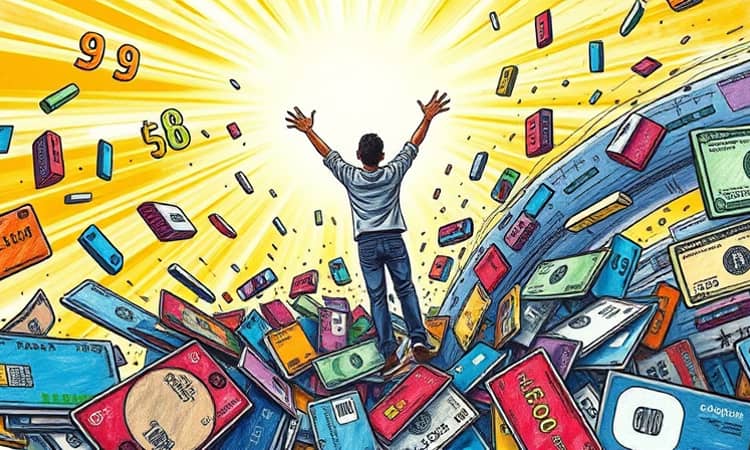
Credit card debt has reached staggering levels in America, affecting individuals across all demographics. With total balances now exceeding $1.277 trillion and an average cardholder debt of $7,886, many find themselves trapped in a cycle of payments that never seem to reduce their principal. Beyond the numbers lies a complex psychological web driving impulsive spending and emotional distress.
Understanding the Scale of the Problem
In recent years, credit card balances surged 66% from Q1 2021 to Q4 2025. More than 61% of debtors maintain balances for over a year, and nearly one in five endure this burden for five years or more.
- Total credit card debt: $1.277 trillion
- Average cardholder balance: $7,886
- 47% of American adults carry a balance
This growing trend represents not only financial strain but also a societal challenge in managing impulsive consumption and long-term planning.
The Neuroscience of Spending
Every time we swipe a card, we bypass the emotional discomfort of parting with physical cash because credit cards enable immediate acquisition of goods. This convenience activates the reward center of the brain, producing a rush similar to winning. Researchers note that credit cards function as a “gas pedal,” accelerating purchasing beyond what might occur with cash alone.
Neuroimaging studies reveal that even those with strong self-control show increased activity in reward circuits when exposed to credit. Over time, the association between seeing a credit limit and feeling wealthier cultivates a habit of spending first and thinking later.
The Debt Escalation Cycle
Small purchases, like a $20 dinner or a $50 gadget, can compound into thousands of dollars of debt with little conscious awareness. When cardholders make only minimum payments, most of their money covers interest, not principal. This dynamic rapidly escalates small debts into burdens that can take years to pay off.
Consider how a typical minimum payment plan allocates funds:
This table illustrates how low payments keep balances almost constant. Borrowers effectively persistently turning down a risk-free investment by paying high interest on revolving debt rather than saving or investing.
Psychological Consequences of Mounting Debt
As balances grow, so does stress. Studies report that higher debt levels correlate with elevated anxiety, depression, and feelings of hopelessness. For many, the emotional toll of owing money influences decisions about career changes, relationships, and even health care.
- Increased risk of depression and anxiety
- Shame and social isolation
- Impulse usage of credit to cope with negative feelings
- Chronic financial avoidance behaviors
Debt becomes a vicious cycle: emotional distress leads to further credit use, deepening the burden and reinforcing negative psychological patterns.
Behavioral Patterns and Lifelong Habits
Research shows spending behaviors are remarkably stable. Individuals who once carried 40% of their credit limits continue similar patterns a decade later. This reflects an intrinsic impatience—a preference for immediate consumption over delayed gratification.
When credit limits rise, spending follows. This phenomenon, known as the wealth effect, tricks the mind into spending as if one’s resources increased, even when they have not. Over time, high-interest borrowing becomes normalized, making alternative strategies like saving appear less rewarding.
Demographic and Regional Variations
Debt burdens vary by age: Gen X and Millennials both carry balances at 53%, while Boomers stand at 43% and Gen Z at 40%. State trends diverge widely, with Washington, South Dakota, and Nebraska experiencing the fastest debt growth. Conversely, New Mexico, West Virginia, and Louisiana have seen declines.
These differences reflect regional economic opportunities, cost of living, and cultural attitudes toward credit. Understanding these patterns helps tailor interventions and educational programs to local needs.
Breaking Free: Practical Escape Strategies
Escaping the debt cycle demands both behavioral shifts and concrete financial planning. Here are proven strategies to regain control:
- Adopt a zero-based budget that assigns every dollar a purpose
- Implement a debt avalanche by prioritizing high-rate balances
- Set up automatic transfers to a savings account before spending
- Use a rewards account for savings goals, not credit
- Engage an accountability partner or professional coach
By reframing credit as a temporary convenience rather than a long-term solution, individuals can retrain their brain’s spending cues. Tools like spending journals, financial apps, and mindful purchase delays interrupt impulsive patterns. Over time, these practices cultivate patience, allowing savers to view more valuable than immediate wants future rewards as more valuable than immediate wants.
Breaking free from credit card debt is a journey, not a single event. It begins with understanding the psychological forces at play—how our brain responds to plastic instead of cash, how interest rates silently erode progress, and how small lapses can snowball into overwhelming balances. Armed with practical tactics and a supportive mindset, anyone can escape this cycle and move toward lasting financial wellness.