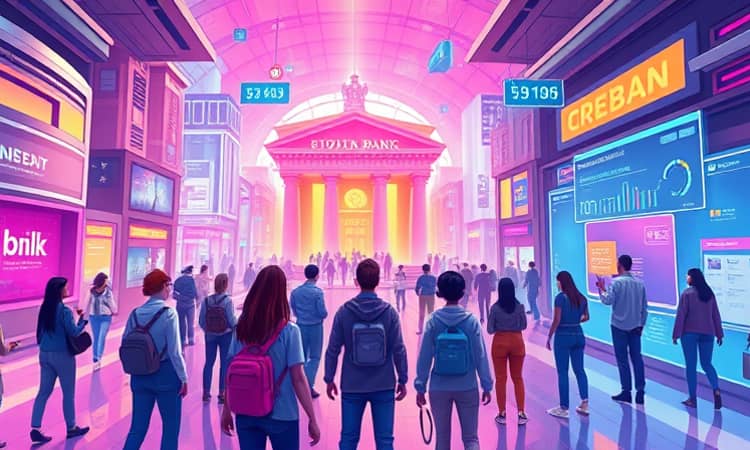
Imagine a world where your banking experience extends beyond screens and branches, unfolding in three dimensions. The metaverse is not just a speculative frontier—it is rapidly becoming a tangible stage for immersive virtual environments for banking. As the boundaries between physical and digital blur, financial institutions must innovate to meet the evolving expectations of tech-savvy customers and seize new opportunities in a sprawling virtual economy.
Definition and Evolution of Metaverse Banking
Metaverse banking leverages a suite of cutting-edge technologies—ranging from AR/VR to blockchain and AI—to create persistent, shared financial spaces. In these realms, users interact with avatars, explore virtual branches, and manage assets in ways that mirror real-world experiences. Historically, banking has progressed from paper-based ledgers and physical branches to internet and mobile banking, then to open and digital finance. Now, we stand at the dawn of a fifth phase, where secure, decentralized financial transactions reshape the very concept of money.
This evolution represents more than a novelty; it signifies a fundamental shift in how value is exchanged and relationships are built. Just as internet banking once unlocked convenience, metaverse banking promises personalized, AI-driven customer experiences in fully immersive contexts, forging deeper emotional connections with users.
Key Technologies Powering the Next Era
A convergence of advanced systems underpins this transformation, enabling banks to offer rich, interactive services. The following table highlights the core technologies and their roles:
Each component amplifies the others, creating a robust foundation for truly real-time immersive financial insights that were once the domain of science fiction.
Transformative Use Cases in Action
From personalized advice to secure transactions, metaverse banking unlocks a spectrum of new possibilities. Leading institutions are already experimenting with features that redefine customer engagement and operational efficiency.
- Virtual Branches and Interactions: Customers enter virtual lobbies via avatars, consult AI representatives at digital teller desks, and explore product offerings in 3D showrooms.
- Core Transactions: Account inquiries, fund transfers, and bill payments occur within engaging environments, complete with seamless fiat to digital conversions and instantaneous confirmations.
- Personalized Financial Services: Dynamic dashboards adapt to spending patterns, while avatar-based advisors deliver hyper-personalized AI-driven product recommendations.
- Employee Training and Collaboration: Staff engage in simulated scenarios, learn virtual branch operations, and collaborate globally without travel constraints.
- Brand and Customer Engagement: Banks host interactive events, sponsor virtual concerts, and reward loyalty with exclusive digital collectibles.
These use cases highlight how immersive design and digital assets converge to create meaningful customer journeys, empowering users to feel truly connected to their financial lives.
Benefits for Banks and Customers
- Enhanced Emotional Connections: Avatars and VR environments foster trust and deepen relationships beyond static screens.
- New Revenue Streams: Tokenized assets, NFT marketplaces, and in-metaverse lending open diverse monetization models.
- Operational Efficiency: Automated smart contracts and digital twins streamline risk assessments and loan processes.
- Competitive Differentiation: Early adopters position themselves as innovators, capturing the loyalty of younger, digital-native demographics.
By adopting these strategies, banks can lead the charge in shaping the future of finance, offering cutting-edge digital asset services that resonate with emerging market demands.
Market Potential and Growth
The market opportunity is staggering. Bloomberg Intelligence forecasts the metaverse economy will near $800 billion by 2024, driven by digital real estate, NFTs, and immersive services. Accenture’s surveys reveal that 84% of global banking executives believe Web3 will revolutionize user engagement in the next decade. Such insights highlight the urgency for banks to act now.
Global institutions like JPMorgan and Citibank have already opened virtual outposts, offering exclusive NFTs and interactive experiences in leading VR platforms. These pioneers demonstrate how early experimentation can yield brand recognition and revenue. By learning from their initiatives and iterating rapidly, banks can refine their strategies and deliver value to customers at scale.
As digital asset valuations rise and virtual interactions become mainstream, metaverse banking will extend its reach across gaming, social media, and e-commerce spheres. Collaboration with fintech startups, technology vendors, and regulators will be essential to unlock integrated, cross-industry ecosystems where finance flows seamlessly between real and virtual worlds.
Overcoming Challenges and Looking Ahead
Despite its promise, metaverse banking faces hurdles that require careful navigation. Cybersecurity remains paramount: institutions must implement robust encryption, multi-factor authentication, and decentralized identity protocols to safeguard digital identities and assets.
Infrastructure compatibility poses another challenge. Banks need to integrate legacy systems with blockchain networks and VR platforms, ensuring uninterrupted asset flows between real and virtual realms. Collaborative partnerships with technology firms are essential for bridging skill gaps in 3D design, game engines, and distributed ledgers.
Regulatory frameworks continue to evolve, with policymakers defining standards for cross-border crypto transactions, digital asset custody, and consumer protection in virtual spaces. Banks should engage proactively with regulators, advocating for clear guidelines while adhering to compliance requirements.
Finally, driving user adoption demands education and intuitive experiences. Financial literacy initiatives within the metaverse can empower customers to navigate new products safely, while gamified tutorials offer engaging ways to learn about decentralized finance and NFTs.
Conclusion: Embracing the Virtual Frontier
The promise of metaverse banking extends far beyond the novelty of virtual branches. It heralds a new era of cross-reality financial empowerment, where customers shape their experiences and institutions unlock unprecedented efficiencies. As technology and imagination converge, the financial world stands poised to enter a realm where creativity, security, and personalization coexist seamlessly.
For banks, the call to action is clear: invest in immersive platforms, cultivate strategic partnerships, and design human-centric experiences that bridge the gap between the physical and the digital. For customers, the metaverse opens doors to an enriched financial ecosystem, offering agency, inclusivity, and transformative interactions.
Picture a future where families gather around a virtual hearth in a bank’s digital plaza, receiving tailored financial wisdom from AI guardians. Entrepreneurs launch crowdfunding campaigns via NFT marketplaces integrated within banking metaverses. This is not distant speculation, but a near-term reality unfolding before us.
Together, let us embrace this virtual frontier, co-creating financial worlds that inspire, uplift, and empower generations to come.