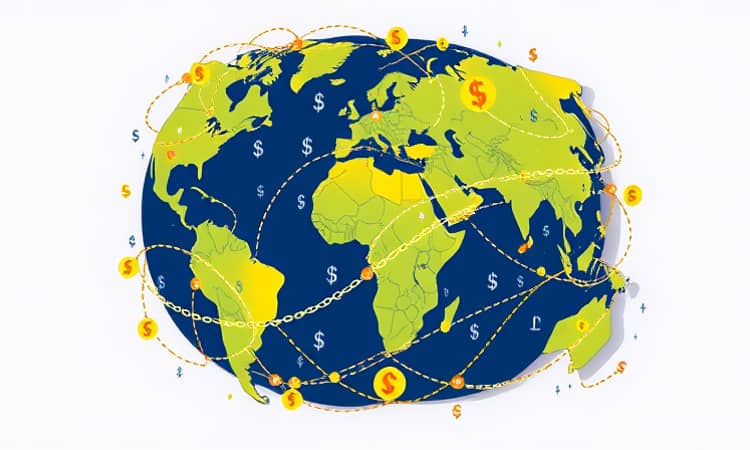
In a world of shifting economic tides, debt has become the backbone and burden of modern finance. Global total debt—encompassing both public and private obligations—has soared past 300 percent of world GDP, a striking testament to both our ambitions and vulnerabilities. From government spending on social programs to corporate investments in emerging technologies, this massive ebb and flow of capital fuels progress but also poses complex challenges. Understanding these nuances is essential for policymakers, investors, and citizens alike.
As of early 2025, total debt hovered near $346 trillion, with more than $26 trillion added in just nine months. Governments in advanced and emerging markets have ramped up borrowing to address pandemic legacies, infrastructure gaps, and stimulus measures. Meanwhile, households and corporations have carefully moderated their borrowing, responding to higher interest rates and subdued growth prospects. Navigating this intricate interplay of forces requires both keen analysis and courageous action at every level of society.
Global Debt at a Glance
Rising public borrowing has driven debt levels to record highs. By late 2024, combined public obligations surpassed $99 trillion, equivalent to nearly 93 percent of global GDP. Private debt, once on a relentless upward trajectory, has cooled to under 143 percent of GDP—the lowest level since 2015. This dynamic blend of rising sovereign deficits and moderated private finances sets the stage for both risk and opportunity.
Although numbers vary across sources, most estimates converge on a sobering reality: global debt now represents between 235 and 310 percent of world output. Alternative assessments even point to more than $300 trillion in total liabilities, underscoring the magnitude of fiscal and financial commitments worldwide. As borrowing costs rise, refinancing pressures mount, and the gap between policy intent and economic performance widens, the stakes could not be higher.
Drivers Shaping Debt Patterns
The build-up and unwinding of debt reflect a confluence of structural trends and cyclical forces. A primary catalyst has been the persistent fiscal deficits and stimulus costs stemming from pandemic response measures, expanded social safety nets, and elevated defense spending. These deficits have steadily risen to an average of 5 percent of GDP in many mature economies, pressuring policymakers to choose between immediate relief and long-term stability.
At the same time, higher interest rates and tighter credit conditions have led to a gradual adjustment in private borrowing. Corporations in the United States and Europe have reduced new bond issuance, opting to strengthen cash reserves and refinance existing loans on more cautious terms. This moderation has been partially offset by strategic borrowing in sectors such as clean energy and artificial intelligence, especially in China and select emerging markets.
- Crowding-out private sector investment through expanded public lending
- Elevated bond yields raising refinancing costs
- Weak growth dampening corporate and household demand
- Geopolitical tensions increasing policy uncertainty
Risks of Elevated Global Debt
High debt levels constrain fiscal flexibility and heighten vulnerability to economic shocks. As bond yields rise, governments face steeper elevated government debt-servicing costs, diverting resources from critical areas like education, healthcare, and infrastructure. In an environment where inflation expectations remain unanchored, financiers demand higher risk premia, potentially triggering a self-reinforcing cycle of rising rates and slower growth.
Moreover, financial history teaches us that rapid shifts in risk appetite can unleash turbulent market dynamics. The nonlinear amplification of stress—sometimes termed nonlinear tail-end financial risks—can transform manageable debt profiles into full-blown crises within months. Emerging markets, with limited access to foreign currency financing, are particularly exposed when global liquidity tightens or commodity prices plummet.
- Sudden spikes in interest rates eroding repayment capacity
- Refinancing risks concentrated at high-debt percentiles
- Potential social unrest from fiscal consolidation
- Policy missteps magnifying economic downturns
Opportunities Amid High Debt
Despite these challenges, elevated debt levels can support transformative investments and structural reforms. When deployed thoughtfully, borrowed funds can finance decarbonization, digital infrastructure, and human capital development, delivering returns that exceed borrowing costs. In this sense, not all debt is detrimental; rather, it can be an engine for sustainable progress.
Private credit markets have also demonstrated resilience, with alternative debt strategies offering attractive yields in a cautious environment. Institutional investors seeking long-term income streams have directed capital toward private debt funds that support small and medium enterprises in emerging regions. These channels can foster inclusive growth while diversifying risk.
- Financing growth-friendly green infrastructure
- Investing in cutting-edge technology and innovation
- Leveraging private debt for small business expansion
- Unlocking development finance in underserved markets
Policy Recommendations for Sustainable Growth
Balancing the dual imperatives of fiscal prudence and economic dynamism calls for nuanced strategies. First, governments should adopt credible medium-term consolidation plans that gradually reduce deficits without undermining growth prospects. This approach preserves market confidence, keeps borrowing costs contained, and protects vital public services.
Second, policymakers need to strengthen financial regulation and macroprudential tools to mitigate systemic risks. By enhancing stress-testing frameworks and monitoring debt-at-risk metrics, authorities can anticipate and cushion against adverse scenarios. A leading example is the use of full distribution debt-at-risk scenarios, which go beyond average forecasts to capture tail-end vulnerabilities across 175 countries.
Finally, fostering a dialogue between public and private sectors can unlock innovative financing mechanisms. Public-private partnerships, blended finance vehicles, and targeted guarantees can channel debt into high-impact projects without exacerbating sovereign obligations. Such collaboration underpins a virtuous cycle of investment, job creation, and revenue growth.
History reminds us that unchecked debt accumulation often precedes painful corrections. Yet, with informed leadership, robust planning, and collaborative spirit, societies can steer through high-debt episodes toward sustainable prosperity. By embracing both caution and ambition, we can transform the heavy burden of global debt into a bridge to a more resilient future.