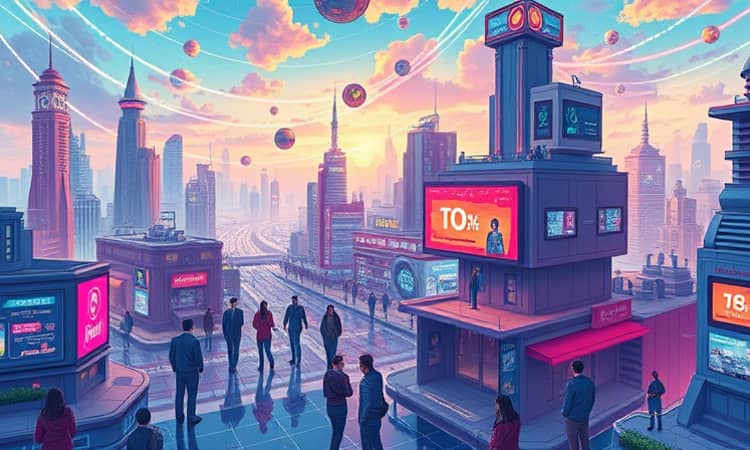
The rise of immersive virtual spaces is reshaping how we work, play, and connect. As major brands and innovative startups invest billions, a new digital frontier beckons—a realm where creativity, commerce, and community converge. This article delves into the financial heartbeat of the metaverse, offering insights and guidance for individuals and organizations poised to ride this wave.
By understanding the forces propelling the metaverse, you can seize opportunities, anticipate challenges, and chart a strategic path into a landscape marked by rapid transformation and boundless possibility.
Market Size and Growth Forecasts
From niche gaming worlds to sprawling virtual ecosystems, the metaverse economy is on an upward trajectory. Analysts forecast a shift from early experimentation to widespread adoption, with value creation spanning sectors.
- Current valuation: $8295 billion in 2023, projected to reach $1.3 trillion by 2032.
- Potential peak: up to $5 trillion by 2030, driven by digital commerce and immersive experiences.
- Gaming and user-generated content: ~43% CAGR, potentially a $1 trillion sector within a decade.
- Foundational industries: hardware, broadband, and gaming sectors that stood at $2.6 trillion in 2021, growing at 7.4% CAGR to 2025.
Gartner predicts that by 2026, 25% of people will spend at least one hour daily in virtual worlds for shopping, education, and social interaction. Enterprises are already responding: an estimated 30% of global businesses will offer metaverse-ready products or services by that date.
Whether you are a startup founder, an established brand leader, or an individual creator, understanding which sector aligns with your strengths is key. Analyze your core competencies—if you excel in digital design, focus on immersive retail spaces; if finance is your domain, explore tokenized lending platforms. Tailoring your approach to a sector’s specific value drivers will optimize your path to success.
Key Sectors and Economic Opportunities
At its core, the metaverse economy thrives on the blending virtual and physical economies. Gaming and entertainment form the foundation, while commerce, finance, and enterprise use cases expand its reach.
This table highlights how diverse sectors are tapping into new revenue streams. Whether you are an artist, educator, or entrepreneur, there are multiple ways to engage with and profit from the metaverse.
Virtual Assets: A New Asset Class
Underpinning this economy are tokenized assets—the new digital asset class. Ownership, scarcity, and interoperability are now coded into every object, from land parcels to digital fashion.
- Real estate and land parcels with high valuations
- Avatars and wearables as status symbols
- Collectibles and NFTs offering provenance
- AI-generated content for personalized experiences
- Digital currencies and tokens enabling seamless transactions
- IP NFTs securing royalties for creators
Monetization models take shape in subscriptions for premium experiences, pay-or-rent-to-own offerings for high-end items, and peer-to-peer marketplaces where creators retain more revenue. Embracing Web3 principles ensures a significant first-mover advantage in this fluid environment.
Technology Drivers (202630)
The metaverse’s growth rests on five key pillars. Advances in each domain will determine how immersive and accessible these worlds become.
- AI Synergy: Procedural content generation, dynamic NPCs, automated world-building
- XR Hardware: Sleeker headsets, higher resolution, improved field of view
- Blockchain Scalability: Faster, cheaper transactions for frictionless commerce
- 5G/6G Networks: Ultra-low latency enabling real-time multi-user experiences
- Integrated Tech Stack: VR/AR, AI, blockchain, and crypto converging seamlessly
By investing in these areas, stakeholders can support richer interactions and drive mass-market adoption of virtual platforms.
Regulatory and Investment Landscape
As virtual economies expand, governance frameworks must evolve. Policymakers are considering new taxation models, consumer protections, and IP regulations to ensure stability and fairness.
IP rights in virtual realms can mirror physical world rules, but with new challenges around digital replication and licensing. Platforms are experimenting with automated royalty distribution through smart contracts to ensure creators are compensated fairly. Customer protections will need mechanisms for transparent dispute resolution when virtual goods fail to meet expectations or services are disrupted by technical issues.
For investors, the metaverse offers fertile ground. Early entry into digital real estate, tokenized assets, and creator tools can yield high returns. Platforms like Meta, Roblox, and Decentraland are establishing infrastructure, while brands are reallocating ad budgets to virtual spaces. A prudent strategy balances risk with the opportunity to claim persistent identities and avatars that travel across platforms.
Challenges and the Path Forward
Despite the optimism, skepticism persists. Some question whether the metaverse hype will translate into sustainable growth. However, history shows that transformational technologies often face doubt before reaching maturity.
To navigate this evolving landscape, begin by educating yourself on foundational technologies and market dynamics. Experiment with small-scale metaverse initiatives to gather first-hand insights, and partner with trusted platforms and creators to mitigate risk. Prioritize interoperable solutions to avoid vendor lock-in and maintain flexibility as new standards emerge.
Ultimately, the metaverse represents more than a trend—it’s a testament to human creativity and collaboration, democratized via user-generated content. As we stand at the threshold of this new era, the choices we make will shape virtual worlds for decades to come. Embrace the opportunities, anticipate the challenges, and join a future where imagination and economy are intertwined.