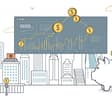
Imagine a world where your financial life unfolds not in banks or stock markets, but in immersive digital realms where virtual assets hold real value.
This is the promise of the metaverse, a convergence of technology and finance that could redefine how we earn, invest, and spend.
With massive corporate investments and rapid regulatory shifts, this virtual frontier is becoming a tangible part of our economic future.
It offers unprecedented opportunities, from digital ownership to new revenue streams, but it also comes with significant risks and uncertainties.
As we stand on the brink of this transformation, understanding its dynamics is crucial for anyone looking to navigate this emerging landscape.
The Corporate Race: Investing Billions in Virtual Dreams
Tech giants are pouring resources into the metaverse, betting on its potential to shape tomorrow's economy.
Meta Platforms, for instance, has committed over $100 billion in capital expenditures for 2026, focusing on AI and supercomputing infrastructure.
This investment is driven by the need to support advanced virtual reality hardware and data centers.
However, this push has not been without setbacks. Reality Labs, Meta's metaverse division, faced losses totaling $70 billion, leading to a 30% budget cut and over 1,000 job reductions.
Other companies like Microsoft have also joined the fray, with expenses around $70 billion for metaverse initiatives.
Key strategies include diversifying revenue through business messaging on WhatsApp and exploring virtual real estate markets.
This corporate enthusiasm highlights a broader shift towards integrating the metaverse into mainstream finance.
- Meta's revenue reached $51.24 billion in 2026, a 26% year-over-year increase.
- AR/VR shipments are expected to hit 32.8 million by 2025, expanding access to metaverse platforms.
- Institutional adoption is surging in 2026, positioning Meta as a top metaverse stock despite recent cuts.
These efforts underscore the metaverse's potential to become a significant economic engine, albeit with high costs and volatility.
Digital Assets and the New Economy: Crypto, NFTs, and Beyond
At the heart of the metaverse economy lies blockchain technology, enabling verifiable ownership and transactions.
NFTs, or non-fungible tokens, have evolved from digital art to tools for identity and fractional ownership.
In 2021, the global NFT trading volume was $23 billion, laying a foundation for virtual assets.
Innovations include AI-generated NFTs, such as a piece that sold for $400,000, and brand collaborations with companies like Nike.
Play-to-earn gaming platforms, such as OP Game and Vorto Network, allow users to earn cryptocurrency through gameplay.
This creates a decentralized creator economy where digital assets can be exported and traded freely.
- NFTs serve as proof of ownership for virtual real estate and other digital items.
- Tokenization of real-world assets is accelerating in 2026, impacting sectors like art and music.
- Decentralized autonomous organizations (DAOs) emphasize governance and trademark management in metaverse projects.
These developments point towards a more integrated digital economy where virtual and physical assets blur.
Navigating the Rules: US and EU Regulatory Developments
As the metaverse grows, regulators are stepping in to provide clarity and protect investors.
In the US, the GENIUS Act aims to establish a federal framework for stablecoins, requiring reserves in high-quality assets.
Monthly reporting with CEO certification and 120-day application approvals are part of this push for enhanced financial oversight.
Taxation rules are also evolving, with Form 1099-DA for digital asset disposals and backup withholding requirements.
The EU's Digital Finance Package includes MiCA for crypto issuance and DORA for resilience, harmonizing regulations across member states.
- Stablecoin regulations focus on reserves and reporting to prevent fraud.
- AML and BSA requirements mandate risk-based programs for money service businesses.
- Regulatory delays in the US may extend into 2026, but progress is being made towards clearer rules.
This regulatory landscape is crucial for building trust and scalability in metaverse finance.
Pitfalls and Perils: Risks and Scams in the Metaverse
Despite its potential, the metaverse is fraught with dangers that can lead to significant financial losses.
Scams are rampant, including fraudulent NFT schemes that promise unrealistic casino profits.
In 2022, enforcement actions targeted a Russia-tied investment fraud, highlighting the need for vigilance.
Meta's financial setbacks, with $70 billion in losses, show how even corporate giants can struggle in this space.
Compliance burdens add another layer of risk, with requirements for segregated customer assets and state reporting.
- Investors should beware of schemes offering quick returns without due diligence.
- NASAA has issued alerts on metaverse scams, emphasizing the importance of research.
- High market volatility and regulatory uncertainty can exacerbate financial risks.
Understanding these pitfalls is essential for safeguarding your investments in the virtual world.
Looking Ahead: The Future of Metaverse Finance
The future of the metaverse and money is poised for significant growth, driven by technological advancements and institutional interest.
Projections for 2026 indicate a surge in AR/VR hardware, boosting access and engagement in virtual environments.
Big tech investments and NFT integration will continue to shape the landscape, offering new opportunities for digital asset ownership.
However, challenges remain, including high capital expenditures and competition from AI development.
Opportunities abound in corporate virtual solutions and play-to-earn economies, which could normalize digital finance.
- Growth drivers include institutional capital flowing into DeFi and asset tokenization.
- Challenges involve regulatory delays and the need for sustainable business models.
- The metaverse represents an inflection point in the digital economy, with clearer rules enabling scalability.
By staying informed and adaptable, individuals and businesses can potentially thrive in this evolving financial frontier.