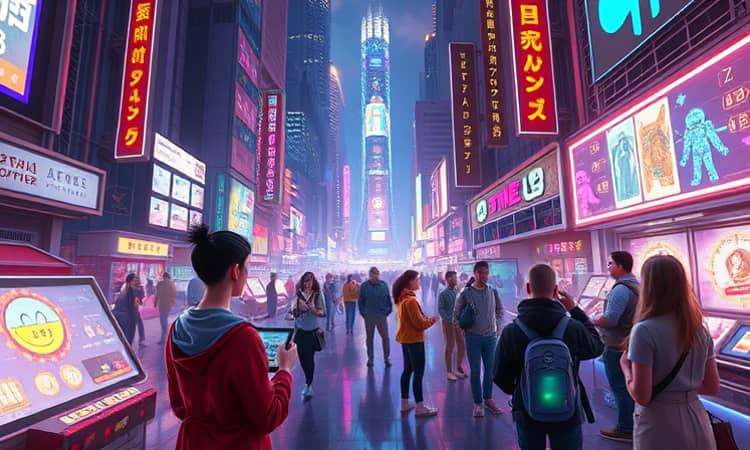
The dawn of immersive digital worlds is reshaping the way we earn, spend, and envision value. As virtual realms expand, so too do their economic currents, offering both opportunity and challenge.
Understanding the Metaverse: Origins and Core Features
The metaverse refers to a persistent, immersive social world where avatars navigate three-dimensional spaces enabled by AR, VR, and other advanced interfaces. It acts as a new layer between physical and digital realms, promising seamless integration across devices and platforms.
First coined in Neal Stephenson’s 1992 novel Snow Crash, the term gained cultural traction through early virtual environments like Second Life and World of Warcraft. Today, it spans gaming, social platforms, enterprise simulations, and blockchain-powered experiences.
Technology Powering Virtual Economies
Behind every virtual transaction lies a complex stack of cutting-edge technologies, each contributing to real-time 3D convergence bridging worlds:
- VR, AR, and XR hardware from Meta, Apple, Sony, and emerging players; forecasts predict the VR market soaring from $43.6B in 2024 to over $380B by 2033.
- Blockchain and Web3 frameworks enabling NFT ownership, smart contracts, DAOs, and cross-platform trading of digital items—over $2B in virtual real estate traded in 2024.
- Game engines and 3D tools like Unreal Engine and Unity that power immersive content creation and real-time rendering.
- 5G, edge computing, IoT, and digital twins providing low-latency connectivity and real-world asset modeling for enterprise uses.
- Artificial intelligence for procedural content generation, intelligent NPCs, moderation, and personalized experiences at massive scale.
Money in Motion: Market Size and Investment Flows
Analysts project the global metaverse market will grow from around $105.4B in 2024 to nearly $936.6B by 2030, reflecting a trillion-dollar scale in the 2030s. Other estimates envision as much as $5T in cumulative value creation by 2030 when factoring in indirect benefits.
Corporate engagement is intensifying. Meta plans to boost its metaverse budget by 30% in 2025, while over 26,000 companies and one million employees are already active in this space. Venture capital funneled $17.6B into entertainment-focused applications in 2024 alone.
Regionally, North America leads in investments and innovation, Europe and Asia-Pacific show rapid adoption rates, and emerging markets in MENA are poised for exponential growth.
Economic Models: Earning, Spending, and Ownership
Virtual economies thrive on persistent global economic interactions across diverse monetization avenues:
- Experience-based revenues: virtual concerts, conferences, education, training simulations, and tourism.
- Digital asset ownership: NFTs for avatars, skins, wearables, in-game items, and virtual real estate.
- Platform and infrastructure services: Metaverse-as-a-Service offerings, cloud and networking subscriptions, and hardware rentals.
- Creator-driven revenue streams: diverse creator-driven revenue streams including sales, royalties, tipping, and brand partnerships.
Beyond traditional commerce, entire careers have emerged. Designers sell virtual wearables; architects build branded spaces; event promoters host pay-per-view concerts. Play-to-earn models let participants convert game progress into real-world value, often through tokenized assets.
Fiat bridges and platform currencies like Robux or V-Bucks facilitate transactions, while crypto tokens and DAOs add decentralized governance. Yet, token volatility and speculation introduce risks, and off-ramps to fiat currencies bring evolving tax considerations.
Key Players and Platforms
Major technology giants and specialized platforms shape the virtual economy landscape. Meta’s Horizon Worlds experiments with social hubs, while Roblox empowers millions of user-generated games and experiences. Epic Games’ Unreal Engine fosters high-fidelity worlds, and blockchain-based platforms such as Decentraland, The Sandbox, and Axie Infinity pioneer true asset ownership.
Traditional gaming titans like Sony and Microsoft are exploring metaverse extensions of flagship franchises, and luxury brands such as Gucci and Nike are launching digital fashion lines and virtual storefronts.
Risks, Regulation, and Social Impact
Despite its promise, the metaverse faces significant headwinds. Market speculation fuels boom-and-bust cycles, and security vulnerabilities expose users to fraud and data breaches. The rapid monetization of social spaces raises concerns over privacy, addiction, and digital divides.
Regulators worldwide are scrutinizing token offerings, classifying some as securities, and debating consumer protections. Tax authorities grapple with how to treat virtual income: wage, capital gain, or service fee. Emerging evolving digital property rights frameworks will shape ownership disputes and cross-border commerce.
Looking Ahead: Future Potential and Challenges
The metaverse stands at a crossroads. Continued investment in hardware, blockchain interoperability, AI-driven content, and digital twins promises to unlock new efficiencies for enterprise training, healthcare simulations, and remote collaboration.
Yet realizing this vision requires addressing equity, governance, and sustainability. Bridging the digital divide, ensuring transparent moderation, and aligning incentives across stakeholders will be key to creating a healthy virtual economy.
For individuals and businesses, engaging early with strategic pilots, cultivating digital literacy, and experimenting with token-based models can build resilience in this rapidly evolving landscape. By balancing innovation with responsibility, we can harness the metaverse’s vast potential while safeguarding the social fabric that connects us across both physical and digital domains.