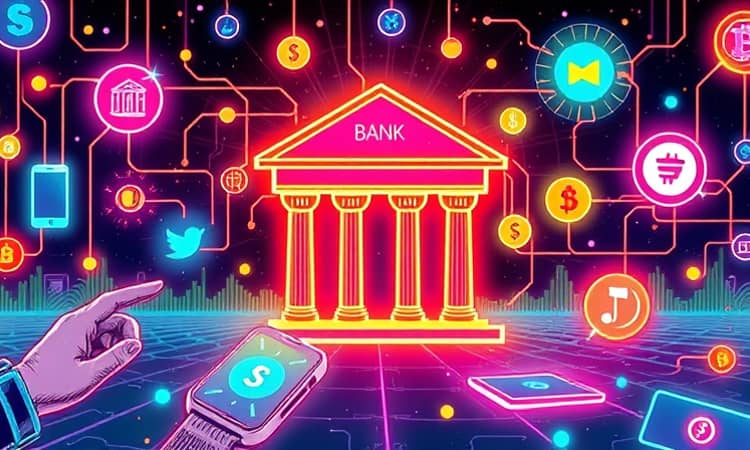
The financial world is undergoing a profound transformation as the Internet of Things (IoT) weaves connectivity into every transaction, device, and service. From wearable rings that authorize payments to blockchain-powered smart contracts, this new era promises not only greater convenience but also enhanced security and efficiency.
As the number of connected devices soars, financial institutions and consumers alike stand to benefit from more personalized experiences and real-time insights. Yet with opportunity comes complexity: ensuring data privacy, preventing fraud, and integrating new technologies with legacy systems will require foresight and innovation.
Mapping the IoT Financial Landscape
Market projections underscore the magnitude of change. The global IoT applications market, assessed at USD 1.3 trillion in 2026, is expected to swell to USD 5.34 trillion by 2035. Enterprise spending on IoT solutions is estimated between $350 and $400 billion in 2026. Meanwhile, the count of connected devices is staggering: from 18.8 billion in 2024 to an anticipated 34.7 billion by 2028.
These figures reflect more than mere growth—they signal a paradigm shift. Financial services, traditionally reliant on centralized infrastructure, are being reimagined as dynamic, interconnected ecosystems that thrive on continuous data flows.
Empowering Consumers with Wearables and Contactless Payments
Wearable devices have become extensions of our financial identities. NFC-enabled smartphones, fitness trackers, rings, and smartwatches are not just gadgets—they are payment instruments linked directly to checking and credit accounts. Users can tap, wave, or gesture to pay, eliminating the need to carry physical cards.
Beyond convenience, these devices offer tools for greater control. Consumers can:
- Set spending limits on each wearable
- Receive instant alerts for near-limit transactions
- Monitor daily budgeting patterns in real time
By harnessing IoT data, banks and fintech apps deliver personalized budgeting advice and nudges that foster healthier financial habits. The result is not just faster payments, but more responsible spending and deeper customer engagement.
Fortifying Security and Fraud Prevention
With more devices comes more data—and more potential attack vectors. However, IoT also provides powerful tools to detect and deter fraud.
- Transaction monitoring sensors in ATMs and POS terminals analyze usage patterns to flag anomalies.
- Wearable-based biometric authentication layers biometric and tokenized security.
- Integrated IoT security networks connect disparate fraud-detection systems for unified oversight.
By correlating data from multiple endpoints, financial institutions achieve unprecedented levels of security. Machine learning models trained on extensive IoT datasets can identify suspicious behavior long before conventional systems detect a breach.
Blockchain: The Convergence with IoT
Blockchain and IoT together form a formidable duo. Devices collect transaction and asset-tracking data, while blockchain ensures tamper-proof records. Smart contracts—self-executing code on blockchain platforms—automate payments, enforce contractual terms, and settle cross-border trades without intermediaries.
This synergy yields:
- Reduced settlement times for international transactions
- Lower operational costs through automated verification
- Enhanced transparency for auditors and regulators
Major financial institutions are now investing heavily in IoT-driven blockchain pilots. By embedding sensors within shipping containers or high-value goods, they track provenance in real time and trigger payments automatically upon delivery confirmation.
Projections at a Glance
Integrating with Fintech Ecosystem Trends
IoT’s impact amplifies when combined with broader fintech innovations. Key trends driving adoption include:
- Real-time payments evolving into automated financial flows
- Decentralized digital identity frameworks with biometric verification
- Embedded finance powered by API-first platforms
- Tokenization of real-world assets via blockchain
- Cloud-native infrastructure underpinning scalable IoT deployments
Together, these trends create a seamless, interoperable financial ecosystem. Imagine a world where your digital identity grants secure, instant loans at point of sale, or where tokenized assets move frictionlessly across international markets.
Mobile Banking and the Future of Interaction
Advances in 5G, AR, and AI are poised to redefine mobile banking experiences. High-speed networks will support immersive augmented reality interfaces, enabling users to visualize spending patterns or investment portfolios in their living rooms.
AI-powered chatbots and digital advisors, fed by IoT data streams, will anticipate needs and provide tailored guidance. From suggesting optimal times to execute trades to detecting market trends based on sensor-driven supply-chain data, banking apps will transform into proactive financial partners.
Achieving Operational Excellence and ROI
Businesses that adopt IoT solutions report average operating cost reductions of 4–6%. Across industries, companies allocate roughly 7% of IT budgets to IoT initiatives, underscoring their strategic value.
Financial institutions deploying IoT-driven analytics achieve:
- Faster loan processing via automated data collection
- Reduced fraud losses through predictive monitoring
- Improved customer retention with personalized services
These efficiencies not only bolster profitability but also free resources for innovation, creating a virtuous cycle of growth.
Conclusion: Embracing a Connected Financial Future
The convergence of IoT, blockchain, AI, and mobile technologies heralds a new chapter in finance. Institutions that embrace connected devices and harness real-time data will lead the way, offering customers unprecedented convenience, security, and personalization.
For consumers, the promise is equally compelling: smarter budgeting tools, seamless payments, and financial services that adapt to individual needs. As we move forward, collaboration between banks, fintechs, device manufacturers, and regulators will be crucial to unlock the full potential of this ecosystem.
Now is the moment to build the infrastructure, foster innovation, and cultivate trust in a world where every device, every payment, and every piece of data is part of a dynamic, interconnected financial tapestry.