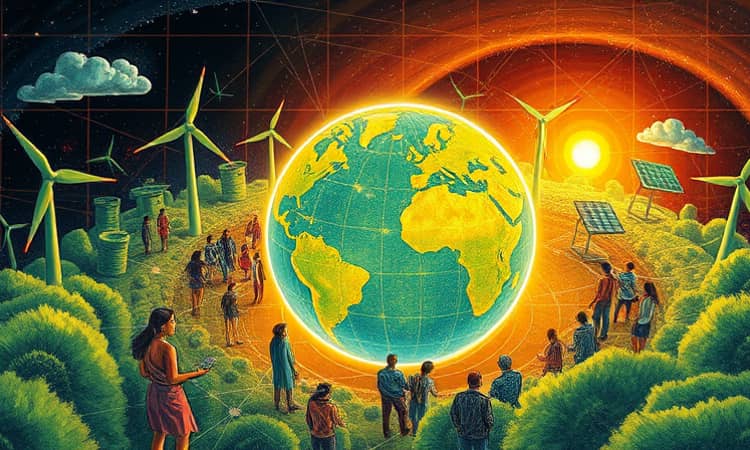
Launched at the end of 2021, the Global Gateway represents the European Union’s most ambitious effort to foster sustainable, high-quality infrastructure worldwide and empower partner countries toward resilient growth.
From Vision to Reality: A Strategic Overview
The Global Gateway (GG) was inaugurated on December 1, 2021, with an initial target to mobilize €300 billion by 2027. By October 2025, thanks to sustained efforts under the Team Europe approach, the initiative had already surpassed this milestone with €306 billion in commitments and is poised to scale up to €400 billion by 2027.
Beyond mere figures, the GG constitutes a reimagining of development cooperation: it aligns EU strategic autonomy, competitiveness, and security with partner countries’ priorities, such as the UN 2030 Agenda and the Paris Agreement.
Core Objectives and Guiding Principles
The GG’s framework rests on two mutually reinforcing ambitions:
- Enhancing EU economic resilience through diversified supply chains and strategic investments.
- Supporting partner countries in sustainable development goals and climate resilience.
By addressing global investment gaps in a polarized geopolitical context, the initiative represents a new form of partnership that goes beyond traditional aid to deliver durable benefits on digital, energy, transport, health, and education fronts.
Key Policy Drivers: Five Focus Areas
Global Gateway’s investments concentrate on five interlinked sectors, each vital to shaping a sustainable future:
- Digital: Building fiber-optic networks, data centers, and robust cybersecurity frameworks to bridge the digital divide.
- Climate and Energy: Scaling up renewable projects, enhancing grid resilience, and supporting clean mobility solutions.
- Transport: Developing sustainable, multi-modal corridors that link regions and foster trade.
- Health: Strengthening public health systems to combat pandemics and endemic diseases.
- Education, Research, and Human Development: Promoting inclusive learning, innovation hubs, and social cohesion.
Additional sectors—such as supply chains, clean technologies, food security, and SMEs—receive strategic support to maximize impact and encourage private sector participation.
Funding Mechanisms and Mobilization Strategy
To achieve its targets, the GG relies on a blend of grants, loans, equity, and guarantees. Central instruments include:
- The Global Gateway Fund (GGF), an EIB-led fund-of-funds targeting emerging markets with a 40/40/20 allocation among infrastructure, SMEs, and structured finance.
- The Investment Hub, coordinating EU bodies, member states, DFIs, and ECAs to ensure coherent Team Europe coordination.
- An Early-Stage Investment Mechanism (pilot in 2026) offering 20–30 grants of €0.5–2 million to EU companies in transport, energy, AI, and urban development.
Other specialized platforms—GET.invest for renewables in Africa and ElectriFI for clean energy—have already channeled hundreds of millions into transformative projects.
Flagship Projects and Regional Highlights
Since its inception, GG has endorsed over 218 flagship projects (2023–2024), with 46 additional projects slated for 2025. Noteworthy examples include:
• In Africa, GET.invest-supported solar mini-grids are enhancing energy access and resilience in rural communities.
• In Southeast Asia, early-stage grants to EU-Viet Nam partnerships are fostering smart urban transport pilots.
• In Latin America, social innovation grants of up to €15 million are funding community-led development initiatives.
These projects exemplify how public-private collaboration underpins success, leveraging EU expertise and local insights.
Accessing Global Gateway Opportunities
Prospective applicants—governments, DFIs, NGOs, and private enterprises—must prepare concept notes aligned with sectoral priorities. The EIB ensures that all projects meet stringent environmental, social, and governance standards.
Key steps include:
- Consulting the Investment Hub to identify suitable instruments.
- Submitting detailed proposals or funding applications via designated portals.
- Engaging with Team Nationals for co-financing opportunities and technical support.
Challenges and the Path Forward
Despite remarkable progress, the Global Gateway faces challenges typical of large-scale partnerships: navigating complex regulatory environments, ensuring equitable benefits, and continuously mobilizing private capital to close the remaining investment gap.
Moreover, in a geopolitical landscape shaped by alternatives such as the Belt and Road Initiative, the EU must maintain flexibility and responsiveness to partner needs, strengthening trust and local ownership.
Looking Ahead: Scaling to €400 Billion
Building on its October 2025 success, the GG will intensify outreach to private investors, launch new sectoral calls, and deepen cooperation with multilateral development banks. The early-stage pilot in 2026 will serve as a springboard for innovative business models and cross-border collaborations.
Conclusion: A Gateway to Shared Prosperity
The Global Gateway stands as a testament to the EU’s commitment to forging strategic, sustainable partnerships across continents. By delivering tangible infrastructure and capacity-building outcomes, it not only enhances global connectivity but also champions the values of inclusivity, resilience, and shared growth. As the initiative evolves toward its €400 billion goal, stakeholders worldwide have an unprecedented opportunity to collaborate on projects that will define the next era of sustainable development.