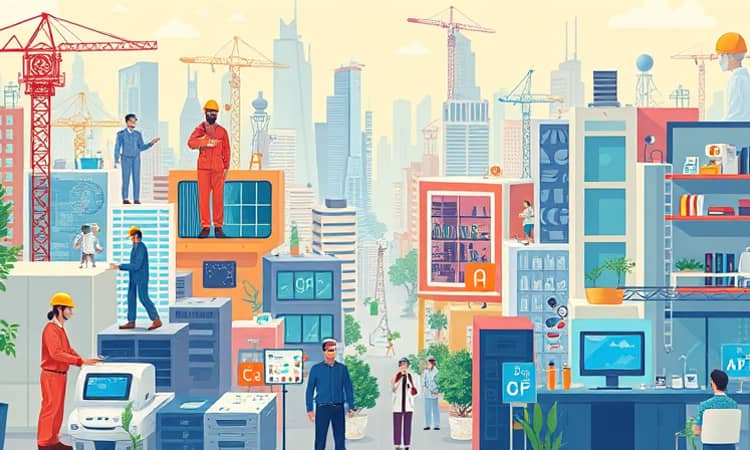
The world is on the brink of a transformative era in employment, driven by rapid technological changes and economic shifts.
By 2026-2030, the convergence of AI, demographics, and policy will reshape how we work.
This article explores the challenges and offers practical guidance to navigate this new landscape.
Navigating Economic Slowdowns and Unemployment
The economy is expected to experience uncomfortably slow growth in the coming years.
Unemployment may peak at 4.5% due to various factors.
Recovery is anticipated later through strategic interventions.
- Economic deceleration leads to hiring freezes.
- Companies adopt a do more with less philosophy.
- Policy changes like tariffs impact labor supply.
This normalization signals a shift from pandemic volatility.
Inequality could widen as AI disrupts traditional roles.
Transformative Shifts in the Job Market
White-collar jobs are declining, while blue-collar opportunities surge.
McKinsey estimates that 12 million U.S. workers will switch occupations by 2030.
Office support roles are hit hardest by automation.
- Entry-level positions in finance and law erode.
- Infrastructure and trades see rapid growth.
- Manufacturing faces a 600,000 job shortage in 2025.
Healthcare and green energy sectors lead in job creation.
Global job changes affect nearly a quarter of all positions by 2027.
The Impact of AI on Skills and Employment
AI exposure impacts 60% of jobs in advanced economies.
Core skills are disrupted for 39% of workers by 2030.
This requires massive reskilling efforts across industries.
- Half the global workforce needs major retraining by 2027.
- Human-AI teams become standard in workflows.
- Democratizing AI skills is crucial to avoid inequality.
Technologies like data science and cybersecurity remain in high demand.
The shift demands continuous learning and adaptation.
Emerging Opportunities and Sector Growth
Trades and physical labor are experiencing a renaissance.
Gen Z is pivoting from coding to skills like plumbing and electrical work.
Healthcare projects an 8.4% growth rate through 2034.
- Green energy jobs expand three times faster than the U.S. workforce.
- Entrepreneurship rises as workers seek autonomy.
- Management roles evolve to focus on coaching and trust-building.
Work models blend remote and in-office settings by 2027.
This diversity offers new pathways for career development.
Key Statistics to Guide Your Planning
These figures highlight the scale of change ahead.
Use them to inform your career decisions and strategies.
Practical Steps to Thrive in the New Economy
Embrace reskilling as a continuous journey.
Focus on durable human skills like critical thinking.
AI cannot replicate hands-on judgment and empathy.
- Invest in learning platforms for AI and tech skills.
- Explore opportunities in high-growth sectors like healthcare.
- Consider entrepreneurship to gain autonomy and flexibility.
Build resilience by diversifying your skill set.
Networking and mentorship can provide crucial support.
Conclusion: Embracing Change with Confidence
The future of work is not about decline but reorganization.
By aligning with trends, you can turn challenges into opportunities.
Stay adaptable and proactive in your career planning.
- Monitor economic indicators and policy changes.
- Engage in community and professional development.
- Foster a mindset of growth and innovation.
Remember, the human edge lies in creativity and collaboration.
With the right approach, you can navigate this era successfully.