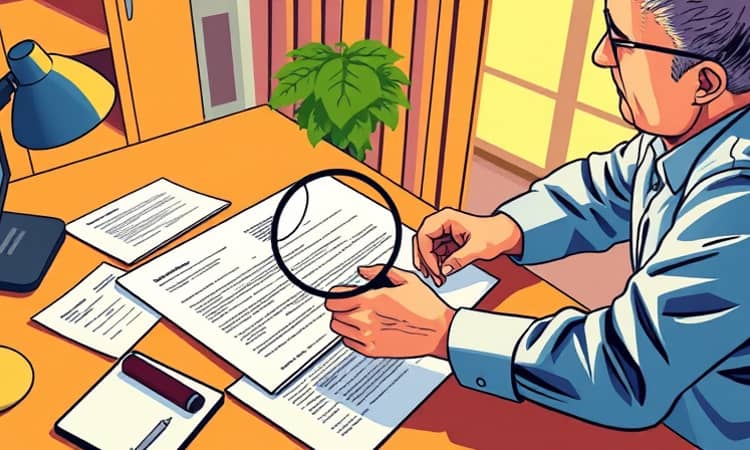
When you sign on the dotted line, you’re not just accepting numbers—you’re embracing a promise that shapes your financial future. For both consumers and small businesses, understanding every clause in a loan agreement can mean the difference between opportunity and unforeseen challenges.
Understanding Loan Agreements: The Big Picture
A loan agreement, also known as a credit agreement or personal/business loan agreement, is a binding contract between lender and borrower that spells out loan amount, repayment schedule, interest, fees, conditions, covenants, collateral, and default remedies. Drafted by the lender’s legal counsel, it becomes legally enforceable once both parties sign.
The fine print matters for protection. Clear terms eliminate ambiguity about payments and costs. They safeguard borrowers against abusive practices and ensure lenders can enforce their rights if repayments falter. Under federal and state consumer-protection rules, lenders must adhere to interest-rate caps and disclosure requirements, though some clauses may still tilt heavily in their favor.
Exploring the Forms of Credit Contracts
“Loan agreement” is a broad term encompassing several related documents. From the simplest IOU to complex credit facilities, each serves a distinct purpose:
- IOU: A basic note between friends or family, stating only the amount owed, often without a due date or interest.
- Promissory Note: A written promise to repay principal and interest, which can be secured (with collateral) or unsecured.
- Credit Agreement / Loan Agreement: A detailed contract covering term loans, revolving lines of credit, interest, covenants, events of default, and more.
- Associated Documents: Commitment letters, mortgages or deeds of trust, security agreements, guarantees, and assignments that flesh out collateral and repayment obligations.
Decoding the Core Structure: Building Blocks of a Loan
Every loan agreement shares a set of structural elements—think of them as the architectural pillars of credit:
Parties and Basics: The agreement begins by naming the lender (creditor) and borrower (debtor) with full legal addresses. It records the date of signing, which triggers obligations and starts the clock on statute-of-limitations and interest calculations. A choice-of-law clause specifies which jurisdiction governs disputes, and many agreements include a venue or mandatory arbitration provision.
Loan Amount and Facility Type: The principal, or face amount, is the money you’ll receive. That could be a one-time advance on a term loan, a revolving line of credit allowing multiple draws and repayments, or a mortgage secured by real estate. A purpose clause may restrict how funds are used—breaching it can trigger default.
Interest Rate Mechanics: Rates can be fixed or adjustable. Fixed rates stay constant for the loan’s life, while variable rates fluctuate based on benchmarks like SOFR or prime plus a margin. Some agreements add a margin ratchet that adjusts based on financial metrics. Default interest, often higher, applies if you miss payments. Consumers see an APR that bundles interest and fees to reflect the true annual cost.
Fees and Charges: Interest is just part of your cost. Origination or processing fees, commitment fees on undrawn credit, late-payment penalties, prepayment fees, and NSF or annual fees can all inflate the total. Always compare APR and total costs to avoid surprises.
Repayment Terms and Schedules: Terms range from 2–7 years for personal loans to 15–30 years for mortgages and 3–10 years for many business loans. Payments may be monthly, quarterly, or structured as bullet payments. Fully amortizing plans gradually eliminate principal and interest, whereas interest-only periods delay principal payments to a final balloon.
Collateral and Security: Secured loans attach collateral—real estate, equipment, inventory—giving the lender a security interest under the UCC. Unsecured loans rely solely on creditworthiness, which often means higher rates. Detailed security agreements list collateral categories and perfection steps.
Key Clauses Every Borrower Must Read
Some clauses may hide significant risks or costs. Pay close attention to:
- Interest Rate Provisions & APR disclosures
- Events of Default and Remedies
- Prepayment, Early Termination Fees
- Cross-Default and Acceleration Triggers
- Mandatory Arbitration and Venue Clauses
- Collateral Descriptions and Perfection Steps
Reviewing these with legal or financial advisors ensures you’re not blindsided by a broad collateral grant or an unexpected penalty.
Practical Tips for Borrowers and Small Businesses
Armed with knowledge, you can negotiate terms and protect your interests. Consider the following strategies:
- Ask for a clear definition of interest calculation methods and ask if a 360/365-day year is used.
- Negotiate reduced or waived origination and facility fees, especially if you have strong credit or collateral.
- Include a cap on rate increases for variable loans or a floor to protect against negative benchmarks.
- Seek a carve-out for hardship or force majeure events to avoid automatic defaults.
- Ensure any collateral grant is specific, not a blanket lien on all assets.
Conclusion: Empowerment Through Clarity
Reading the fine print may feel daunting, but understanding your repayment schedule structure and every covenant can protect your financial well-being. Whether you’re financing a new car, expanding your small business, or purchasing a home, being informed lets you negotiate fair terms and avoid costly surprises.
When the terms align with your goals and risk tolerance, a loan becomes more than debt—it becomes a powerful tool for growth and security. Take time to decode every line, ask questions, and seek professional guidance. That attention to detail is your strongest shield against unexpected pitfalls and your key to leveraging credit with confidence.