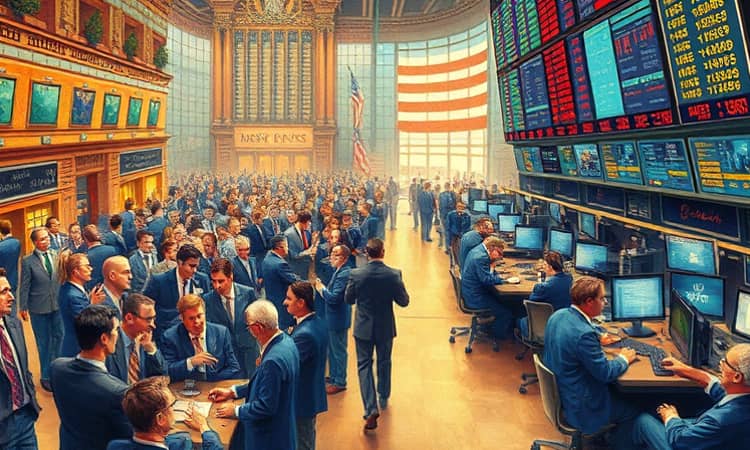
Financial markets have undergone a remarkable transformation over centuries, evolving from noisy, hand–signal–driven trading pits to sleek, screen–dominated ecosystems. This journey reflects human ingenuity, resilience, and the relentless pursuit of efficiency and inclusivity in allocating capital. As investors and participants today, understanding this arc helps us harness innovation and navigate new frontiers with clarity and confidence.
The Humble Beginnings: 13th–17th Centuries
Long before electronic terminals and streaming data feeds, merchants and moneylenders in medieval Europe were forging the foundations of modern finance. Italian city–states pioneered lending practices that evolved into first modern financial instruments. Wealthy traders would pool resources to fund perilous voyages for spices and silk, sharing profits and losses in nascent shares.
These informal gatherings gradually coalesced around coffee houses and public squares, where brokers posted prices on wooden boards. Though primitive, these venues enabled risk sharing across communities and sowed seeds for systematic trading.
Rise of Formal Exchanges: 17th–19th Centuries
The year 1602 marks a watershed moment: the Dutch East India Company’s launch of the Amsterdam Stock Exchange—the world’s first regulated marketplace for shares and bonds. Here, merchants and government officials introduced perpetual quotes, organized brokerage, and regular dividends, giving birth to structured trading and market-making.
By the late 1700s, London’s Jonathan’s Coffee House gave way to the London Stock Exchange, while in the young United States, the Buttonwood Agreement of 1792 under a New York elm tree established trading rules that evolved into the New York Stock Exchange. These institutions codified commissions, membership rights, and trading hours, ushering in an era of formal regulation that sought to temper speculation and protect participants.
The Age of Pits: Industrial Revolution to 20th Century
The Industrial Revolution spurred unprecedented demand for capital. Railroads, steelworks, and manufacturing giants flocked to the trading floors—known as pits—where brokers shouted bids and offers, their gestures choreographed into an expressive language of hand signals. The American Stock Exchange, rooted in curbside trading, formalized this chaos into a structured curb market by 1908.
Indices emerged to track market performance. In 1896, the Dow Jones Industrial Average introduced a 12–stock gauge of industrial health, later expanding into the S&P 500. Yet, peaks of exuberance led to devastating crashes, notably in 1720’s South Sea Bubble and 1929’s Wall Street collapse. Each crisis prompted regulatory reforms, reinforcing surveillance, margin limits, and reporting standards.
Key Exchanges at a Glance
The Digital Revolution: From Screens to Algorithms
February 1971 ushered in a seismic shift with the launch of NASDAQ, the world’s first fully electronic stock exchange. OTC trading migrated from paper tickets to digital quote boards. Within decades, exchanges across the globe replaced open-outcry pits with ultra-fast order matching engines capable of executing millions of trades per second.
Innovations proliferated: exchange-traded funds democratized access to diversified portfolios, derivatives and futures expanded hedging tools, and zero-commission trading platforms empowered retail investors. Transparency soared, with real-time data streams supplanting end-of-day price bulletins.
Lessons for Today’s Investors
As modern participants in a world of ultra-fast algorithmic trading engines, investors can glean valuable insights from this evolution. Below are practical strategies to navigate contemporary markets:
- Embrace technological tools: use real-time analytics, mobile apps, and automated alerts.
- Diversify across asset classes: balance stocks, bonds, ETFs, and alternative investments.
- Maintain disciplined risk management: set stop-loss orders and position limits.
- Understand market structure: know the differences between lit exchanges, dark pools, and ECNs.
- Stay informed on regulation: monitor updates on trading halts, margin requirements, and reporting standards.
The Future Beyond Pixels
Looking ahead, emerging technologies like blockchain and artificial intelligence promise another leap. Decentralized exchanges aim to restore direct asset custody, while AI-driven trading advisors offer personalized strategies. Yet, the core lessons endure: markets thrive on trust, transparency, and innovation.
By appreciating the journey from fervent trading pits to sophisticated digital arenas, we honor the pioneers who built these systems and position ourselves to shape future breakthroughs. In this dynamic landscape, every trader and investor can play a part in writing the next chapter of financial history.