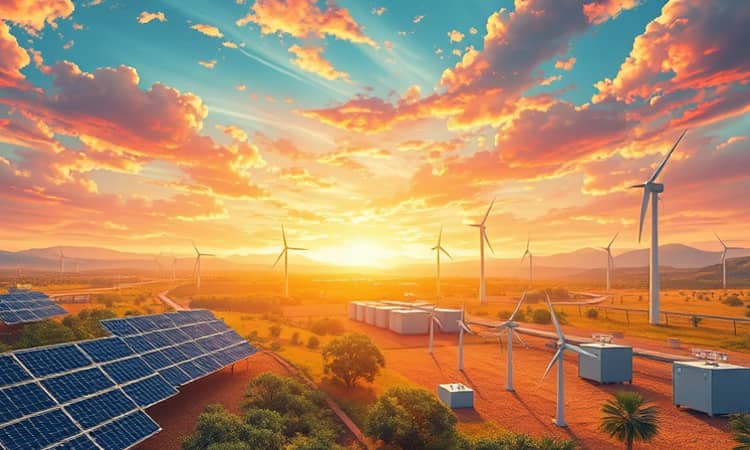
As the global economy confronts climate change, the surge in renewable energy is transforming investment landscapes. What was once a niche sector has become the cornerstone of future growth, offering resilience, cost savings, and unparalleled long-term returns for forward-thinking investors.
With capacity additions and financial performance upending traditional models, the energy revolution is not just an environmental imperative—it is a defining opportunity for those seeking to power their portfolios for decades to come.
Renewable Capacity and Deployment Trends
In 2025, the United States witnessed an unprecedented shift in its power mix. Despite headwinds like extreme weather events, trade tensions, and evolving tax credits, renewables accounted for 92% of new U.S. grid capacity. Solar energy led the charge, driving roughly three-quarters of all new generation.
Through September 2025, a staggering 30.2 GW of fresh capacity was added, 93% of which came from renewable sources. Co-located solar and battery storage projects comprised 83% of that growth, illustrating how energy storage is rapidly maturing alongside solar installations.
This deployment boom is mirrored globally. China alone installed 390 GW of solar (56% of new global capacity) and 86 GW of wind (60% share) in 2025, cementing its role as both an installer and supplier of renewable technologies.
- U.S. 2025 new capacity: 92% renewables despite policy shifts
- Solar’s share of U.S. growth: approximately 75% of new generation
- Global solar + wind share: projected ~20% of electricity by 2026
- Battery costs: halved in two years, one-third in three years
Superior Investment Performance of Renewables
Renewable energy investments have outperformed fossil fuels across portfolios, delivering striking 10-year returns while exhibiting lower volatility in advanced economies. According to recent data, global renewable portfolios returned 422.7% over ten years versus 59.0% for fossil fuel assets.
Advanced economies saw renewables generate a remarkable 727.0% return over the same period, compared with just 31.6% for fossils. Sharpe ratios—measuring risk-adjusted returns—tell a similar story: renewables stand at 1.06 in developed markets against 0.22 for traditional energy.
These figures underscore how clean energy has transitioned from a socially responsible choice to a financially strategic asset that can stabilize and grow diversified portfolios.
Driving Forces: Demand and Technological Innovations
Digital transformation and the rise of AI are supercharging energy demand. Hyperscale data centers in the U.S. now secure nearly 90% of their power through carbon-free contracts, with 78% coming from renewables. This shift has elevated co-located solar and storage solutions to a critical role in ensuring reliable, 24/7 clean power.
On the technology front, next-generation solar cells—such as perovskites—promise higher efficiencies, while advances in long-duration storage and AI-enabled grid management systems optimize dispatch and reduce curtailment. Hybrid power purchase agreements combining wind, solar, and battery storage are becoming commonplace, offering balanced risk and reward profiles for both producers and buyers.
Risks and Policy Considerations
Despite its impressive growth, the renewable sector faces supply chain headwinds and policy uncertainties. Changes to U.S. safe-harbor provisions and FEOC restrictions on Chinese and Russian components have increased solar costs by 36–55% and wind costs by 32–63%. As a result, projected annual additions could range from 30 GW to 66 GW between 2026 and 2030, a notable decline from pre-policy forecasts.
Tariffs, mineral sourcing probes, and uneven permitting processes further complicate project timelines and economics. Yet even with these challenges, more than 90% of new renewable projects remain cheaper than their fossil counterparts, underscoring the sector’s enduring cost advantage.
Strategies and Opportunities
To navigate this dynamic landscape, developers, utilities, and investors are adopting a range of proactive measures. In the near term, companies are leveraging safe-harbor investments and stockpiling critical components. Digital twin technology and AI analytics are enhancing project design and operational efficiency, reducing delays and cost overruns.
- Embrace hybrid PPAs blending wind, solar, and battery storage
- Invest in long-duration and distributed energy storage solutions
- Forge strategic partnerships to reshore critical supply chains
- Accelerate permitting through streamlined regulations
- Pursue M&A to consolidate expertise and expand scale
These strategies not only mitigate risk but also position stakeholders to capitalize on the sector’s accelerating growth and resilience.
Charting the Path Forward
As we look beyond 2026, renewables are poised to eclipse global demand growth. Consolidation and M&A will continue to reshape the competitive landscape, while grid modernization investments will ensure stability in an increasingly electrified world.
For investors seeking to power future returns, the message is clear: clean energy is the strategic choice. By aligning capital with innovation and policy support, stakeholders can drive decarbonization, foster energy security, and unlock strong, risk-adjusted returns for generations to come.