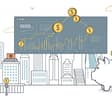
The financial world is at a pivotal moment, where technology is reshaping how credit is accessed and distributed.
For too long, traditional lending has left millions on the sidelines, but now, innovation is bridging the gap with explosive growth in digital solutions.
This isn't just a trend; it's a movement toward inclusive financial systems that empower everyone.
The Digital Lending Revolution
Digital lending platforms are experiencing unprecedented expansion, driven by a shift from old methods to automated models.
Key statistics highlight this rapid change.
- The global digital lending platform market was valued at $4.79 billion in 2018.
- It is projected to reach $19.88 billion by 2026, with a CAGR of 19.6%.
- Another estimate places it at $9.6 billion in 2023, growing to $12.22 billion in 2024.
- By 2032, it could hit $84.28 billion at a CAGR of 27.3%.
- The broader digital lending market is set to increase by USD 56.13 billion from 2025-2030.
- This growth is fueled by a CAGR of 28.3%, reducing costs by 30-50%.
Asia-Pacific leads with the fastest growth, expected at a 21.2% CAGR.
This scalability comes from automation in loan origination and risk management.
Rethinking Credit with Advanced Models
A major breakthrough in 2026 involves updated credit scoring models that incorporate alternative data.
These models, like VantageScore 4.0 and FICO 10T, are transforming access.
They enable scoring for previously unscorable borrowers, such as gig workers or young adults.
- VantageScore 4.0 is now accepted by Fannie Mae, allowing lenders to use it loan-by-loan.
- FICO 10T is phasing in, required eventually by government-sponsored enterprises.
- New models could provide credit scores to 33 million more Americans.
- They improve risk prediction by up to 25% better accuracy for certain groups.
- FICO pricing includes a $4.95 per score fee plus a $33 funded loan fee.
This advancement reduces processing cycles by over 40%, making lending faster and more efficient.
Harnessing Alternative Data for Inclusion
Traditional credit scores often fail those outside formal banking, but alternative data fills the gaps.
Sources like rent payments and utility bills offer a more comprehensive view.
This approach enables instant decisions and real-time tracking for borrowers.
- Top alternative data sources include rent payments and behavioral biometrics.
- Smartphone metadata, used with consent, helps assess risk without privacy intrusions.
- Benefits include approving first-time borrowers at scale and reducing fraud.
- It allows for faster, accurate risk assessment in emerging markets.
- Credolab, for example, uses privacy-preserving metadata to expand access safely.
By targeting qualified but underserved borrowers, lenders can increase approvals while minimizing losses.
Technology Driving the Change
In 2026, technology trends emphasize creating seamless, personalized experiences across all channels.
These innovations are making lending more accessible and efficient than ever before.
Platforms like MeridianLink One are leading the way with personalized journeys.
They help reduce mortgage origination costs and improve closing rates.
As rate cuts pressure traditional lenders, digital financial institutions are taking the lead.
Navigating Challenges and Seizing Opportunities
While the opportunities are vast, challenges like security and regulation must be addressed.
Consent-based metadata and advanced encryption are mitigating privacy concerns.
Drivers of this shift include reduced loan management time and government initiatives.
- Key drivers: Borrower demand for instant online loans and inclusivity for gig workers.
- Emerging markets outside formal banking are seeing rapid tech adoption.
- Challenges: Higher fees from credit bureaus and inconsistent regulations.
- For example, lending disclosure laws like SB 24-205 effective in February 2026 add complexity.
- Opportunities: Growth in risk and compliance at a 22.6% CAGR is a major area.
- Cloud and AI advancements are enabling healthier loan books via real-time signals.
Mortgage-specific innovations are expanding access, making homeownership more attainable.
Private credit is also emerging as a flexible alternative, though it raises risks like leverage.
Digital finance innovations, such as stablecoins, boost liquidity and efficiencies in local markets.
Conclusion: Embracing the Future
The edge of lending is no longer a distant concept; it's here, powered by data and technology.
By adopting these new models, we can build a more inclusive financial ecosystem.
Every step forward brings us closer to economic empowerment for all.
Let this be a call to action for innovators and consumers alike to embrace change.