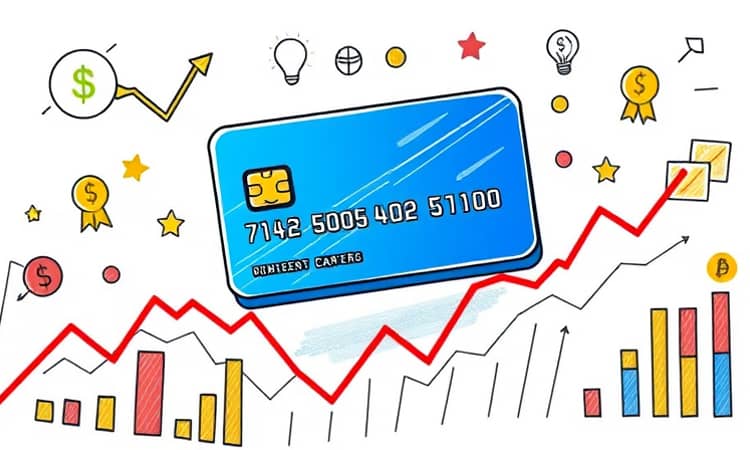
In an age where financial agility defines success, the credit card emerges as more than a payment method—it can be a dynamic component of a coherent planning strategy. Whether you are a freelancer covering uneven cash flows or a consumer seeking to optimize everyday expenses, understanding the multifaceted role of credit accounts is essential. Embracing disciplined habits and informed choices transforms what can be a source of risk into a powerful instrument of growth and flexibility.
By weaving together macroeconomic data and real consumer behaviors, this exploration reveals how individuals and economies alike benefit from credit card liquidity as a stabilizing force, while vigilance and strategy guard against common pitfalls.
Economic Role and Liquidity Provision
Credit cards contribute 22 percent to national GDP and 33 percent to Personal Consumption Expenditures, reflecting $5.83 trillion in spending during 2022. In periods of volatility, consumers and businesses turn to revolving lines of credit to bridge temporary gaps in income or inventory financing, effectively smoothing fluctuations in demand and supply.
On a personal level, cards extend short-term liquidity, enabling families to manage irregular bills or fund urgent repairs without depleting long-term savings. Yet, data show that only 39 percent of cardholders pay balances in full each month, and 11 percent rely on cards exclusively for emergencies. Cultivating a habit of prompt repayment, along with an emergency fund, ensures that this tool enhances rather than undermines financial stability while helping you maintain healthy cash reserves.
Rewards and Incentives for Planned Spending
Beyond liquidity, credit cards offer structured rewards that, when used thoughtfully, deliver substantial value. Sign-up bonuses range from 75,000 to 150,000 points or $200 to $750 in cash back after meeting spending thresholds. Earning rates vary by category, from flat 1.5–2 percent cash back to 8x points on travel and elevated multipliers in select categories.
- Bonus offers and spending targets: 75,000–150,000 points or $200–$750 cash back after qualifying expenses.
- Category multipliers: up to 8x on travel, 5 percent on grocery delivery and rideshare, 4x on dining and business purchases.
- Perks and incubators: annual travel credits, free hotel nights, lounge access, DashPass or Instacart credits.
- Fee and APR structure: annual fees from $0 to $350; variable APRs between 18.24 and 27.74 percent.
When you maximize rewards with intentional spending, aligning card categories with your budgeted needs, these incentives become an integrated aspect of a holistic financial plan, not just scattered bonuses.
Consumer Usage Patterns
Today, 208 million American consumers hold at least one credit card, and adoption among under-25s has climbed to 64 percent. Engaged users of personal financial management tools boast 45 percent lower card balances compared to those who do not track spending rigorously.
Usage priorities reflect a spectrum of goals: 40 percent of cardholders focus on investing, 33 percent on debt payoff, 33 percent on budgeting, and 26 percent on retirement saving. Only 17 percent of adults carry no credit card at all, underscoring the ubiquity of this financial instrument.
By setting deliberate payment schedules and leveraging mobile apps for tracking, consumers can bridge gaps during financial turbulence while improving their credit profiles and readiness for future goals.
Risks to Financial Planning
Despite these benefits, credit cards can derail long-term plans if mismanaged. Households lacking cash buffers often increase card balances during downturns, leading to higher utilization rates and subsequent reductions in 401(k) contributions.
Revolving debt not only accrues costly interest but also tempts many into 401(k) loans or withdrawals, eroding retirement readiness. Worse, rewards systems disproportionately favor high-FICO, high-income users, widening financial inequities. Notably, sub-prime holders lose an average of $5.40 per month on rewards, while super-prime users gain $16.00.
- Elevated utilization correlates with lower retirement balances and decreased financial security.
- Reward program benefits are skewed toward prime borrowers, creating systemic unfairness.
- Impulsive credit use contributes to lower self-reported financial satisfaction among households.
Understanding these pitfalls is as vital as seizing upside opportunities. Always avoid long-term high-interest debt by monitoring balances and payment schedules.
Strategic Best Practices for Long-Term Planning
To harness credit cards as a planning tool, adopt disciplined strategies that leverage strengths while mitigating weaknesses.
- Match cards to personal budgets through targeted rewards that reflect your recurring expenses.
- Maintain a zero-balance practice or pay in full monthly to sidestep interest charges.
- Use budgeting and PFM software to set alerts, categorize transactions, and forecast cash flow.
- Build and preserve an emergency fund to reduce overreliance on revolving credit.
- Review annual fees in context of net rewards — sometimes a fee pays for itself in perks.
Embracing these methods fosters resilience and positions credit as a supplement to, rather than substitute for, sound saving and investing habits.
Demographic and Market Trends Shaping the Future
Millennials and Gen Z are driving card activation, with young adults using mobile wallets and digital banks to manage rewards in real time. Since 2020, 14 percent have opened new accounts, capitalizing on sign-up bonuses and evolving fintech integrations.
Federal Reserve and CFPB reports continue to highlight 208 million active accounts nationwide, reinforcing credit cards’ centrality in consumer finance. As data matures through 2025 and beyond, trends will refine best practice recommendations, particularly around equity of access and digital innovations.
By staying informed and adapting to market shifts, cardholders can sustain an upward trajectory in both credit health and personal wealth accumulation, ensuring this versatile tool remains aligned with evolving life stages and goals.
Ultimately, the credit card’s transformative potential lies in disciplined use: a balance of match cards to personal budgets, prudent payment behavior, and an eye toward long-term objectives. When navigated thoughtfully, credit becomes not a burden but a catalyst for financial empowerment.