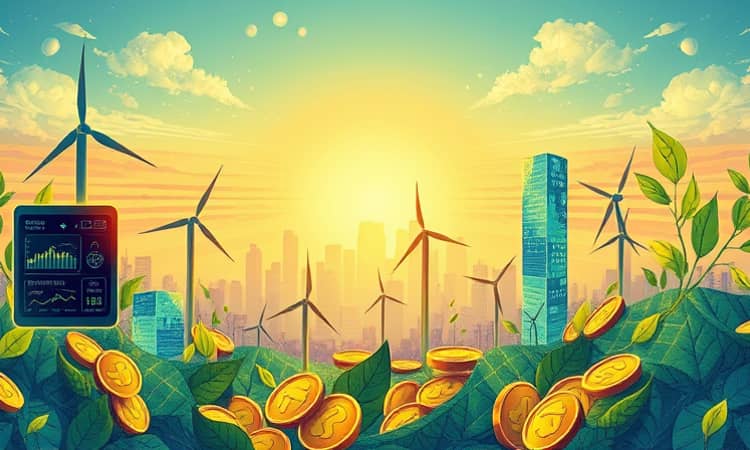
As the world confronts the urgent challenges of climate change and environmental degradation, the financial sector is undergoing a profound transformation. Sustainable FinTech, or green FinTech, is emerging as a powerful force that combines financial innovation with environmental stewardship. By leveraging cutting-edge technology and forward-thinking strategies, investors and institutions can drive positive change while achieving competitive returns.
The fusion of finance and sustainability is not merely a trend but a critical evolution in how capital markets operate. Around the globe, forward-leaning firms are embedding environmental, social, and governance principles into their core operations, redefining the future of banking, investing, and payments.
Understanding Sustainable FinTech
Sustainable FinTech refers to a suite of digital tools and platforms that offer technology-driven environmental impact solutions across the financial ecosystem. It spans multiple domains, including sustainable decision-making processes in banking, climate-focused cryptocurrencies, and robust reporting and analytics frameworks.
At its core lie three main pillars: sustainable banking, climate crypto, and impact investing. Sustainable banking involves lending and underwriting decisions designed to reduce carbon footprints and support green projects. Climate crypto leverages blockchain for blockchain-based carbon offsetting and tokenization, ensuring transparency and traceability. Impact investing strategies channel capital toward ventures that deliver both financial returns and societal benefits, driven by impact investing strategies for social goals.
Key Trends Shaping Green FinTech in 2026
In 2026, Sustainable FinTech is advancing rapidly, driven by regulatory mandates, technological breakthroughs, and investor demand. A diverse array of innovations is reshaping how financial services measure and mitigate environmental risks, allocate capital, and engage stakeholders.
- ESG Integration and Carbon Tracking: Platforms embed real-time environmental metrics into underwriting and portfolio management.
- Green Bonds and Climate Finance: Demand for green bonds surpasses hundreds of billions in Europe, fueling specialized tools.
- Regulatory-Driven Sustainability: Regulations like the European Green Deal and SFDR drive compliance-by-design solutions.
- AI and Tech for Sustainability: Cloud infrastructure, AI-driven risk modeling, and digital twins optimize climate resilience.
These trends illustrate the convergence of policy, technology, and market forces. Financial institutions are racing to integrate advanced capabilities that offer detailed impact reporting and automated compliance features, while startups experiment with novel climate-focused products.
- Blockchain and Tokenization: Fractional ownership, faster settlement, and enhanced transparency of green assets.
- Embedded Finance and B2B Focus: FinTech-as-a-Service embeds sustainable wallets and payment rails into nonfinancial platforms.
- Stablecoins for Efficient Payments: Pegged digital currencies reduce cross-border remittance costs and carbon intensity.
Market Growth and Investment Projections
The long-term outlook for Sustainable FinTech is exceptionally bright. Market analyses predict that by 2032, the global FinTech market will swell to over $1.1 trillion, with sustainability as a key growth driver. B2B FinTech revenues are projected to climb at a 32% compound annual growth rate, reaching approximately $285 billion.
Investors are increasingly allocating capital to climate FinTech ventures. European startups secured $1.4 billion in funding, outpacing U.S. peers, while Latin America emerged as a hotspot for digital payments and remittances driven by B2B solutions.
Drivers of Green FinTech Adoption
- Rising sustainability-conscious consumer and business demand for transparent carbon tracking and eco-friendly products.
- Regulatory Pressures enforcing standardized ESG reporting and climate-risk assessments.
- Advanced Technology Enablers such as blockchain, AI, and real-time analytics for verification.
- Increasing Investment Momentum propelling climate-focused funding rounds ahead of peers.
- Competitive Edge gained by platforms offering integrated ESG capabilities and risk modeling.
Overcoming Challenges and Building Success
Despite the promising outlook, Sustainable FinTech firms must address critical challenges. They need to deliver measurable climate mitigation outcomes to satisfy stakeholders, maintain rigorous data accuracy, and justify profitability. Infrastructure must be resilient and scalable to handle high transaction volumes and complex risk models.
Success hinges on decisive execution. FinTechs can partner with regulated service providers to streamline compliance and adopt cloud-native, API-first ecosystem architectures that support rapid innovation. Integrating in-house AI capabilities and focusing on security controls will establish a strong foundation for growth.
The Road Ahead: Sustainable FinTech in 2026 and Beyond
The future of Sustainable FinTech will be shaped by the integration of agentic AI systems that autonomously manage portfolios, sophisticated real-time settlement networks that reduce friction in green payments, and personalized financial products tailored to underserved communities seeking ethical investments.
Regional hubs will continue to emerge: Europe will solidify its leadership in green bond issuance and climate regulations, Latin America will expand its digital payments infrastructure, and Asia-Pacific markets will explore tokenized green assets and decentralized climate financing models.
By harnessing the synergy of technological innovation, regulatory momentum, and conscious capital, Sustainable FinTech offers investors and institutions a pathway to generate lasting environmental benefits while capturing meaningful financial returns. The journey toward a greener tomorrow has already begun—now is the moment to lead and invest with purpose.