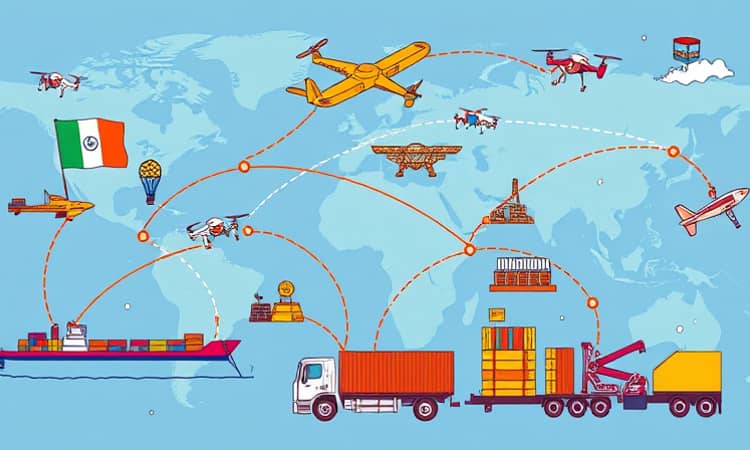
The global logistics landscape is undergoing a profound transformation. Companies that once prioritized cost-cutting and just-in-time inventory are now embracing resilience, regional diversification, and advanced technology to secure their operations against geopolitical risks and market volatility.
Investors stand at a pivotal moment: those who understand the emerging dynamics of deglobalization, government capital interventions, and AI-driven operations will reap significant rewards. This article unpacks key structural shifts, investment consequences, operational overhauls, and strategic frameworks to guide stakeholders in navigating the new supply chain paradigm.
Core Structural Shifts in Global Logistics
For three decades, globalization and single-source suppliers defined supply chains. Today, companies pivot toward resilience-first supply chain models that balance cost with continuity. By 2028, regional hubs in Mexico, India, Vietnam, and Mediterranean countries will offer reliable alternatives for category-specific manufacturing.
Multi-regional networks become standard by 2030, with firms sourcing from three to five regions for key products. AI systems will determine optimal sourcing on a quarterly basis, weighing costs, risks, and proximity to end markets. According to a 2025 survey, 56% of executives plan nearshoring or combined reshoring strategies over the next five years.
- Deglobalization driving regional hubs in emerging markets
- Strategic trade policies shaping long-term sourcing mandates
- AI-enabled decision engines optimizing multi-country networks
Trade policy is no longer a temporary hurdle but a structural driver. Proposed tariffs on Chinese and South African goods, coupled with technology transfer restrictions, signal bipartisan U.S. commitment to reducing critical dependencies. The upcoming review of the USMCA agreement will further redefine North American supply dynamics.
Investment Implications and Risk Reweighting
As buyers seek dependable suppliers, projects in Malawi, Australia, Mexico, and Mozambique gain premium strategic value. Investors must recalibrate valuation metrics to include operational continuity, regulatory stability, and ESG compliance alongside traditional cost measures.
Risk-adjusted IRR models now embed supply chain resilience factors. Stable infrastructure access, predictable labor markets, and clear regulatory paths justify higher valuations despite increased upfront costs. Government equity investments are reshaping market incentives, anchoring domestic and allied critical mineral and semiconductor supply chains.
- State capital deployments in Intel and Lithium Americas alter downside dynamics
- US equity stakes in Trilogy Metals strengthen allied mineral sourcing
- Public-private partnerships crowd in private investors, extending time horizons
Investors should view government balance sheets as part of the capital stack. This shift reduces downside risk and elevates the long-term case for companies within AI, battery, and advanced manufacturing ecosystems.
Operational Model Transformations
The traditional plan-and-execute model gives way to sense-and-respond systems. Retailers and suppliers replace quarterly reviews with continuous monitoring of sell-through performance, fill rates, and inventory levels. High-volatility categories see daily or weekly performance check-ins.
Omnichannel fulfillment demands precision: every supplier becomes a node in a networked ecosystem. Firms that cannot maintain accuracy across multiple channels risk removal from preferred networks. Unified fulfillment operations embrace the principle that “an order is an order,” whether it originates online, in store, or through a mobile app.
Automated order ingestion and real-time inventory visibility are no longer optional. Suppliers relying on manual PDF processing will lose partnerships as retailers consolidate around technology-enabled partners capable of scaling with near-instant delivery expectations.
Technology and AI Implementation
While the promise of artificial intelligence remains high, 2026 marks an inflection point. Some companies have yet to see expected large-scale gains, prompting a recalibration of timelines. However, AI-powered continuous monitoring already reduces forecast errors by up to 40%, and top-tier supply chains deploy autonomous algorithms that reroute orders and adjust production without human intervention.
Digital integration creates interconnected ecosystems. Modern platforms provide end-to-end visibility through real-time dashboards and mobile access, empowering managers to make informed decisions from anywhere. Autonomous planning, self-optimizing inventory, and automated supplier negotiations are emerging capabilities that will define the next generation of supply operations.
Key Challenges and Risk Factors
Despite advancements, companies face rising cost pressures. Economic and trade uncertainties force renewed emphasis on cost optimization, potentially driving plant consolidations and network rationalizations. Workforce dynamics also shift dramatically: aging leadership, labor shortages, and stringent immigration policies create a mismatch between skills and demand.
Supply chains must navigate a fragmented trade environment shaped by bilateral agreements and trade blocks. This complexity challenges multinational coordination and heightens the need for flexible, adaptive operational structures.
Sustainability and ESG as Competitive Advantage
Traceable, low-carbon supply chains command premium valuations. Industrial buyers reward transparency in sourcing practices and energy-efficient production methods. Companies that showcase sustainability credentials attract premium contract terms, offtake commitments, and top-tier talent.
Environmental responsibility is now a competitive necessity rather than an ethical luxury. ESG-aligned operations not only mitigate regulatory risks but also unlock new commercial opportunities, from green financing to preferential pricing in corporate procurement.
Strategic Investment Framework and Future Outlook
Investors seeking exposure to supply chain resilience should consider projects with:
- Stable non-China jurisdictions offering structural value uplift
- High NPV, low-cost operations providing margin protection
- Transparent execution milestones reducing uncertainty discounts
Byproduct optionality further hedges against commodity-specific fluctuations, while major corporate partnerships validate technical potential and provide downstream market access. Regional hubs will mature by 2028, and multi-regional sourcing will be the norm by 2030, underpinning a supply chain era defined by resilience, diversification, and technological integration.
In this reshaped landscape, investors who align their capital with these long-term structural trends will not only capture attractive returns but also contribute to building the robust, agile supply chains that economies worldwide increasingly demand.