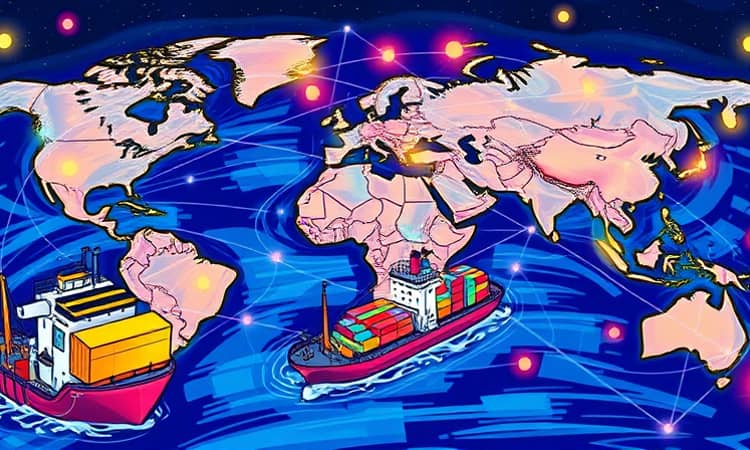
Trade finance has long been the backbone of international commerce, bridging gaps in capital and ensuring that cross-border shipments are matched with secure payment mechanisms. Yet traditional systems suffer from slow, paper-based processes that involve countless intermediaries, opening the door to delays, fraud, and unnecessary costs. As global trade volumes continue to rise, the need for more agile, transparent solutions becomes paramount. Enter smart contracts on blockchain networks, a transformative approach designed to automate workflows, minimize risk, and accelerate transactions with unprecedented levels of security and traceability.
In recent years, digital transformation across industries has accelerated, and trade finance stands at the forefront of this revolution. Financial institutions, logistics providers, and corporates are increasingly collaborating to pilot blockchain proofs of concept, signaling a shift from siloed experiments to enterprise-grade deployments. The convergence of cloud computing, IoT, and distributed ledgers promises an environment where every transaction is recorded and verified instantaneously, paving the way for unparalleled trust within supply chains.
Introduction to Trade Finance Challenges
For decades, businesses engaged in export and import have relied on letters of credit, bills of lading, and bank guarantees to mitigate payment risk and secure working capital. These instruments, while effective, are often bogged down by manual verification, document forgery concerns, and dependency on multiple banks and brokers. The process from order placement to final payment can stretch over weeks, introducing exposure to currency fluctuations and supply chain disruptions.
Moreover, the traditional model places a heavy burden on suppliers to produce physical documents and on financial institutions to manually verify each signature and stamp. Paper-heavy workflows risk delays and fraud, while high intermediary fees eat into profit margins. In many emerging markets, small and medium enterprises struggle to access financing on reasonable terms, curtailing growth opportunities and stifling economic development.
Blockchain Fundamentals in Trade Finance
Blockchain, or distributed ledger technology, offers a decentralized system where every transaction is recorded across multiple nodes and secured through cryptographic techniques. Once data is added to the ledger, it becomes immutable, preventing unauthorized alterations and reducing disputes over document authenticity. The transparency of this network allows all parties—buyers, sellers, banks, and logistics providers—to follow the status of shipments and payments in real time.
By harnessing distributed ledger technology provides transparency, blockchain platforms enable stakeholders to access the same shared information without trusting any single intermediary. This shift reduces reconciliation errors, accelerates approvals, and creates an auditable trail of every movement, from shipment loading to customs clearance.
How Smart Contracts Work
Smart contracts are programmable agreements encoded onto a blockchain that automatically execute predefined actions when specified conditions are met. Unlike traditional contracts that require manual intervention, these digital protocols are self-executing contracts on blockchain and eliminate the need for third-party enforcement. For example, a contract can be written to release payment upon confirmation of cargo arrival, verified by IoT sensors or trusted oracles.
Key components of smart contract systems include oracles that feed external data—such as price indices, shipment statuses, or weather conditions—into the blockchain, and secure multi-signature wallet escrow mechanism that holds funds until all parties confirm compliance with agreed terms. This automated framework not only streamlines transaction flows but also enhances security by reducing human error and limiting opportunity for tampering.
Automation in Trade Finance Processes
The integration of smart contracts in trade finance unlocks a suite of automated solutions:
- Invoice verification and automated payment release upon compliance.
- Digital issuance and verification of letters of credit and bills of lading.
- Real-time risk assessment and compliance checks embedded in code.
- Post-shipment financing commitments triggered by shipment milestones.
These capabilities collectively drive a real-time transaction tracking and traceability environment that accelerates funding cycles, optimizes cash flow, and fosters stronger relationships among trading partners.
Pre- and Post-Shipment Financing Structures
Smart contracts can be tailored to support both pre- and post-shipment financing, providing flexibility for diverse trade scenarios:
- Pre-shipment financing: Purchase order financing and buyer direct financing to fund production and procurement before goods leave the factory.
- Post-shipment financing: Factoring and invoice trading that allow suppliers to monetize receivables as soon as goods are shipped and documents are validated.
By embedding financing terms directly into smart contracts, suppliers gain quicker access to capital, while buyers and financiers benefit from automated risk controls and transparent collateral management.
Benefits and Impacts
Smart contracts in trade finance deliver tangible improvements across multiple dimensions:
Enterprises leveraging these technologies report faster cycle times, lower operational overhead, and enhanced compliance with regulatory requirements. In one study, blockchain-enabled letters of credit reduced processing times by up to 75%, demonstrating the power of digitized trade documents like LCs and BLs to transform workflows.
Risks, Limitations, and Academic Insights
While the potential benefits are clear, academic research urges caution. Game-theoretic models reveal that smart contract value depends on underlying financing structures. In scenarios where pre-shipment and post-shipment instruments align optimally, efficiency gains are maximized. However, alternative setups, such as buyer direct financing, can introduce adverse incentives that reduce overall profitability.
Researchers also highlight the commitment trap in invoice trading where automated systems may lock parties into unfavorable positions under market volatility. Additionally, the reliability of oracles and the quality of code remain critical factors. A single programming error can compromise contract integrity, underlining the need for thorough auditing and robust governance frameworks.
Real-World Applications and Future Prospects
Several platforms, including CargoX and TradeLens, have emerged as pioneers in blockchain-based trade finance, handling thousands of documents each month with no manual intervention. These solutions underscore the promise of a global ecosystem where transactions settle in hours instead of weeks, and suppliers in emerging markets gain fair access to capital.
Looking ahead, integration with Web3 technologies and decentralized finance could further democratize trade financing, introducing novel credit pools and peer-to-peer lending models. Regulatory clarity and standardization will be essential to drive widespread adoption, but the trajectory is clear: smart contracts are set to redefine how goods and capital move across borders.
By embracing these innovations, businesses can unlock operational and financial risks and pave the way for a more inclusive, resilient global trade infrastructure.
To realize these benefits, organizations should explore pilot programs, engage with regulatory bodies, and invest in talent capable of navigating both trade finance and blockchain domains. As the technology matures, early adopters will gain a competitive edge, unlocking new markets and reshaping the future of international trade.