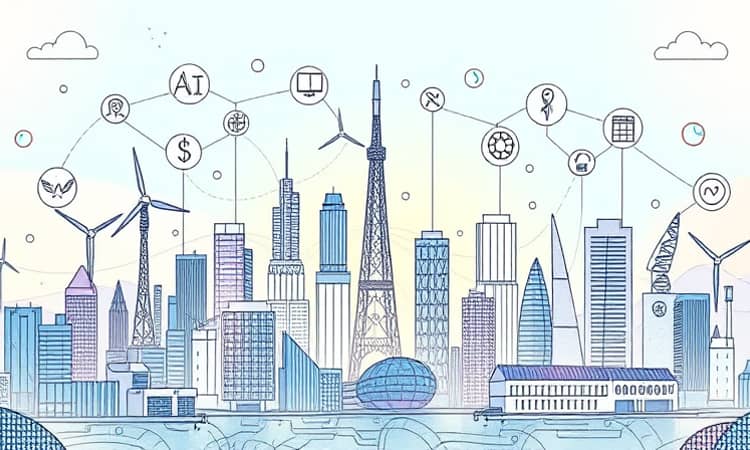
As we approach 2026, the global economy stands at a pivotal crossroads, driven by rapid technological advancements and shifting societal priorities.
This transformative era presents both challenges and immense opportunities for businesses, investors, and entrepreneurs seeking to thrive in a dynamic landscape.
Projections indicate that tech-driven sectors will lead unprecedented growth, while traditional industries adapt to new realities.
The Economic Landscape for 2026
Understanding the broader context is essential for identifying where growth will flourish.
Global economic trends are increasingly influenced by factors like digital transformation and sustainability efforts.
Key drivers include AI adoption across industries, policy shifts towards clean energy, and evolving consumer behaviors post-pandemic.
These elements set the stage for sectors that promise not just incremental gains, but explosive expansion.
By focusing on these areas, stakeholders can align their strategies with the future's most promising trajectories.
Traditional Sectors: Modest Gains and Declines
While innovation sectors soar, traditional industries show a mixed performance with subdued growth rates.
This contrast highlights the importance of diversification and adaptation in today's economy.
The table below outlines revenue growth projections for key US sectors in 2026, providing a clear snapshot of where steady, if modest, opportunities lie.
This data reveals subdued growth in traditional sectors, with agriculture surprisingly leading amid broader economic stabilization.
It serves as a reminder that not all growth is fast-paced, but stability can offer reliable foundations.
High-Growth Innovation Sectors
Technology and innovation sectors are poised to dominate economic forecasts, driven by their transformative potential.
These fields leverage AI, sustainability, and digital shifts to create new markets and redefine existing ones.
- AI & Automation: This sector spans healthcare, finance, and logistics, enabling predictive analytics and task automation. Projections show semiconductor earnings growing at 26% annually, highlighting its explosive growth trajectory.
- Renewable Energy/CleanTech: With declining costs and strong policy support, clean energy solutions are booming. The market is expected to reach $1.92 trillion by 2030, driven by solar, wind, and energy storage innovations.
- FinTech & Digital Banking: Digital payments and AI lending are revolutionizing finance. The market is projected to hit $324 billion by 2026, offering mobile-first solutions that enhance transparency and accessibility.
- Healthcare, Biotech, and Digital Health: Personalized medicine and AI diagnostics are key drivers. Global biotech could reach $3.88 trillion by 2030, with a CAGR of 13.96%, fueled by aging populations and chronic disease management.
- E-Commerce & Logistics: AI recommendations and last-mile automation are transforming retail. Global sales may exceed $6.9 trillion by 2026, enabling hyper-personalization and global reach for businesses.
These sectors benefit from post-pandemic behavioral shifts and continuous digital transformation, making them central to future economic vitality.
Leading Companies and Market Examples
To contextualize this growth, consider the trailblazing companies that define these sectors.
Their success stories offer inspiration and practical insights for emulation.
- In AI and tech, leaders like Apple are pioneering AR and AI devices, setting trends in consumer electronics.
- Renewables see innovators in solar and wind technologies, pushing the boundaries of clean energy solutions.
- FinTech platforms disrupt traditional banking with transparent, efficient digital services.
- Healthcare leaders include Moderna and Pfizer in mRNA therapies, and Illumina in genomics, advancing personalized medicine.
- E-commerce giants leverage automation for efficiency, scaling operations globally.
- Space exploration is led by SpaceX and Blue Origin, focusing on reusable rockets and satellite networks.
- Digital experiences are shaped by Meta, Apple, and Netflix, creating immersive VR/AR and AI-driven content.
These companies exemplify the strategic focus on innovation required to capitalize on growth opportunities.
Global Context and Investment Trends
The global economy adds layers to sector growth, influencing where investments flow and how markets evolve.
India is emerging as the fastest-growing large economy, while China focuses on AI and infrastructure development.
Investment trends show a shift towards AI equipment and data centers, with Asia-Pacific as a key beneficiary.
- Tailwinds include tech adoption like 5G and IoT, policy support for energy security, and demographic changes such as aging populations.
- Challenges involve regulation in healthcare and AI, trade tensions, and overcapacity in legacy industries like manufacturing.
Understanding these factors helps stakeholders make informed, resilient decisions in a volatile world.
Practical Strategies for Engagement
For businesses and investors, actionable insights are crucial to navigate this evolving landscape effectively.
By adopting strategic approaches, you can turn trends into tangible success.
- Prioritize sectors with steady multi-year growth, such as tech and green energy, to build sustainable portfolios.
- Explore niche opportunities in FinTech, EdTech, or biotech for small and medium businesses, leveraging digital transformation for competitive edges.
- Enhance supply chain efficiency in EVs and semiconductors through automation and cloud technologies.
- Leverage AI for operational improvements, boosting productivity and reducing costs across functions.
- Avoid theme-chasing; focus on long-term trends aligned with global sustainability goals and consumer demands.
These strategies empower you to navigate the evolving economic landscape with confidence and foresight.
Conclusion: Navigating the Future Economy
The economic growth areas for 2026 offer a clear roadmap for innovation and prosperity in the years ahead.
By focusing on high-growth tech sectors and adapting to global trends, stakeholders can not only survive but thrive.
Embrace the opportunities presented by AI, renewable energy, and digital health to drive meaningful change.
Stay informed, agile, and ready to pivot as the economy continues to evolve, ensuring your place in a brighter, more sustainable future.