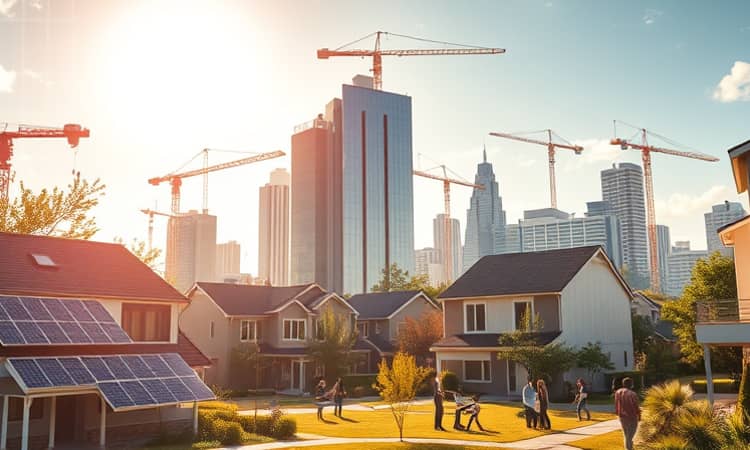
Over the past decade, residential and commercial real estate have weathered seismic shifts—from a global pandemic to runaway inflation and sudden rate hikes, to a wave of technological innovation. Instead of simply reverting to prior patterns, the industry is undergoing a fundamental transformation. Today’s landscape is characterized by a gradual thawing of activity and the emergence of a tech-augmented, demographics-driven new normal with higher capital costs and new winners.
As stakeholders adapt, understanding the forces at play is crucial. This article explores key trends, data-driven forecasts, and practical strategies to navigate the evolving terrain, offering insights for homeowners, developers, and investors eager to thrive in this rebooted environment.
From Frozen to Thawing: A Market Reset
ULI/PwC’s Emerging Trends in Real Estate 2026 frames the industry reboot around five pivotal trends that signal a departure from old norms. Fortune captures this shift as a market moving from “frozen to thawing”—prices have stabilized, and pent-up activity is unlocking. Rather than expecting a rapid rebound, participants must embrace a slower-growth era defined by structural change, not a simple return to the past.
- Half Full or Half Empty? Capital Markets in the Fog
- Niche to Essential Real Estate
- Back to Basics with New Tools: Asset Selection and Operations
- Demographics Will Define Demand
- AI Moves into Real Estate
In this context, capital is more selective, technology is woven into operations, and demographic shifts—like an aging population—are reshaping demand. Investors and operators must recalibrate decisions to align with lower-volatility demand patterns and a more discerning capital market.
A Great Housing Reset: Affordability and Demand
After years of double-digit home-price inflation, Redfin forecasts that in 2026, income growth finally runs ahead of home prices. Wage increases near 4% are expected to outpace modest home-price growth near 1%, easing the affordability crunch. Mortgage rates should ease into the low-6% range, down from 6.6% in 2025, unlocking buyer interest and marginally improving buying power.
This price normalization trend should release trapped demand, but homeownership will remain elusive for many younger cohorts. Gen Z homeownership rates hovered just above 25% in 2024, and Millennials remain near 55%, with little near-term improvement expected. As a result, many households are exploring alternative living arrangements, from roommate situations to multigenerational setups.
- Zero-energy-ready homes with advanced insulation
- Whole-home battery systems and EV charging stations
- Walk-in pantries for bulk shopping and meal prep
- Garage-based cold zones to store extra produce
- Refrigerated drawers and smart organization systems
Supply, Construction, and the Built-Form Shift
On the supply side, single-family housing starts in August 2025 trailed last year’s pace by 5%, and Zillow projects another 2% decline in 2026, pulling starts below 947,000 units. This cautious approach by builders highlights the ongoing structural underbuilding that has perpetuated shortages despite moderate demand.
In tight markets, builders are deploying incentives—particularly mortgage-rate buydowns—to move existing inventory. Meanwhile, design priorities are shifting. Energy efficiency, inflation resilience, and multigenerational functionality are moving from specialty features to baseline expectations. Forward-thinking developers who integrate these elements are best positioned to attract buyers and tenants.
Commercial Real Estate Reinvented
Commercial property markets operate in a “fog” of uncertainty, with higher-for-longer rates and refinancing risks clouding investment decisions. Despite this, Deloitte and Cushman & Wakefield report that CRE showed “real resilience” through mid-2025 as investors recalibrated portfolios toward income stability and quality assets. The focus is now on repricing and filtering: undervalued or overleveraged assets may struggle, while well-capitalized owners and higher-for-longer interest rates strategies will define success.
ULI’s “Niche to Essential” theme spotlights property types poised for sustained demand growth as demographics and technology converge. Recognizing these shifts enables investors to reposition capital toward resilient sectors.
- Senior housing for an aging Baby Boomer population
- Life-sciences and biotech laboratory facilities
- Data centers supporting AI and cloud computing
- Industrial logistics and last-mile distribution
- Affordable and workforce housing
Targeting these segments requires deep market analysis, alignment with local regulatory environments, and partnerships with specialized operators. Those who move decisively can capture outsized returns in a world of repricing and repositioning.
Charting a Path Forward: Strategies for Success
The real estate reboot demands adaptability. For homeowners and renters, staying informed about financing options and emerging community designs—like multigenerational living pods—can unlock new pathways to affordability. Developers should prioritize energy efficiency and flexible layouts to meet evolving preferences.
Investors must refine underwriting models to account for higher capital costs, demographic tailwinds, and technology-driven operating efficiencies. Building portfolios that balance core holdings—like stabilized multifamily—with strategic stakes in growth sectors creates long-term resilience against market swings.
Ultimately, embracing the new normal means recognizing that the next decade will be less about chasing rapid appreciation and more about pioneering sustainable, people-focused, and tech-enhanced real estate solutions. By aligning capital, design, and operations with these trends, stakeholders can thrive in the rebooted market and shape communities that stand the test of time.