Imagine a world where your money moves not just by your hand, but by the very logic of life's events.
It’s a shift from reactive spending to proactive, intelligent financial flows that embed logic directly into accounts for seamless automation.
This isn't science fiction; it's the dawn of programmable payments, a revolution that transforms how we transact, save, and live.
In this article, we'll dive deep into what programmable payments are, how they work, and why they matter for you.
What Exactly Are Programmable Payments?
At their core, programmable payments are automated transactions triggered by predefined conditions or events.
They go far beyond basic standing orders or direct debits, enabling customization that adapts to real-world needs.
This means money can flow when a service is delivered, an account hits a threshold, or a milestone is reached.
Think of it as giving your finances a brain that makes decisions based on rules you set.
The Historical Context: Evolution of Financial Transactions
Payments have evolved from cash and cheques to digital wallets and buy-now-pay-later schemes.
Yet, traditional methods often remain inflexible, laden with manual processes and fees.
Programmability shifts this paradigm, moving intelligence to the account level for greater control.
- Early forms included subscriptions and direct debits like Bacs or SEPA.
- Now, technologies like APIs and smart contracts enable dynamic execution.
- This evolution reduces reliance on intermediaries and boosts efficiency.
Core Technologies Driving the Change
Several key technologies power programmable payments, making them possible and practical.
From blockchain to user-friendly scripts, these tools enable cross-system communication and automation.
- Smart Contracts: Self-executing agreements on blockchain that handle logic like escrow or splits.
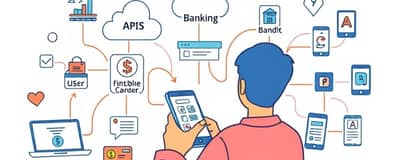
- APIs: Facilitate automation across different systems, such as invoicing and payment marking.
- Payscript: User-defined scripts for dynamic limits or payday-aligned delays.
- Payment Rails: Including DLT for instant settlement or bridges to traditional systems.
- Blockchain Features: Offer real-time settlement and global access via mobile wallets.
Together, these innovations create a robust foundation for intelligent money flows.
A Comparative Look: Traditional vs. Programmable Payments
This table highlights how programmable payments offer greater adaptability and control over financial transactions.
Unlocking the Benefits: Practical Advantages for Everyone
Programmable payments bring a host of benefits that can simplify and secure your financial life.
They reduce manual tasks, minimize errors, and cut costs by automating complex processes.
- Automation & Efficiency: Streamlines payroll, vendor payments, and supply chains.
- Financial Control: Allows dynamic spending limits and warnings for better management.
- Transparency & Security: Provides immutable ledger trails that reduce fraud risks.
- Debt-Free Options: Enables event-based payments instead of credit-based models.
- Speed & Global Access: Facilitates instant, permissionless transactions within regulations.
These advantages make everyday finance more intuitive and less stressful.
Inspiring Use Cases: Real-World Applications That Transform Finance
From consumers to businesses, programmable payments are reshaping how money moves in diverse scenarios.
They empower individuals and organizations to align payments with real-life events for greater impact.
- Consumers: Content creators paid on views, gig workers on task completion.
- Businesses: Insurance payouts post-verification, escrow for asset transactions.
- IoT/EoT: Autonomous cars paying tolls, smart fridges ordering groceries.
- DeFi & Government: Loan repayments, aid with embedded spending rules.
- Cross-Border: Instant foreign exchange with embedded KYC and AML checks.
Examples like milestone payments for holidays show how this technology fosters trust and customization.
Overcoming Challenges: The Path to Widespread Adoption
Despite their promise, programmable payments face hurdles that must be addressed for broad use.
Complexity and regulatory gaps can slow adoption, but solutions are emerging.
- Complexity & Costs: Requires blockchain expertise and upfront investment.
- Regulation: Evolving frameworks, especially for cross-border transactions.
- Adoption Barriers: Needs low-code tools and bridges to legacy systems.
By focusing on simplicity and compliance, we can pave the way for seamless integration.
The Future Outlook: What Lies Ahead for Programmable Finance
The future of programmable payments is bright, with trends pointing toward more versatile and customer-centric systems.
Programmability at the account level will remove fragmentation and support multi-currency agility.
It parallels the rise of low-code platforms, making financial intelligence accessible to all.
Expansions into IoT autonomy and real-time finance will reshape fintech beyond payments.
Driven by blockchain and CBDCs, this evolution promises a world where money flows with logic and purpose.
Embracing this change means stepping into a future where financial control is in your hands, guided by smart, automated rules.