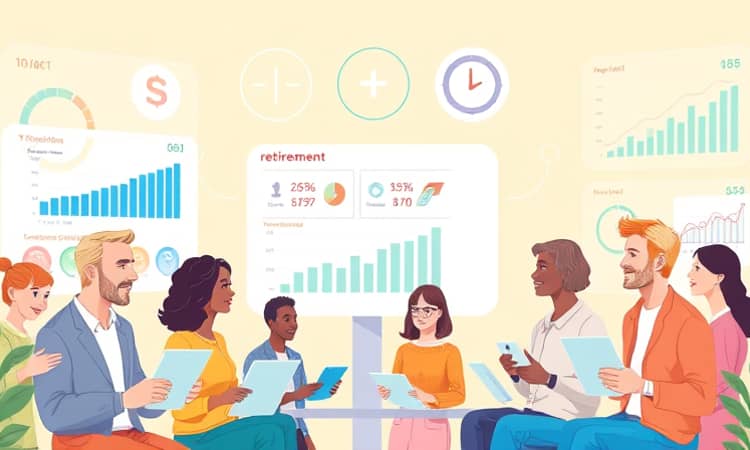
Imagine a retirement plan that adapts to your life, understands your dreams, and guides you every step of the way.
This vision is now within reach, thanks to the rapid integration of artificial intelligence into financial planning.
AI is not just a technological trend; it is transforming how we save and invest for retirement, making personalized advice more accessible than ever before.
As we navigate this new era, understanding how to leverage AI can help you build a secure and fulfilling retirement.
This article delves into the AI-powered future of retirement planning, offering inspiration and practical steps to harness its potential.
The AI Revolution in Retirement Planning
Artificial intelligence is shifting from a niche tool to a mainstream standard in the retirement industry.
It enhances everything from participant communications to investment strategies, providing scalable solutions.
This transformation is driven by AI's ability to deliver hyper-personalized insights that traditional methods often miss.
Participants are increasingly embracing AI, with many trusting it for critical financial decisions.
The move towards AI personalization is redefining engagement and empowerment in retirement savings.
Key Statistics and Market Impact
The data reveals compelling evidence of AI's growing role in retirement planning.
Here are some key figures that highlight its impact and adoption rates.
- 55% of DC plan participants trust AI-powered tools more than family members for managing investments.
- 68% believe AI can match the performance of financial professionals in asset management.
- AI tools could unlock up to $405 billion in 401(k) assets by 2034 through increased participation and contributions.
- 53% of participants already use AI for personal financial planning or investment decisions.
- 43% of Americans have utilized AI for aspects of their personal financial planning, according to surveys.
These statistics underscore the significant financial and behavioral shifts underway.
The projected growth includes $265 billion from new participation and $140 billion from contribution increases.
Total 401(k) assets are expected to reach $9.9 trillion by 2034, assuming steady investment growth.
This expansion is fueled by the democratization of personalization, making advanced tools available to broader audiences.
To visualize adoption differences, consider the following table based on generational data.
This table highlights the varying comfort levels across demographics, emphasizing the need for inclusive approaches in AI deployment.
How AI is Enhancing Retirement Tools
AI applications in retirement planning are diverse and increasingly practical for everyday use.
They range from income projections to behavioral support, all designed to improve financial outcomes.
- Personalized retirement income projections help users visualize future cash flows based on their savings and goals.
- Retirement paycheck modeling integrates multiple income sources like Social Security and pensions for a clearer picture.
- Tax-aware withdrawal planning optimizes savings to minimize tax burdens during retirement.
- Behavioral nudges encourage contribution increases after salary raises, promoting consistent savings habits.
- Chatbot-based financial wellness support provides instant, accessible advice for common questions and concerns.
These tools are actively being implemented, enhancing user engagement and decision-making.
AI also serves as a cost-effective coach, offering scenario-based advice on topics like refinancing or reinvestment opportunities.
In the medium to long term, AI may evolve into hyper-personalized coaches that provide real-time, tailored interactions.
This progression makes high-quality planning more accessible, especially for those with lower account balances.
Participant Preferences and Building Trust
Understanding user preferences is crucial for the successful adoption of AI in retirement planning.
Participants value involvement and transparency when it comes to their financial futures.
- 72% prefer some level of involvement in investment decisions, favoring a "do-it-with-me" approach over full automation.
- 59% say human oversight increases their trust in AI tools, highlighting the importance of a blended model.
- 91% value access to human advisers alongside AI, ensuring support for complex or emotional decisions.
- Data privacy is a top concern for 60% of participants, with Boomers and women expressing higher levels of worry.
These insights show that while AI is trusted, it must be complemented by human expertise to foster confidence.
Clarity on how AI makes decisions is essential for building participant trust and encouraging wider adoption.
Additionally, 62% of participants emphasize the importance of maintaining personal control over their investments while using AI.
This balance between automation and autonomy is key to creating effective retirement solutions.
Challenges and Concerns in AI Implementation
Despite its promise, AI in retirement planning faces several hurdles that need addressing.
These challenges range from technical issues to ethical considerations, requiring careful management.
- Legacy technology infrastructure and fragmented data architectures limit the seamless implementation of AI tools.
- Regulatory uncertainty, such as whether AI tools are considered fiduciaries, poses risks for providers and users.
- Data privacy concerns are prevalent, with many participants hesitant to share sensitive financial information.
- Generational and demographic divides in comfort levels can lead to unequal access and adoption rates.
- There is a risk of AI advice inaccuracy, which could undermine trust if not properly overseen.
Overcoming these obstacles requires collaboration and innovation within the industry.
Providers must develop robust oversight infrastructure to ensure AI tools are reliable, transparent, and ethical.
This includes balancing data access for personalization with stringent security measures to protect user information.
By addressing these concerns proactively, the retirement planning ecosystem can harness AI's full potential safely.
The Future: Blending Technology and Human Expertise
The most successful retirement firms will create experiences that seamlessly integrate AI with human insight.
This blended approach leverages AI for scalability while maintaining the empathy and trust that human advisors provide.
AI can handle monotonous tasks, such as data analysis, freeing advisors to focus on complex client needs and emotional support.
This synergy enables scalable personalization that adapts to individual circumstances without sacrificing quality.
Over time, AI may gradually supplement or replace certain advice functions, making high-quality planning more affordable and widespread.
The future vision includes AI as a partner in reducing disparities in retirement readiness across diverse employee populations.
By democratizing access to advanced tools, AI can help ensure that everyone has the opportunity to build a secure retirement.
Practical Steps for Embracing AI in Your Retirement Plan
To make the most of AI-powered retirement planning, start by taking proactive and informed steps.
These actions can help you navigate the new landscape confidently and effectively.
- Educate yourself on the AI tools available through your employer's retirement plan or financial institutions.
- Use AI for initial projections and scenario analysis to explore different retirement timelines and savings strategies.
- Combine AI insights with human advice for complex decisions, such as Social Security elections or tax optimization.
- Stay informed about data privacy policies and ensure your personal information is protected when using AI tools.
- Regularly review and adjust your retirement plan based on AI-driven recommendations and life changes.
- Engage with AI-powered communications and nudges to stay motivated and on track with your savings goals.
By actively integrating AI into your planning, you can take control of your financial destiny and build a resilient retirement strategy.
Remember, AI is a tool to enhance your financial wisdom, not replace it—embrace it as part of a holistic approach to securing your future.