In an era marked by increasing climate volatility and economic uncertainty, the traditional insurance model often feels sluggish and inadequate.
Parametric insurance emerges as a revolutionary solution, transforming how we manage risk with speed, transparency, and efficiency.
This innovative approach is not just about protection; it's about empowering individuals and businesses to recover swiftly from adversity.
What is Parametric Insurance?
Parametric insurance is a modern risk management tool that provides financial payouts based on specific, measurable events.
Unlike traditional insurance, which requires loss assessment, it uses predefined triggers and payouts to deliver aid automatically.
This method ensures that help arrives precisely when it's needed, without bureaucratic delays.
The core features of parametric insurance make it a standout choice for today's fast-paced world.
- Predefined triggers: Objective parameters like rainfall levels or wind speeds, verified by trusted sources such as meteorological services.
- Predefined payouts: Fixed amounts agreed upon upfront, allowing for any use, from emergency repairs to business continuity.
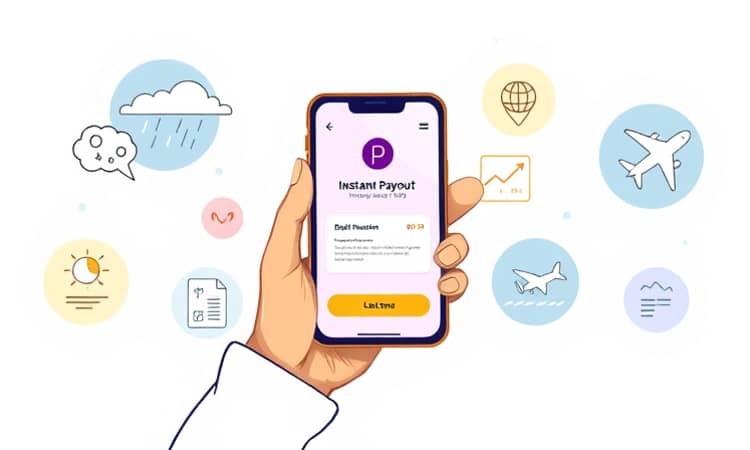
- Fast payouts: Automatic transfers within days or even minutes, eliminating the need for claims forms and adjusters.
- No loss adjustment: Relies on third-party data, reducing disputes and administrative burdens.
How Parametric Insurance Works
The process of parametric insurance is designed for simplicity and speed, ensuring that policyholders can focus on recovery.
It begins with identifying specific risks, such as drought or flight delays, and setting clear thresholds for triggers.
Data monitoring through advanced technologies like satellites and AI ensures accuracy.
When an event meets the threshold, the payout is executed automatically.
This step-by-step approach minimizes human error and maximizes reliability.
- Risk identification: Selecting events like hurricanes or earthquakes that are measurable and impactful.
- Set triggers and parameters: Defining precise thresholds, such as wind speed over 130 mph or a 2-hour flight delay.
- Data monitoring: Using reliable sources like drones or weather services to track conditions in real-time.
- Trigger activation: Automatic verification when events exceed predefined limits.
- Payout execution: Immediate transfer of funds to the policyholder's account, with no proof required.
For example, in travel insurance, a flight delay of over two hours due to weather can trigger a $100 payout within minutes.
This seamless workflow highlights how technology enables rapid response.
Parametric vs. Traditional Insurance
Understanding the differences between parametric and traditional insurance is key to making informed decisions.
While traditional insurance relies on indemnity for proven losses, parametric insurance offers a more agile alternative.
This comparison shows that parametric insurance prioritizes speed and simplicity, though it comes with the risk of payouts not always aligning perfectly with losses.
However, for many, the benefits outweigh this limitation.
Key Benefits of Parametric Insurance
The advantages of parametric insurance extend beyond fast payouts, offering a holistic approach to financial resilience.
It enhances transparency and reduces disputes by relying on objective data and clear terms.
This model also provides quick cash for recovery, which is crucial in disasters.
Moreover, it is highly customizable, making it accessible for hard-to-insure risks.
- Speed and efficiency: Payouts in days versus months, reducing administrative burden.
- Transparency and reduced disputes: Clear terms and objective data minimize bias.
- Financial resilience: Immediate funds aid recovery, complementing traditional policies.
- Customization and accessibility: Tailored for sectors like agriculture, with low premiums.
- Customer satisfaction: Streamlined processes enhance loyalty and trust.
- Scalability: AI enables rapid pricing for a wide range of premiums.
These benefits make parametric insurance a valuable tool for building a more secure future.
Applications Across Industries
Parametric insurance is versatile, with applications spanning various sectors to address diverse risks.
It is particularly effective in areas prone to natural disasters or operational disruptions.
From agriculture to travel, it offers targeted solutions that traditional models might overlook.
- Natural disasters: Covers events like droughts, floods, and earthquakes using specific triggers.
- Agriculture and energy: Protects against climate events, with companies like Arbol offering weather risk solutions.
- Travel: Insures against flight delays, lost luggage, or weather disruptions.
- Business and government: Supports systemic risks, such as hotels during hurricanes or farmers in drought-prone areas.
- Other sectors: Includes catastrophe bonds and programs for vulnerable populations, enhancing global resilience.
For instance, the Jumpstart Parametric Earthquake program offers low-cost coverage for homeowners and businesses, demonstrating its practical impact.
This broad applicability underscores its role in modern risk management.
Technology Driving Innovation
Advancements in technology are the backbone of parametric insurance, enabling its growth and efficiency.
Data sources like satellites and real-time streams provide accurate monitoring.
AI and machine learning allow for rapid pricing and risk modeling, processing vast amounts of data.
Automation integrates with insurtech partners to streamline operations.
This technological evolution has made parametric insurance more accessible and reliable over the past 30 years.
Companies like Arbol leverage AI to generate over 200 quotes daily, showcasing its scalability.
Such innovations are unlocking new opportunities for hybrid models with traditional insurance.
Challenges and Future Outlook
Despite its advantages, parametric insurance faces challenges, primarily related to basis risk.
Basis risk occurs when payouts do not match exact losses, such as a trigger being met with minimal damage.
However, with precise data and triggers, this risk can be minimized.
Parametric insurance is best used as a complement to traditional policies, not a replacement.
The market is growing rapidly, with trends indicating sustained expansion.
Regulatory interest is increasing, and future outlooks point to greater integration of AI and satellites.
This evolution promises to enhance global reach and climate resilience, making it a cornerstone of future risk strategies.
Embracing parametric insurance means investing in a more responsive and hopeful approach to uncertainty.