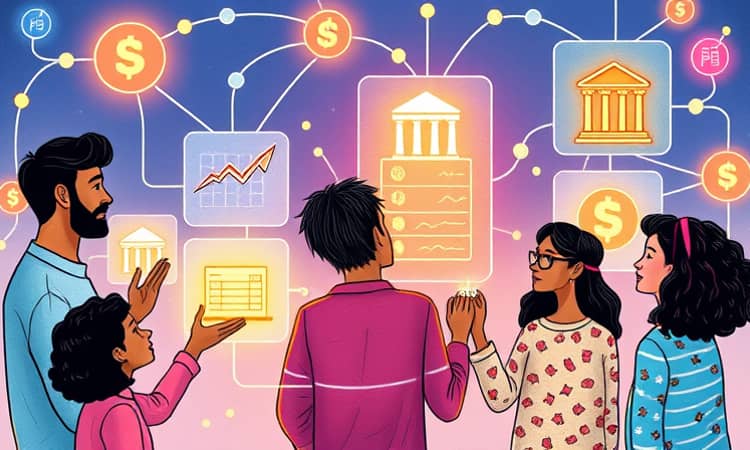
In today’s fast-paced digital world, financial services are no longer confined to the walls of a bank branch. Open banking transforms relationships by placing explicit, revocable consumer consent at the center. This paradigm shift empowers individuals to choose how and with whom they share their financial information, creating opportunities for more personalized, transparent, and inclusive services.
By breaking down data silos, open banking gives consumers unprecedented influence over tools that manage their money. From budgeting apps to seamless payment options, the modern user has the reins. The result is a system where financial institutions compete to deliver the best consumer experience, rather than locking customers into outdated, closed networks.
Reimagining Financial Relationships
Imagine a world where your transaction history, account balances, and loan details are yours to control—shared only when and with whom you choose. Through secure Application Programming Interfaces (APIs), open banking enables consumer-permissioned data sharing without exposing credentials or compromising security.
This model shifts power to individuals, dismantling traditional gatekeepers. Small businesses and retail consumers alike can integrate banking features directly into their favorite apps, unlocking streamlined payments, automated accounting, and smarter investment insights—all tailored to their unique needs.
The Mechanics Behind Open Banking
At its core, open banking relies on standardized APIs and robust consent frameworks. When a consumer selects an app, they are redirected to their bank to authenticate, often with strong customer authentication (SCA) like two-factor verification. Once approved, a token grants the app scoped access to data or payment initiation, which can be revoked at any time.
- Account Information Services (AIS) for read-only access to balances and transactions
- Payment Initiation Services (PIS) enabling secure account-to-account transfers
- Variable Recurring Payments (VRPs) for automated savings or “sweeping” transfers
By eliminating fragile screen scraping and embedding encryption throughout, open banking ensures data moves securely, reliably, and under the consumer’s full control.
Regulation as a Catalyst for Change
Legislation has been instrumental in accelerating open banking adoption. In the European Union, PSD2 mandated banks to open payment accounts to licensed third-party providers under strict security rules. Across the UK, the Competition and Markets Authority’s Open Banking Roadmap required major banks to deliver full APIs for both information and payments.
On the other side of the Atlantic, the U.S. Consumer Financial Protection Bureau’s Personal Financial Data Rights rule guides banks to grant customer-driven access by 2026 for large institutions, and by 2030 for smaller ones. These regulatory frameworks enshrine granular control over personal financial data and guarantee the right to revoke or limit permissions at any moment.
Adoption and Impact Around the World
The United Kingdom leads global uptake, with over 10 million consumers and small businesses regularly using open banking by mid-2024. Empirical research shows that countries with explicit open banking policies have twice the prevalence of fintech apps accessing customer data compared to those without.
As account-to-account payments gain traction, merchants and consumers alike benefit from faster settlements and lower fees, challenging traditional card networks and reducing costs for all.
Empowering Consumers: Practical Benefits
Open banking delivers tangible advantages across four dimensions:
1. Control: Users can tailor permissions by account, data field, and duration, stepping into the role of data owner rather than passive account holder.
2. Visibility: Aggregation apps offer a holistic view of financial life, consolidating all accounts, loans, and cards into a single dashboard for clear, real-time insights.
3. Credit Access: Lenders gain richer data, enabling more informed and faster lending decisions. Underbanked consumers can share alternative payment histories to secure fairer underwriting and unlock micro-loans or salary-linked advances.
4. Competition: By erasing data barriers, challengers and fintech startups compete on user experience and pricing, driving down fees and elevating service quality.
Building Sustainable Business Models
To thrive, banks and fintechs are collaborating on revenue frameworks that balance innovation with consumer protection. These include subscription-based insights, embedded finance partnerships, and nominal transaction fees on payment initiations.
- Premium advisory services leveraging transaction analytics
- Embedded finance models with revenue-sharing agreements
- Small fees for seamless account-to-account payment settlements
Such structures ensure that open banking scales responsibly, aligning incentives across platforms, institutions, and end users.
Looking Ahead: Trends and Opportunities
The journey from open banking to open finance promises expanded access to investments, pensions, insurance, and more. Emerging technologies—such as AI-driven credit scoring and personalized financial coaching—will further elevate consumer empowerment.
Cross-border data sharing could enable global financial identities, while decentralized finance (DeFi) concepts may integrate with regulated APIs to offer novel lending and saving solutions. The next frontier lies in weaving financial services seamlessly into daily life, from smart home budgeting to IoT-powered expense tracking.
How Consumers Can Prepare and Benefit
Adopting open banking safely and effectively involves a few key practices:
- Review each app’s permissions carefully and set clear boundaries
- Choose well-established providers with transparent security measures
- Periodically audit connected applications and revoke unused access
By staying vigilant and informed, users can harness the full power of open banking to streamline finances, improve credit access, and cultivate smarter spending habits.
Conclusion
Open banking marks a pivotal moment in financial history, shifting control to the consumer and fostering unprecedented innovation. As APIs connect once-isolated data vaults, individuals gain clarity, choice, and agency over their financial destinies.
By embracing this transformation—through informed consent, savvy app selection, and active management—every person can unlock a new era of sensitive financial transaction histories turned into actionable insights. The path to empowerment is open, transparent, and waiting for you.