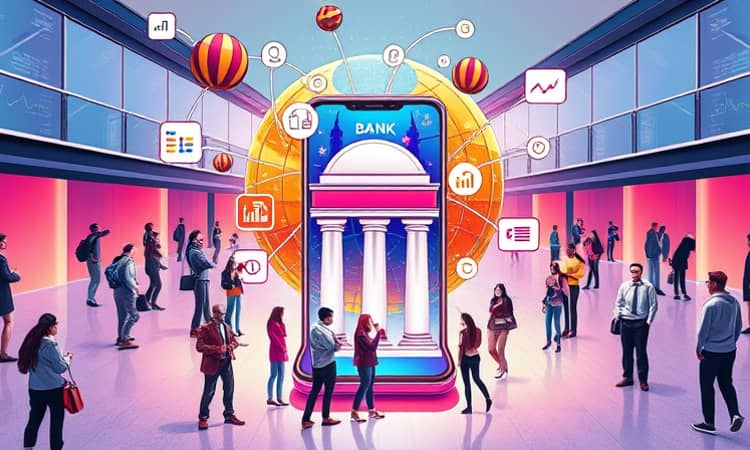
In an era defined by rapid technological change, neobanks have emerged as powerful disruptors, revolutionizing the way individuals and businesses manage money. Their rise signals a shift toward agile, customer-centric finance that blends innovation and accessibility.
Defining Neobanks
Neobanks are digital-only banking platforms operating without physical branches. They deliver services exclusively through mobile apps and online portals, offering everything from basic checking accounts to advanced business solutions.
With features like real-time transaction validation and automated financial management, these institutions appeal to users who demand speed, transparency, and cost-efficiency. Unlike traditional banks, neobanks emphasize a mobile-first customer experience and tailor services to specific user segments.
Evolution and Explosive Growth
The neobanking concept took shape in the mid-2010s and gained momentum post-2020 as smartphone penetration soared and internet access expanded globally. From a modest 39 million users in 2018, the sector swelled to 394 million by 2023, with projections indicating a further rise to 386.3 million by 2028.
Market estimates vary, reflecting different scopes and metrics. Some reports anticipate the segment’s revenue to climb from $34 billion in 2019 to $333.4 billion by 2026, representing a remarkable 47.1% CAGR. Others project transaction values exceeding $8.18 trillion by 2026 and upwards of $13.67 trillion by 2031. These figures underscore an unprecedented growth trajectory driven by evolving consumer preferences and technological advancements.
This explosive growth has drawn both established financial institutions and fintech startups into fierce competition, each striving to capture dedicated user bases with cost-effective financial solutions and personalized offerings.
Key Advantages of Neobanks
Neobanks offer a suite of benefits that resonate strongly with tech-savvy consumers and modern businesses alike. Their principal advantages include:
- Low or zero fees for everyday banking activities, eliminating hidden charges.
- Instant notifications and real-time spending insights, fostering better budget control.
- Seamless international payments at competitive exchange rates.
- Customizable alerts and automated savings tools for smarter money management.
- User-friendly interfaces designed for Gen Z and millennial preferences.
- Integration with accounting and analytics platforms for business customers.
By focusing on personalized financial insights and minimizing operational overhead, neobanks can reinvest in innovation and user experience rather than branch infrastructure.
Challenges, Restraints, and Regulations
Despite their rapid ascent, neobanks face several hurdles. Intense competition from legacy banks adopting digital strategies has blurred the lines between challenger and incumbent offerings. Regulatory frameworks vary by region, with some jurisdictions enforcing stringent operational standards.
- EU’s Digital Operational Resilience Act imposes rigorous controls on digital providers.
- Scaling customer support without physical branches can limit adoption among less digitally literate segments.
- Achieving profitability amid low-fee models requires high volumes or diversified revenue streams.
- Data security and privacy regulations demand continuous investment in robust cybersecurity measures.
Moreover, regulatory approval processes and capital requirements can delay product launches and expansion into new markets. Building consumer trust without a traditional brand presence remains an ongoing endeavor.
Case Studies: Success in Action
Several standout neobanks illustrate how innovation drives market leadership:
- Revolut Ltd. expanded from the UK to over 35 countries, offering multi-currency accounts and cryptocurrency trading in a single app.
- Chime in the United States attracted over 12 million customers with early wage access and fee-free overdrafts.
- Nubank transformed banking in Latin America by providing credit cards and digital wallets to underserved populations in Brazil, Mexico, and beyond.
These examples highlight the power of combining customer-centric design with strategic market entry to capture high-growth segments.
Future Outlook: A Trillion-Dollar Horizon
Looking ahead, industry analysts forecast the neobanking sector will surpass the trillion-dollar mark in transaction value by the early 2030s. Asia-Pacific is poised for the fastest growth, propelled by smartphone ubiquity and digital inclusion initiatives in China, India, and Southeast Asia.
Emerging markets in Africa and the Middle East represent untapped potential, where neobanks can leapfrog traditional banking models. Strategic partnerships with telecom providers and government-backed digital ID systems could accelerate adoption in these regions.
For incumbents, collaboration with fintech innovators offers a path to retain market share. Joint ventures and API integrations allow banks to embed neobanking features while leveraging established trust and capital resources.
Ultimately, the future of banking will blend the strengths of both digital natives and traditional institutions. Those who embrace open banking, foster regulatory alignment, and prioritize continuous user engagement will shape the next generation of financial services.