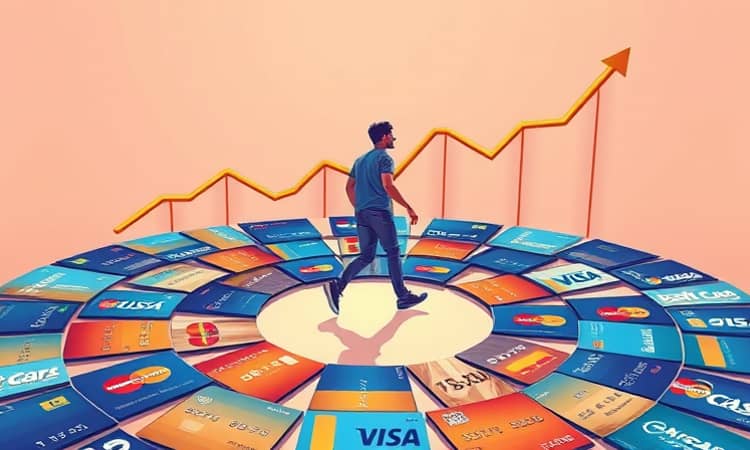
In today's economic landscape, a record-high share of U.S. households find themselves making only the minimum payment on their credit cards.
This signals a deep-seated financial pressure that traps consumers in a vicious cycle of debt, preventing true financial freedom.
Approximately 22% of credit card users are caught in this cycle, where balances remain high and credit utilization ratios soar, silently damaging credit scores.
Many believe this approach is harmless, but the reality is far more insidious, perpetuating a costly and long-term burden on personal finances.
The Debt Trap Unveiled
Minimum payments are designed to keep you indebted, with most of your money going toward interest rather than reducing the principal balance.
This creates a road to nowhere, where progress is minimal and financial goals seem out of reach.
A shocking 50% of U.S. consumers mistakenly think minimum payments help or have no effect on credit scores.
This myth is a key driver of the debt trap, leading to higher utilization rates that harm credit health despite avoiding late fees.
- Myth: Minimum payments improve credit scores.
- Reality: They increase credit utilization, lowering scores.
- Consequence: Longer debt repayment periods and higher costs.
Breaking free starts with understanding this dynamic and taking proactive steps.
By the Numbers: The Stark Reality
The statistics paint a grim picture of consumer debt in America.
Total U.S. credit card debt has reached $1.17 trillion, with projections of $1.18 trillion by the end of 2026.
This growth, though modest, reflects persistent strain on household budgets.
Average credit card debt per person stands at $6,730, with higher figures for those carrying unpaid balances.
Delinquency rates are elevated, with 90+ days past due at 2.57%, indicating ongoing financial stress.
- Average credit cards per person: 3.9 active cards.
- Credit cards account for 31% of U.S. payment transactions.
- Delinquency rates rose to 3.6% in Q4 2024, per NY Fed data.
These numbers underscore the urgent need for change in how we manage debt.
Interest Rates: The Silent Enemy
High APRs amplify the detrimental effects of minimum payments, making it harder to escape debt.
The average APR for all accounts is 20.97%, with new offers at 23.79%.
This means that on a $20,000 balance, most minimum payments go toward interest, not reducing what you owe.
- Average APR for accruing interest: 22.30%.
- Rewards cards average 23.69% APR.
- Cash back cards average 23.96% APR.
Expected Fed rate cuts might ease costs slightly, but the burden remains significant for many.
For example, debt settlement could halve a $20,000 balance to $10,000, cutting monthly minimums by hundreds of dollars.
This highlights the importance of strategic financial planning to mitigate interest costs.
Why We Fall into the Trap
Economic pressures and consumer misconceptions drive the reliance on minimum payments.
Inflation has led to an 18% rise in credit card reliance for everyday expenses among middle-income households.
Post-pandemic, balances grew at double-digit rates, adding to household strain.
- Factor: Inflation impact on daily spending.
- Factor: Growth trends with balances up 5.7% recently.
- Factor: Record minimum payments amid rising delinquencies.
Consumers often lack awareness, with 53% unaware that closing old cards hurts credit scores.
Additionally, 52% overestimate the impact of medical debt, and 39% think rent auto-reports to credit bureaus.
These misconceptions, combined with economic uncertainty, keep people stuck in the cycle.
Breaking Free: Practical Steps
Escaping the minimum payment trap requires actionable strategies and a shift in mindset.
Start by paying more than the minimum whenever possible to reduce principal faster.
Consider balance transfers to lower APR cards, but be mindful of fees and terms.
- Step: Create a budget to track spending and debt.
- Step: Use debt snowball or avalanche methods to prioritize payments.
- Step: Explore debt forgiveness or settlement options if overwhelmed.
Building an emergency fund can reduce reliance on credit for unexpected expenses.
Seek financial counseling to develop a personalized plan for debt reduction.
Remember, small consistent efforts can lead to significant long-term gains.
Lenders are tightening underwriting, so improving your credit score through timely payments is crucial.
- Tip: Monitor credit reports regularly for errors.
- Tip: Avoid new debt while paying down existing balances.
- Tip: Use rewards cards wisely, but don't let points tempt overspending.
Projections show stable delinquencies and modest growth, indicating resilience in the economy.
Expert quotes emphasize that this is the smallest year-over-year growth since 2013, underscoring consumer strength.
By taking control, you can transform your financial journey from a road to nowhere into a path toward freedom.
Embrace financial literacy as a tool for empowerment, and inspire others to do the same.