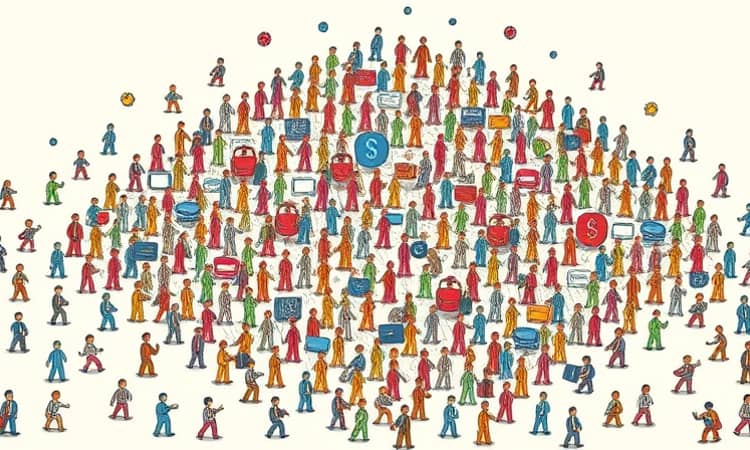
In today’s complex economy, sweeping trends like inflation, unemployment or growth may feel distant from our daily lives. Yet these broad movements emerge directly from the choices made by each household, firm or investor. By tracing every aggregate outcome back to its roots, the theory of microfoundations ensures that macroeconomics remains grounded in microeconomic principles rather than relying on simplistic assumptions. This article explores how individual decisions on consumption, saving and production coalesce into powerful, large-scale dynamics—and why understanding this linkage empowers better policy design, forecasting and crisis prevention.
Historical Development and Key Milestones
The journey of microfoundations began in the mid-20th century as economists sought to bridge the gap between Keynesian macroeconomics and neoclassical micro theory. By the 1940s and 1950s, pioneers integrated individual choice into aggregate models, laying the groundwork for more robust analyses.
A turning point arrived in the 1970s when Robert Lucas Jr. issued a critique: models lacking solid microfoundations would produce unreliable policy predictions. His insight catalyzed the adoption of rational expectations and individual optimization in macro frameworks, dissolving outdated correlations and highlighting the need for causal precision.
- 1940s–1950s: Emergence of microfoundations to reconcile macro and micro theories
- 1970s: Lucas Critique demands policy-invariant, individual-based models
- 1980s–1990s: Rise of Dynamic Stochastic General Equilibrium (DSGE) models
Methodological Principles and Model Building
At its core, the microfoundations approach specifies how each agent—households, firms, governments—sets goals, processes information and operates under constraints. Models assume that individuals maximize utility or profit, markets clear simultaneously, and expectations respond rationally to policy shifts. This optimizing behavior of individual agents guarantees that macro relationships remain anchored in fundamental economic incentives.
To illustrate, consider a government tax-cut stimulus. Individuals differentiate between a temporary versus a permanent reduction. Those viewing the cut as short-lived may save the extra income in anticipation of future tax hikes, muting the stimulus effect. Conversely, if consumers perceive the cut as permanent, they often increase spending, amplifying demand. By simulating these responses, DSGE frameworks capture complex feedback loops, delivering nuanced predictions on output, inflation and employment.
Practical Applications in Policy and Institutions
Central banks and international institutions widely deploy microfounded models to guide monetary and fiscal decisions. The Bank of England’s 2004–2005 BEQM model, for instance, comprises a microfounded “core” and an ad-hoc “periphery,” merging theoretical rigor with empirical tuning. Core equations respect optimization and general equilibrium, while periphery blocks fit observed data patterns such as unemployment persistence.
This dual structure safeguards policy invariance—keeping the central framework immune to regime changes—while still accommodating real-world anomalies through supplementary routines.
Criticisms and Limitations
Despite its intellectual appeal, microfounded macro faces challenges in empirical accuracy and realism. Many central banks augment core models with ad-hoc layers, sacrificing full consistency to improve forecast fit. Critics also target the reliance on a representative agent simplifying assumption, which collapses diverse households and firms into a single decision-maker, overlooking distributional and institutional frictions.
Other limitations include an overemphasis on rational expectations and equilibrium stability—assumptions that faltered during the 2008 financial crisis. Moreover, the Sonnenschein–Mantel–Debreu theorem warns that even well-specified micro foundations cannot guarantee unique or stable aggregate demand curves without restrictive conditions.
Alternatives and Debates
Responding to these concerns, economists have explored several complementary or competing approaches. Agent-based models (ABMs) conduct bottom-up simulations of heterogeneous agents, capturing non-linear interactions, financial contagion and emergent crises without presuming equilibrium. Imperfect Knowledge Economics relaxes the rational expectations constraint, allowing agents to learn or misinterpret policy signals.
Business Cycle Accounting dissects observed fluctuations into productivity, capital and labor wedges, isolating key frictions from data rather than theory. Each method offers unique insights, sparking vibrant debate on balancing theoretical consistency with empirical richness.
Future Directions and Hybrid Frameworks
Looking ahead, the frontier lies in integrating microfounded cores with richer data-driven or agent-based peripheries. Hybrid models might embed heterogeneous households and networked firms within DSGE backbones, reconciling stability with crisis realism. Advances in computational power and big data analytics will enable large-scale simulations featuring millions of interacting economic agents, bridging theory and measurement more effectively.
Policymakers stand to benefit from frameworks that preserve causal rigor while accommodating real-world anomalies—such as financial market frictions, sudden regime shifts and distributional effects. By embracing modular, flexible architectures, economists can design tools that remain robust under uncertainty, deliver actionable policy guidance and illuminate the profound ways in which small choices collectively shape our global economy.
Conclusion
Microfoundations remind us that the grand narratives of economic growth, inflation and unemployment unfold one decision at a time. By weaving individual incentives and constraints into coherent, dynamic models, we gain the power to forecast more reliably, craft better policies and anticipate crises before they spiral out of control. As hybrid approaches evolve, the promise of microfoundations endures: a deep, causal understanding of how countless individual decisions on consumption culminate in the sweeping economic tides that define our world.