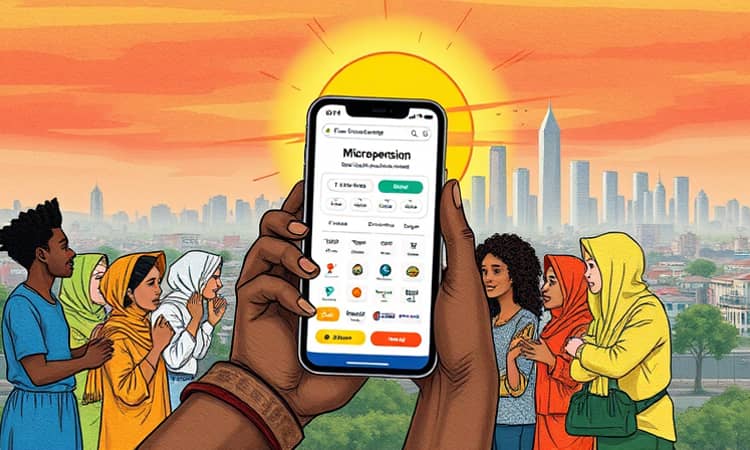
In a world where millions of informal workers lack formal retirement provisions, micro-pension plans emerge as a lifeline. These voluntary savings schemes bridge the gap between microfinance and traditional pensions, offering a secure pathway for gig workers, artisans, and small-business owners to prepare for their later years.
Defining Micro-Pension Plans
Micro-pension plans (MPPs) are voluntary, defined contribution schemes tailored for individuals with irregular incomes. Unlike mandatory contributory pension schemes funded by employers, MPPs are solely funded by individual contributors and emphasize accessibility. They operate in two phases: an accumulation phase leading to long-term growth and a payment phase that delivers retirement income.
By acting as a “third pillar” complementing government and employer plans, MPPs ensure that informal sector participants can save at their own pace, leveraging investments managed by licensed Pension Fund Administrators (PFAs). Contributions may be as low as N500 in Nigeria or local equivalents elsewhere, ensuring no one is left behind.
How Micro-Pension Plans Work
At their core, MPPs revolve around small, flexible contributions to build security. Contributors determine their deposit schedule—daily, weekly, or monthly—using cash, electronic transfers, or approved digital platforms. This flexibility accommodates fluctuating earnings common among non-salaried workers.
- Allocation structure: 40% of contributions become withdrawable after three months for emergencies, while the remaining 60% remains locked until retirement age or incapacitation.
- Growth mechanisms: PFAs pool and invest funds across fixed-income, money market, and equity instruments, generating returns that compound over time.
- Access conditions: Participants typically start receiving pensions between ages 50 and 60 or upon meeting health-related thresholds.
Key Benefits and Impact
Micro-pension plans deliver far-reaching advantages beyond mere savings. They foster financial resilience, reduce dependency on family support, and promote dignity in retirement. Through steady source of retirement income, participants can plan their futures with confidence, knowing that even modest contributions today will yield stability tomorrow.
- Financial security: ensures a baseline income after retirement, reducing old-age poverty.
- Flexibility: contributions adapt to income cycles, supporting business continuity.
- Inclusivity: crafted for informal sector workers traditionally excluded from pensions.
- Emergency access: partial withdrawals address urgent needs without derailing long-term goals.
Global Adoption and Success Stories
Across continents, governments and institutions are embracing micro-pensions to combat old-age poverty and vulnerability. Rwanda pioneered a digital scheme in 2019, leading to over 2.4 million subscribers and RwF 40 billion assets under management. Nigeria, with 50 million informal workers, has registered 114,382 contributors by December 2023, thanks to platforms like pinBox under PENCOM regulation.
Elsewhere, Kenya’s MBAO roadmap targets 17 million informal workers through mobile money integration, while India’s pilot projects gauge demand among freelancers and small traders. Ghana’s model demonstrates strong momentum, and blueprint frameworks in Uganda aim to reach 11 million workers via national ID linkage and fiscal incentives.
Critical Success Factors and Implementation Strategies
Scaling micro-pensions demands a blend of policy support, technological innovation, and community engagement. Programs that integrate accessible digital and mobile platforms with national identity systems streamline enrollment and contributions. Fiscal measures—tax deductions or matching grants—can incentivize uptake among low-income participants.
- National ID linkage: verifies beneficiaries and connects them to social protection registries.
- Financial literacy campaigns: foster understanding of long-term savings benefits.
- Stakeholder collaboration: aligns regulators, PFAs, microfinance institutions, and community groups.
- Government sponsorship: provides credibility and potential subsidies for early adopters.
Challenges and Pathways Forward
Despite promising frameworks, MPPs face hurdles such as low financial literacy, irregular incomes, and macroeconomic instability. Political shifts or market volatility can undermine participant confidence. Addressing these issues requires extensive financial education and outreach to build trust and demonstrate long-term value.
Innovations like quasi-mandatory enrollment—with opt-out clauses—could boost coverage, while partnerships with NGOs and cooperatives offer grassroots support. Pilots in diverse regions help refine incentives and digital interfaces before national expansion. As the gig economy grows, responsive design and continuous feedback loops will be essential.
Looking to the Future
Micro-pension plans illustrate how tailored savings solutions can empower underserved populations. By harmonizing microfinance principles with pension design, they offer a robust model for aging societies and gig workers alike. Emerging technologies—blockchain for transparency, AI-driven advice—may further enhance accessibility and trust.
Success hinges on a shared vision: to structure client-centered, accessible savings solutions that reflect real-world income patterns. With sustained policy support, innovation, and education, MPPs can transform uncertainty into opportunity, allowing millions to retire with dignity.
By embracing micro-pension plans today, communities can ensure that every worker’s efforts yield not just immediate earnings but also lasting financial peace of mind in retirement.