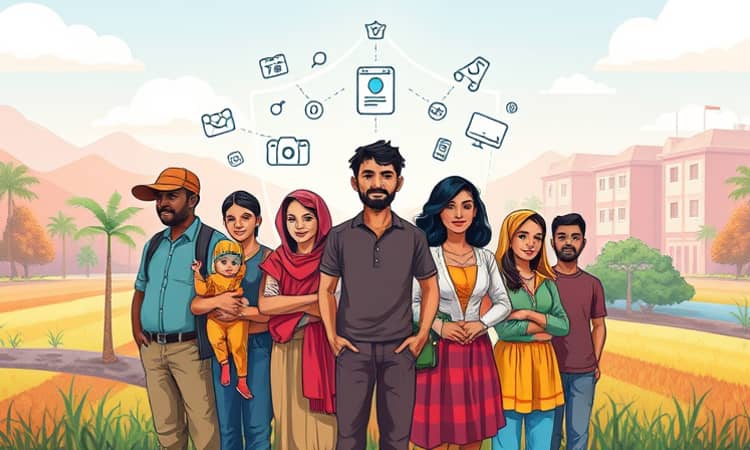
In a world where billions live with uncertainty at every turn, microinsurance emerges as a beacon of hope. This innovative approach adapts traditional insurance models to serve those often left behind—people vulnerable to health crises, crop failures, and economic shocks.
Understanding Microinsurance
Microinsurance provides protection for financially marginalized, informal sector individuals. By charging small, affordable premiums and offering simple, tailored benefits, it brings critical coverage to families and microentrepreneurs in developing regions.
At its core, microinsurance applies risk pooling principles familiar in conventional insurance, but scaled to match the capacities of low-income clients. Policies may cover health, life, agriculture, climate events, or even credit risks, ensuring a wide spectrum of safeguards.
Market Growth and Coverage
Over the last decade, microinsurance has witnessed remarkable expansion. By 2026, global market size projections range from USD 95 to 109 billion, driven by rising demand and digital innovations. Despite this, only 12% of an estimated 3 billion potential beneficiaries hold active policies, leaving an 88% protection gap.
Coverage statistics reveal:
- 344 million people insured in 2023, a 70% increase since 2021
- 37 countries across Africa, Asia-Pacific, Latin America and the Caribbean
- 985 products offered by 294 insurers, generating USD 6.2 billion in premiums
Key Market Segments and Distribution Channels
Microinsurance providers fall into two main groups: commercial insurers and government or aid-supported schemes. Commercial players account for roughly 69% of the market, leveraging digital platforms and mobile technology to reduce costs and scale effectively.
Distribution methods are equally varied. Traditional financial institutions hold the largest share today, while digital channels—from mobile money to smartphone apps—are the fastest-growing conduits, significantly enhancing last-mile accessibility for remote clients.
Driving Factors Behind Growth
Several powerful forces fuel the microinsurance revolution:
- Technology advancements: AI-driven underwriting, blockchain transparency, parametric insurance models and smartphone penetration streamline operations.
- Financial inclusion initiatives: Subsidies, awareness campaigns and partnerships with NGOs and governments foster trust and elevate uptake.
- Rising risk awareness: Climate shocks, pandemics and economic volatility drive households to seek reliable safety nets.
Overcoming Challenges and Closing the Protection Gap
Despite progress, significant obstacles remain. Trust deficits linger due to delayed claims and complex processes. Adverse selection and cream-skimming by insurers can destabilize risk pools. Many regions still lack enabling regulations and data-sharing mechanisms.
To bridge the 88% gap, stakeholders must focus on scalable, sustainable solutions. This includes risk subsidies for high-cost perils, streamlined claims processes, improved financial literacy, and robust regulatory frameworks that encourage innovation.
Voices from Experts and Stakeholders
Renowned voices in the field underscore the urgency and promise of microinsurance:
- Lorenzo Chan, MiN Chair: “Sustained investment is key to scale and sustainability, with simple products that build trust through reliable claims payment.”
- Matthew Genazzini, MiN Executive Director: “Public-private partnerships and integrated data systems can unlock competition and drive product innovation.”
- Jan Kellett, UNDP IRFF Lead: “Embedding insurance in development strategies accelerates market growth and enhances resilience to climate and health shocks.”
- Saurabh Sharma, UNDP Specialist: “Inclusive insurance must be part of national risk reduction plans to protect the most vulnerable.”
Real-World Impact: Product Examples
Concrete cases illustrate how microinsurance transforms lives:
Agrissur in West Africa offers a simple subscription model. Farmers pay a modest premium and receive cash payouts—FCFA 650,000 (about USD 1,092) on the death of the primary earner and FCFA 150,000 (USD 252) for others. This ensures continuity of farm operations and family welfare.
In Nigeria, a savings-linked microinsurance product combines interest-bearing savings (4.02% annual) with life cover for a nominal monthly deposit of ₦5,000. Proceeds support children’s education while protecting the family if the guardian passes away.
The Road Ahead: Trends and Future Outlook
Looking forward, microinsurance is poised for further evolution:
Digital transformation will deepen as insurtech partnerships with telecoms and fintech firms proliferate, enabling on-demand coverage and real-time claims processing.
Regulatory authorities are increasingly offering incentives to embed microinsurance in social protection and rural development programs. This alignment of policy and private sector innovation will be critical to close the protection gap.
Finally, the untapped potential of micro, small and medium enterprises (MSMEs)—with a USD 5.2 trillion annual financing need—signals vast opportunities for tailored microinsurance products that support economic growth and resilience.
As we embrace these trends, microinsurance stands as a powerful tool to uplift underserved communities. By combining technological innovation, public-private collaboration, and a deep commitment to inclusion, microinsurance can truly protect the world’s most vulnerable and foster a more resilient future.