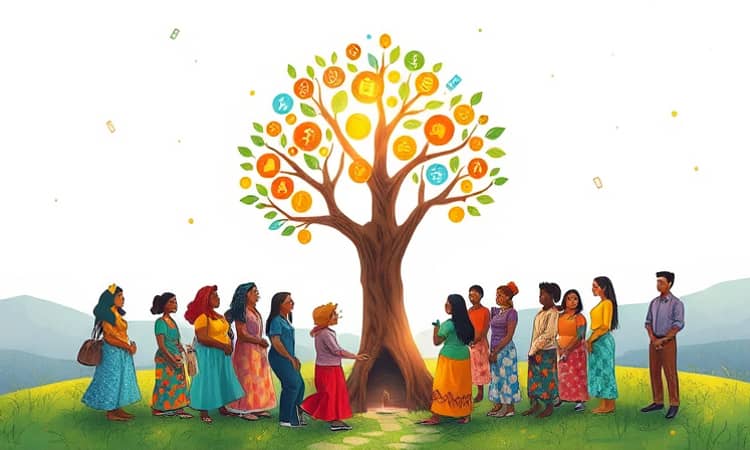
Microfinance has emerged as a transformative force, unlocking opportunities for millions of low-income individuals worldwide. By channeling modest capital into the hands of determined entrepreneurs, it bridges the gap between aspiration and achievement, fostering self-confidence and sustainable growth in communities often overlooked by traditional banks.
The Expanding Global Market
The microfinance sector is experiencing unprecedented growth, propelled by a surge in demand for inclusive financial services. Valued at USD 285.03 billion in 2026, forecasts predict it will reach USD 480.73 billion by 2031, reflecting an impressive 11.02% CAGR over that period.
Historical context underscores this momentum: from USD 156.7 billion in 2020 to USD 177.2 billion in 2021, the market’s upward trajectory demonstrates both resilience and potential. Rapid digital adoption and policy support have combined to create an environment where small investments can yield outsized social and economic returns.
Regional Dynamics and Impact
Across continents, microfinance shapes livelihoods and sparks entrepreneurial ventures. The Asia-Pacific region dominates, accounting for Asia-Pacific accounted for 44.31% share of the global market in 2025, while South Asia alone served over 85 million borrowers in 2018.
- The Middle East and Africa lead with a 13.21% CAGR through 2031.
- China’s market is set to expand at a 13.6% CAGR, driven by urban and rural partnerships.
- Sub-Saharan Africa sees high reliance on mobile money, with mobile-money accounts grew tenfold in Ethiopia.
Globally, over 1.4 billion people have accessed microfinance services, yet more than 2 billion remain unbanked. This vast unmet need underscores the sector’s capacity to uplift vulnerable populations and promote widespread economic inclusion.
Core Services and Innovative Models
Microfinance institutions (MFIs) offer a diverse portfolio of services tailored to the unique needs of low-income clients. Beyond credit, they provide savings instruments, insurance products, and capacity-building programs that foster resilience and growth.
Financial literacy programs and fund transfer services complement these offerings, ensuring that clients not only receive funding but also the knowledge to manage it effectively.
Operational Approaches by Microfinance Institutions
To serve clients efficiently and responsibly, MFIs adopt innovative lending mechanisms designed for minimal risk and maximum impact.
- Group lending model with collective guarantees
- Collateral-light underwriting based on client capacity
- Flexible repayment terms aligned with income cycles
These approaches maintain high repayment rates while keeping administrative costs low, often sustaining a 10–15 percentage-point cost advantage over traditional banks.
Driving Forces and Emerging Trends
Several catalysts are propelling microfinance into its next phase of growth. Government-led financial inclusion initiatives, such as India’s Jan Dhan program with over 500 million accounts, contribute a significant 2.1% impact on projected CAGR. Multilateral efforts, including World Bank MSME access projects in Pakistan and Uzbekistan, further expand reach.
Digital transformation has accelerated since the pandemic, with partnerships between fintech firms and MFIs leveraging alternative data—utility payments, mobile transactions—to underwrite loans without conventional collateral. Simultaneously, micro-insurance is set to grow at a 14.42% CAGR through 2031, offering agricultural index products via cooperatives to shield smallholder farmers from climate shocks.
Benefits and Value Propositions
- Poverty reduction through income generation
- Women’s economic empowerment and equity
- Enhanced community development impact
- Bridging the financial inclusion gap
By financing micro-enterprises and fostering financial discipline, microfinance helps lift families out of poverty, boosts local economies, and creates a ripple effect of improved education, health, and housing standards.
Challenges and Criticisms
Despite its successes, the sector faces valid concerns. In certain contexts, interest rates can soar above 30%, raising fears of debt distress. Critics argue that some institutions resemble loan sharks, prioritizing profit over client welfare. Studies in select regions reveal that not all borrowers experience significant income gains, underscoring the need for responsible lending practices.
Ensuring transparency, fair pricing, and robust client education remains paramount. By integrating feedback loops and impact assessments, stakeholders can mitigate risks and align services more closely with borrower needs.
Future Outlook and Innovations
The horizon for microfinance is bright, marked by rapid technological adoption and evolving service models. Blockchain-based microfinance platforms promise secure and transparent transactions, while Islamic microfinance expands Sharia-compliant options in Muslim-majority regions. Large commercial banks entering the field challenge traditional MFIs to innovate further, particularly through artificial intelligence, alternative scoring models, and climate risk analytics.
Analysts envision the market surpassing USD 800 billion by the mid-2030s, as digital wallets, embedded finance, and rural outreach programs converge to serve the globe’s unbanked and underbanked.
Conclusion
Mastering microfinance means recognizing the power of small investments to ignite profound change. By combining scalable services, inclusive policies, and innovative technology, stakeholders can build an ecosystem where millions more access the tools they need to flourish. Whether you are an investor, policymaker, or aspiring entrepreneur, engaging with microfinance holds the promise of shared prosperity and resilient communities.
Now is the moment to champion financial inclusion, to amplify small investments, and to shape a future where opportunity knows no bounds.