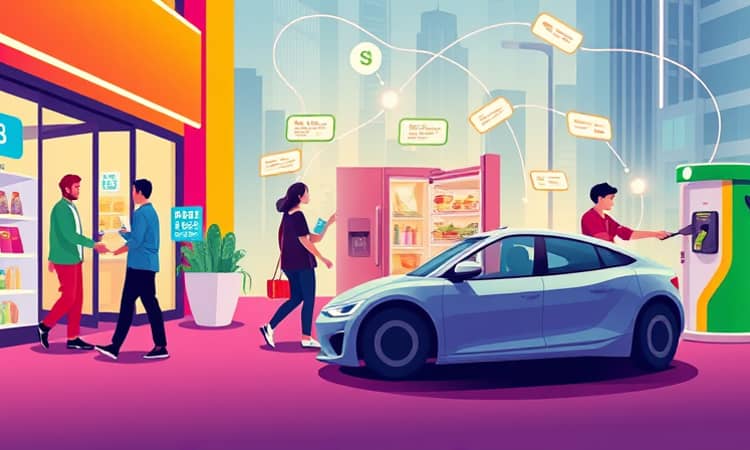
In a world where every second counts, payments are evolving to become virtually undetectable. Gone are the days of fumbling for cards or tapping on screens—technology now enables seamless integration into daily life. Invisible payments promise to transform commerce by making the act of paying disappear into the background.
From ride-hailing apps to smart refrigerators, transactions can now occur without any manual step. Let’s explore how this works, why it matters, and how businesses and consumers can prepare for a truly frictionless background transaction.
Understanding Invisible Payments
Invisible payments are transactions that happen automatically in the background. There is no need to tap, swipe, or confirm—payment credentials are pre-authenticated and stored securely.
These systems rely on contextual triggers and automated processing. Whether you finish a ride, walk out of a cashier-less store, or command your smart speaker to reorder essentials, the charge is handled without interrupting your experience.
- No manual intervention at checkout
- Contextual triggers replace “Pay Now” buttons
- Pre-authenticated credentials via tokenization
- Real-time, automated settlement
The Mechanics Behind the Scenes
Invisible payments involve a clear four-step flow. Each phase ensures speed, security, and continuity of service.
- Account Setup & Credential Storage: Users link cards or bank accounts during onboarding. Sensitive data is protected by secure tokenization and encryption methods.
- Trigger Event: Actions like ending a ride, walking out of a store, or issuing a voice command activate the payment.
- Background Processing: Tokenized data is sent to processors, who authenticate and debit the account in real time.
- Completion & Notification: A receipt is sent via email or app notification, confirming the purchase without further steps.
Real-World Applications
Invisible payments are not a distant dream—they are already part of our daily lives. The variety of use cases highlights the versatility of this approach.
Benefits for Businesses and Consumers
Invisible payments unlock value on both sides of the counter. Consumers enjoy time-saving and user-friendly solutions, while businesses gain operational and economic advantages.
- Eliminates checkout lines and delays
- Enables automatic reordering of essentials
- Creates a more natural user journey
- Provides instant digital receipts
For businesses, embedding payment capabilities drives rich data insights for personalization and boosts overall efficiency.
- Higher conversion rates with fewer abandoned carts
- Reduced dependency on POS infrastructure
- New revenue streams via subscription and usage models
- Detailed analytics on consumer behavior
Security, Challenges, and Best Practices
With great convenience comes the responsibility to maintain trust. Invisible payments demand robust safeguards.
Key security measures include:
- Multi-layered authentication using biometrics and device IDs
- End-to-end encryption and tokenization
- Behavioral analytics to detect anomalies
Yet challenges remain. Consumers may fear unauthorized charges or data misuse. Businesses must navigate regulatory requirements like GDPR and PSD2, ensuring transparent consent and opt-out options.
To mitigate these risks, follow these best practices:
- Offer clear notifications and spending summaries
- Allow users to pause or cancel automatic payments
- Maintain responsive support for dispute resolution
- Regularly audit systems and update compliance protocols
Looking Ahead: The Future of Payments
Invisible payments represent just the beginning of a larger transformation. As IoT expands, everyday objects—from cars to clothes—will handle transactions autonomously.
Emerging trends include:
- Hyper-personalized offers triggered by AI predictions
- Blockchain-based rails for transparent settlements
- Self-sovereign digital identities securing consent
- Global interoperability standards for seamless cross-border payments
Businesses that embrace invisible payments now will build stronger customer loyalty and unlock new growth opportunities.
Consumers, in turn, will enjoy a world where paying is no longer an interruption but an invisible thread woven into the fabric of daily life—creating fully integrated payment process experiences that feel as natural as breathing.
As the lines between commerce and technology continue to blur, one thing is certain: the future of transactions is invisible, and it’s already here.