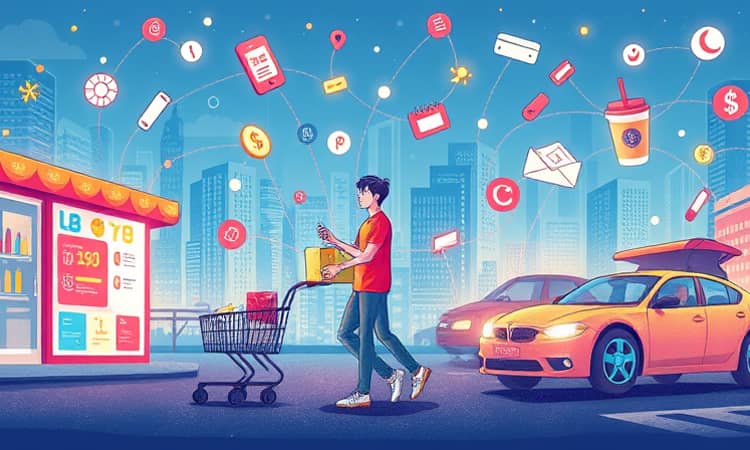
In a world where every moment counts, our financial lives are evolving beyond apps and portals into an experience so integrated that we hardly notice it. Invisible banking transforms transactions, lending, and insurance into organic interactions woven into daily routines. This article explores how you can benefit from this revolution, adopt practices that maximize convenience, and stay ahead as the lines between finance and life blur.
Understanding Invisible Banking
Invisible banking refers to the seamless integration into daily activities where finance happens behind the scenes. Instead of opening a dedicated banking app, you trigger payments, loans, or insurance through the tools you already use—be it ride-sharing, e-commerce, or smart home devices.
At its core, this concept relies on context-aware financial triggers that anticipate needs. Imagine booking a flight and having travel insurance added automatically, or filling your tank and driving away as payment completes in the background. This level of convenience is fueled by technologies that learn from behavior and adapt in real time.
Key Technologies Empowering Seamless Finance
The backbone of invisible banking is a suite of converging technologies. Together, they dissolve friction and create ever-present financial services.
- APIs and the API Economy: Open interfaces allow banks and fintechs to weave services into third-party platforms. Real-time data exchange has become the norm, enabling banks to deploy new offerings in hours, not months.
- Artificial Intelligence and Machine Learning: Behavioral analytics predict when you need a microloan, a savings nudge, or a payment reminder. Personalized models drive engagement and financial wellness.
- Internet of Things (IoT): Connected devices—from cars to refrigerators—become financial endpoints. Auto-pay at the gas pump, geolocation-led travel coverage, and in-car insurance adjustments illustrate this evolution.
- Advanced Networks and Voice Interfaces: 5G and conversational AI let you handle bills and transfers via voice assistants without lifting a finger or opening an app.
These technologies often work in concert. For example, AI may detect a pattern in your spending, trigger an IoT device to offer a savings roundup, and execute the transaction via API—all instantaneously.
Benefits for Consumers and Businesses
Invisible banking unlocks powerful advantages for everyone from individual users to global enterprises.
- For individuals, invisible banking means more time enjoying life and less time managing finances.
- Businesses gain increased operational efficiency and stronger customer loyalty by embedding financial services into their existing offerings.
- Financial institutions expand reach and relevance by partnering across industries, accelerating innovation.
Real-World Applications and Use Cases
Leading brands and emerging startups already illustrate the transformative power of invisible banking.
In retail and e-commerce, buy-now-pay-later (BNPL) options appear at checkout without redirecting you to a separate portal. Ride-sharing apps preapprove salary advances, delivering funds before your weekly payout. Geolocation services auto-enroll you in travel insurance when you book a flight or step off a plane.
Voice-activated assistants manage your budgets in the background—rounding up spare change, transferring it to savings, and even recommending debt repayment plans. Fleet management platforms use embedded treasury APIs to fund fuel purchases and fleet maintenance without manual invoicing.
Gig platforms follow your earnings in real time and offer instant cash-outs. SaaS tools integrate billing and fraud detection directly into dashboards, offering lenders a window into cash flow and reducing credit risk.
Overcoming Challenges and Looking Ahead
While invisible banking promises a friction-free future, it demands robust governance, stringent security, and unwavering user trust. Regulatory compliance, particularly around eKYC and data privacy, must remain a top priority. Banks and fintechs should invest in transparent consent mechanisms and continuous security audits.
Looking forward, deeper AI personalization will tailor services to micro-moments—your morning coffee run or end-of-day commute. Blockchain will underpin ultra-secure contracts and settlements, while RPA will automate back-office workflows entirely. Smart devices—from wearables to connected cars—will become financial nodes, anticipating and fulfilling needs before you even articulate them.
For businesses, the message is clear: partner with fintech innovators or risk becoming irrelevant. Consumers will gravitate toward brands that make finance effortless, expecting every platform they use to double as a personalized banking portal. The pandemic has accelerated contactless and digital-first mindsets, and invisible banking is the natural next step in that journey.
Now is the time to embrace this shift. Start by mapping friction points in your own financial habits—subscription renewals, late fees, or manual transfers—and explore services that automate or embed those functions. Engage with providers offering robust APIs and AI-driven insights. Test IoT integrations in pilot projects, and involve compliance teams early to build trust from day one.
Invisible banking is more than a trend; it’s a fundamental transformation in how we interact with money. By embedding finance into everyday life, we free ourselves to focus on what truly matters—experiences, relationships, and personal growth. The future of banking lies in the background, empowering us without interrupting our lives.