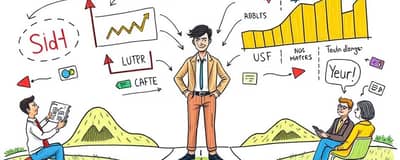
Venture capital has become the lifeblood of groundbreaking ventures, fueling the ideas that shape our future.
Understanding Venture Capital
Venture capital (VC) is a specialized form of innovation-focused private equity that channels money from institutions and wealthy individuals into early-stage startups. It operates on the principle of high risk, high return, seeking out companies too risky for traditional lenders but brimming with potential.
At its core, VC serves two groups:
- Investors aiming for outsized returns through IPOs or acquisitions.
- Startups needing capital, mentorship, and networks to accelerate growth.
By targeting industries like software, biotech, fintech, clean tech, and deep tech, venture capitalists become synonymous with financing tomorrow’s innovations.
Structure and Lifecycle of a Venture Fund
A venture capital fund is typically organized as a limited partnership. The main players are:
- Limited Partners (LPs): pension funds, endowments, sovereign wealth funds, family offices, and individuals who commit capital.
- General Partners (GPs): professional investors who manage the fund, source deals, and sit on portfolio company boards.
Each fund usually spans around ten years, with possible extensions to maximize exit value. The economic model follows a “2 and 20” structure: a 2% annual management fee and 20% carried interest on profits beyond returning capital to LPs. GPs also invest their own money, known as a GP commit aligned with LP interests.
Portfolio strategy embraces diversification across 20–40 startups, accepting that a few home runs drive returns while many investments may fail or deliver modest gains.
Stages and Types of Financing
Venture capital unfolds over several stages, each tailored to a company’s maturity and risk profile.
- Pre-seed and Seed: Funding ideas into prototypes, often from angels or micro-VCs.
- Series A/B: Capital for product refinement, early sales, and scaling operations.
- Growth Equity: Later rounds (Series C, D…) for market expansion and infrastructure investment.
Alongside these stages, investor profiles vary:
- Angel Investors: Individuals offering smaller checks plus mentorship.
- Financial VCs: Institutions focused primarily on financial returns.
- Corporate Venture Capital: Strategic arms of large companies seeking both innovation and synergy.
Mechanics of a VC Investment
When a startup raises venture capital, the journey involves rigorous due diligence, term negotiations, and legal structuring. Key instruments include preferred stock with liquidation preferences and anti-dilution clauses, and convertible notes or SAFEs that defer valuation decisions.
Once funding is secured, VCs often take board seats and offer hands-on guidance. They help recruit talent, open doors to partners and customers, and support subsequent fundraising rounds.
Exit Strategies and Value Realization
VC investments are illiquid until an exit event occurs. Typical exit routes include:
- Initial Public Offering (IPO): Listing on a public exchange for maximum visibility and liquidity.
- Mergers & Acquisitions (M&A): Sale to a larger company, often the most common path.
- Secondary Sales: Selling shares to other investors before a formal exit.
While some startups fail and are written off, the occasional 10x or 100x return justifies the risk for successful funds.
Returns, Risks, and Performance Metrics
VC returns are measured by IRR (Internal Rate of Return) and TVPI (Total Value to Paid-In) over a long horizon. The industry expectation is a skewed distribution: many losses, some moderate successes, and rare blockbuster outcomes.
Major risks include technology failure, slow market adoption, regulatory hurdles, and economic downturns. To manage these, funds maintain diversified portfolios and active governance roles.
Global Trends and Future Outlook
Today’s VC landscape is shaped by trends such as:
- Artificial Intelligence: Massive investments in generative AI platforms and applications.
- Climate Tech: Renewables, carbon capture, and sustainable agriculture solutions.
- Healthtech and Biotech: Personalized medicine, DNA sequencing innovations, and telehealth.
Regionally, ecosystems from Silicon Valley to Bangalore and Shenzhen are driving local innovation, supported by government initiatives and cross-border capital flows.
Looking forward, venture capital will continue to evolve with new fund structures like rolling funds, more accessible seed platforms, and greater emphasis on impact investing.
Balancing Advantages and Criticisms
Venture capital delivers rapid scaling and strategic value for startups, but it also faces critiques. Concerns include overvaluation bubbles, concentration in a few high-profile regions, and pressure on founders to prioritize growth over sustainability.
Emerging voices advocate for more inclusive funding models, ethical governance, and stronger alignment between financial returns and social impact.
Conclusion
Venture capital remains a powerful engine for technological progress and economic growth. By understanding its structures, stages, and strategies, entrepreneurs and investors can navigate the complexities of high-stakes funding.
Whether you’re an aspiring founder or a prospective LP, grasping the mechanics and risks of VC positions you to contribute to—and benefit from—the next wave of innovation.