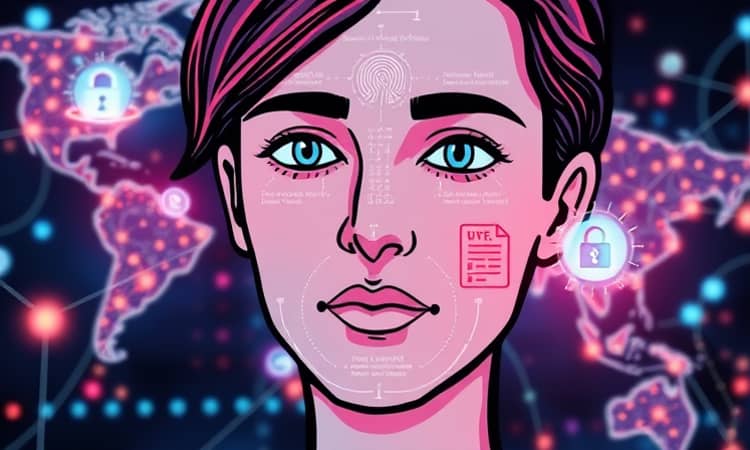
In our increasingly digital world, the foundation of every online interaction hinges on a simple yet profound question: Are you who you say you are? This is where identity verification (IDV) steps in, serving as the critical checkpoint in the vast landscape of cyberspace.
Imagine opening a bank account remotely or accessing sensitive healthcare records; without robust verification, trust evaporates, and fraud can flourish, undermining the very fabric of digital commerce and communication.
At its core, IDV is more than just a security measure; it is the bedrock of digital trust, enabling businesses and users to engage with confidence in an era where online threats evolve relentlessly.
This article explores how identity verification works, why it matters, and how it can empower you to navigate the digital realm safely and efficiently.
Understanding Core Concepts
Identity verification (IDV) confirms that a person is who they claim to be, using methods like document checks, biometric scans, and data validation against authoritative sources.
It is a subset of identity proofing, which builds comprehensive profiles by evaluating multiple evidence types such as government IDs and personal data.
Digital identity refers to the profile tied to users, machines, or entities in IT ecosystems, enabling activity tracking and cyberattack prevention.
Digital trust is the confidence users have in online platforms' security and reliability, with IDV as its foundational layer to mitigate fraud and unauthorized access.
The key difference lies in scope: proofing constructs profiles, while verification validates specific claims, ensuring precision in security checks.
Without strong initial verification, fraud like synthetic identities can cascade, compromising entire systems and future interactions.
Assurance levels, as per ISO/IEC 29115, help categorize risk and guide verification rigor:
- Level 1 (Minimal): Suitable for low-risk activities like subscribing to newsletters.
- Level 2 (Some Confidence): Used in e-commerce and basic financial services where moderate trust is required.
- Level 3 (High Confidence): Essential for regulated sectors such as finance and healthcare, demanding robust checks.
- Level 4 (Very High): Required for government and critical infrastructure, involving the highest security standards.
Market Growth and Projections
The digital identity market is expanding rapidly, reflecting its critical role in modern economies.
From $51 billion in 2025, it is projected to reach $80 billion by 2030, representing a 56% growth driven by regulatory demands and technological innovations.
This surge is fueled by advancements like mobile driving licenses (mDLs), digital travel credentials, and the EU Digital Identity Wallet (EUDI) rollout by end-2026.
Hybrid physical-digital credentials are boosting adoption, making verification more seamless and user-friendly.
Moreover, 89% of organizations plan to hire for identity security roles in the next year, highlighting the growing demand for expertise in this field.
Key Technologies and Methods
Modern identity verification relies on advanced technologies to stay ahead of sophisticated fraudsters.
- Biometrics: Facial recognition with liveness detection defends against deepfakes and face swaps, analyzing signs of manipulation.
- Document Verification: AI processes security features, forensics, and image quality to ensure document authenticity.
- Multi-layered Approaches: Combines documents, biometrics, device intelligence, and behavioral analytics for comprehensive security checks.
- AI and Machine Learning: Detects anomalies, automates risk assessment, and powers adaptive decisions to combat evolving threats.
- Behavioral Analytics: Monitors typing patterns, hesitation, and other behaviors to counter social engineering attacks.
- Device Intelligence: Analyzes contextual signals like lighting and texture for additional security layers during verification.
Enhanced IDV goes beyond basics, using these technologies for robust confirmation and continuous improvement in security protocols.
2026 Trends and Predictions
As we approach 2026, several key trends are reshaping the future of identity verification, driven by AI and user-centric design.
Here is a summary of the major developments that will define the landscape:
Other trends include continuous employment verification and the rise of agentic commerce, further integrating IDV into daily operations and enhancing global digital infrastructure.
Industry Applications and Benefits
Identity verification is essential across various sectors, enabling secure and efficient processes that protect both businesses and consumers.
- Finance: Facilitates remote onboarding and high-value transactions while preventing identity theft and ensuring regulatory compliance.
- Healthcare: Ensures secure access to patient records, protects sensitive health data, and maintains privacy in digital health services.
- Government: Supports critical services like voting and benefits distribution with high assurance levels, enhancing public trust.
- E-commerce: Reduces fraud, builds consumer confidence in online shopping, and streamlines checkout processes for better user experiences.
The benefits of robust identity verification extend far beyond basic security, offering practical advantages for everyday users and organizations alike.
- Fraud Prevention: Significantly reduces risks like identity theft and synthetic fraud, safeguarding personal and financial information.
- Regulatory Compliance: Ensures adherence to KYC, KYB, and other regulations, avoiding penalties and building legal trust.
- Enhanced User Confidence: Builds trust in digital platforms through transparent and secure data handling practices.
- Operational Efficiency: Automates verification processes, reducing manual errors and speeding up onboarding for faster service delivery.
- Lifecycle Management: Evolves from initial checks to continuous trust across user interactions, adapting to changing needs and threats.
Challenges and Risks
Despite advancements, identity verification faces significant hurdles that require constant vigilance and innovation to overcome.
- Fraud Evolution: Deepfakes, video injection, and impersonation kits are becoming mainstream, demanding adaptive countermeasures.
- Synthetic Identities: These bypass initial checks and can lead to cascading fraud across systems, compromising security at multiple levels.
- Data Breaches: Obsolete traditional methods, necessitating continuous updates to verification techniques and data protection strategies.
- Regulatory Pressure: Increasing expectations from governments and international bodies add complexity, requiring agile compliance approaches.
- Balancing Act: Finding the right mix between security and user experience is a persistent challenge, especially as AI erodes traditional trust signals.
Addressing these challenges is crucial for maintaining digital trust and ensuring that verification systems remain effective in a dynamic environment.
Future Outlook
Looking ahead to 2026 and beyond, the landscape of identity verification is set for innovation, with a focus on resilience and user empowerment.
Key areas include predictive prevention through AI-driven insights and interoperable self-sovereign models that give users control over their digital identities.
Organizations will prioritize compliance, fraud prevention, and delivering exceptional user experiences, making IDV a cornerstone of digital strategy.
The identity space is becoming a battleground, with advancements in AI agents, digital wallets, and biometrics shaping a resilient global digital infrastructure.
By embracing these trends, businesses and individuals can build a future where digital trust is not just assumed but assured, fostering safer and more connected online communities.