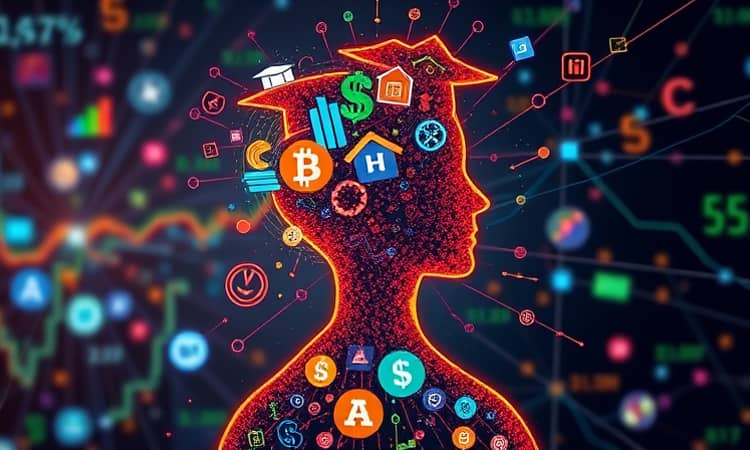
We stand at the cusp of a revolution in advisory services where technology and human insight blend seamlessly. Hyper-personalized wealth management integrates data intelligence, advisor expertise, and contextual engagement to deliver advice that is timely, relevant, and deeply trustworthy. At its core lies the concept of the financial twin—a dynamic digital reflection of each client’s unique financial life.
Unlike static profiling, a financial twin acts as virtual replica of an individual's financial life. It ingests real-time data on assets, liabilities, expenses, income, market movements, and personal behaviors to run continuous simulations. These simulations answer the crucial question: “What does this client need now—and why?”
By synthesizing these signals, advisory platforms can alert both clients and advisors to strategic opportunities—whether it’s rebalancing a portfolio as markets shift or preparing for a major life event like retirement or college planning. This approach preserves human judgment while scaling personalized guidance across a diverse client base.
The Rise of Financial Twins
The financial twin concept draws inspiration from industries like manufacturing and healthcare, where digital twins model machinery performance or patient outcomes. In wealth management, digital twins extend this capability to personal finances, enabling scenario planning for early retirement, unexpected medical costs, or windfalls such as inheritances.
Leveraging vast data sources—including transaction histories, market news, psychological risk assessments, and life-event calendars—a financial twin evolves dynamically. It not only tracks where you are, but predicts where you could be, empowering advisors to intervene proactively with tailored recommendations.
This shift transforms advisory relationships from reactive check-ins to continuous, meaningful engagements grounded in predictive insights. Clients no longer wait for quarterly reviews—they receive guidance the moment their circumstances change.
Core Technologies Powering Personalization
- AI, ML, Predictive Analytics, GenAI: Drive continuous adaptation of recommendations, portfolio rebalancing, and alerts based on demographics, behaviors, and context.
- Digital twin mechanics employ scenario analysis with real-time simulation to forecast outcomes under varied life-event triggers like marriage, job change, or home purchase.
- Hyper-automation streamlines cash management, vendor conflict resolution, and KPI forecasting in advisor workflows, freeing professionals to focus on strategic guidance.
- Integrations with market and ESG data, psychological profiling, and even sensor telemetry ensure clients receive holistic advice aligned with their beliefs and objectives.
These technologies coalesce on platforms that blend automated engines with human verification. Advisors harness dashboards displaying key indicators, modeled scenarios, and next-best actions, enabling them to deliver personalized touch points at scale.
Transformative Benefits for Clients and Advisors
Financial twins unlock measurable gains across revenue, loyalty, efficiency, and compliance. By delivering contextually relevant advice, firms foster deeper engagement and long-term relationships.
Beyond these headline metrics, firms report improved forecasting of inflows and outflows, enhanced fraud detection, and richer client conversations—transforming advisory services from cost centers into strategic growth engines.
Real-World Applications and Platforms
Financial twins power a wide spectrum of use cases that resonate with both advisors and end clients.
- Portfolio building and auto-rebalancing tailored to risk tolerance, time horizon, and sustainable investing preferences.
- Retirement and scenario planning simulations, enabling clients to visualize outcomes under varied spending and market conditions.
- Life-event triggers that prompt automated recommendations following marriages, births, or career changes.
- Investment alerts for asset opportunities—bonds, funds, or ESG-aligned strategies—matched to evolving profiles.
Platforms such as WealthForce.ai embed these capabilities directly into advisor workflows, while larger ecosystem providers integrate AI engines for bespoke portfolio construction, all backed by human oversight.
Overcoming Implementation Challenges
Adopting financial twins requires careful planning across data, technology, and organizational culture.
- Data access and interoperability: Breaking down silos to unify financial and nonfinancial data.
- Employee training: Empowering advisors to leverage new tools and interpret model outputs.
- Balancing automation and human judgment to maintain trust and personalized service.
- Ensuring explainability and traceability in AI-driven insights to satisfy regulatory requirements.
Firms that invest in robust cloud infrastructures, clear governance frameworks, and change management see smoother deployments and faster realization of long-term dividends.
The Path Forward: Balancing Innovation and Trust
As the digital twin market in finance expands, organizations must navigate the delicate balance between cutting-edge technology and the enduring value of human relationships. Clients expect transparent, ethical, and goal-aligned advice—not just automated signals.
By embedding explainable AI at every touchpoint, firms can preserve trust while scaling personalized guidance. Advisors transform from data interpreters into strategic partners, focusing on empathy and contextual understanding.
Looking ahead, continuous collaboration between technologists, compliance teams, and wealth professionals will refine financial twins’ capabilities. The result: advisory experiences that adapt instantaneously to client needs, delivering insights with empathy, precision, and unwavering integrity.