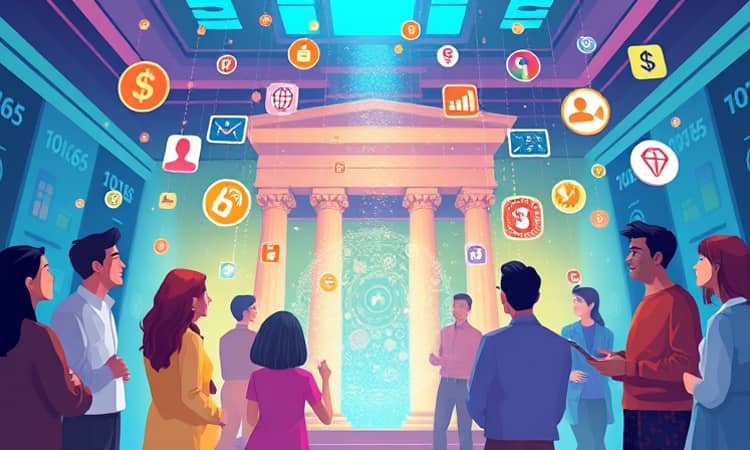
In a world where consumers expect instant, relevant interactions, financial institutions must evolve beyond one-size-fits-all offerings. Hyper-personalization represents a transformative shift, leveraging advanced technologies to deliver unique experiences for each individual. By harnessing data and AI, banks and fintechs can craft solutions that resonate on a personal level, driving both growth and loyalty.
Through real-time tailoring of financial products, institutions empower customers to feel seen and supported. This article explores the evolution, business case, enabling technologies, practical use cases, and implementation strategies behind hyper-personalization in financial services.
The Evolution from Personalization to Hyper-Personalization
Traditional personalization in banking often meant inserting a customer’s name into an email or recommending generic products based on broad segments. While better than generic marketing blasts, this approach falls short of delighting customers with timely, meaningful insights. Hyper-personalization goes deeper, using granular data and behavioral analytics to interpret individual actions and preferences.
By analyzing transaction history, browsing patterns, location signals, and life events, institutions can anticipate needs in real time. Imagine a savings suggestion triggered when a pay raise is detected or an insurance offer precisely aligned with a recent home purchase. This level of precision elevates trust and engagement, positioning banks as proactive partners in each customer’s journey.
The Business Case: Driving Growth and Loyalty
Research from leading consultancies underscores the financial impact of personalization. When executed at scale, hyper-personalization can unlock significant cost savings and revenue growth. By reducing acquisition costs, improving marketing efficiency, and deepening customer relationships, organizations gain a clear competitive edge.
Gallup data reveals that customers who believe their bank cares about their financial wellbeing are more than three times as engaged. This deep-rooted customer trust and loyalty translates into higher retention, increased cross-sell, and a willingness to advocate for the brand.
As financial products become commoditized, differentiation lies in relevance and timing. Hyper-personalization is thus a strategic imperative to win and retain high-value clients in a crowded market.
Enabling Technologies: Data, AI, and Real-Time Intelligence
A robust data foundation is critical. Institutions must unify disparate sources—transaction records, CRM data, mobile app behavior, demographic profiles, and external signals—into a single customer view. This unified profile fuels AI and ML models that predict needs and orchestrate personalized interactions.
At the core of hyper-personalization are predictive and prescriptive analytics. Predictive models forecast upcoming events, such as a potential overdraft or investment opportunity. Prescriptive engines then recommend the next best action, whether pushing a savings nudge or offering tailored credit products. Generative AI can craft personalized communications, from dynamic dashboards to conversational chatbot responses that adapt to each user’s tone and context.
Key Use Cases: Transforming Customer Interactions
Financial institutions are already deploying hyper-personalization across multiple touchpoints. Real-world examples showcase how targeted interventions can reshape the customer experience and deliver measurable results.
- Hyper-Personalized Product Recommendations —Recommending a high-interest savings account when disposable income spikes, or suggesting mortgage refinancing when rates drop.
- Proactive Financial Management —Using real-time analytics to detect rising credit card balances and offering automated repayment plans before fees accrue.
- Conversational AI Advisory —Deploying chatbots that provide contextual, goal-based advice, from vacation budgeting to retirement planning.
For instance, one leading European bank implemented real-time insights into its mobile app, prompting users to save a portion of windfall deposits automatically. Engagement rose by over 60%, and customer satisfaction scores improved significantly. These use cases illustrate the power of timing and relevance in building enduring relationships.
Implementing a Customer-of-One Strategy
To move from ambition to execution, financial services organizations should follow key best practices. First, establish a scalable data architecture with real-time ingestion and processing capabilities. Second, deploy modular AI components—such as decisioning engines and recommendation systems—that can be iterated rapidly. Third, prioritize privacy and consent management to maintain customer trust.
Cross-functional collaboration is essential. Marketing, data science, risk, and compliance teams must align around unified goals and shared metrics. Start with pilot projects targeting high-impact use cases, measure results, and expand successful initiatives. Continuously monitor performance, refine models, and respect evolving customer preferences and regulations.
Conclusion: Embracing the Future of Financial Wellbeing
Hyper-personalization represents more than a technology upgrade—it embodies a shift to a holistic financial wellbeing approach that places the individual at the center of every decision. By delivering the right offer, insight, or alert at the precise moment of need, financial institutions can foster meaningful connections and unlock lasting loyalty.
As the competitive landscape intensifies, those who harness real-time intelligence, AI-driven orchestration, and empathetic design will lead the next era of banking. Embrace hyper-personalization today, and transform customer experiences from transactional to transformational, empowering every individual on their journey to financial wellness.