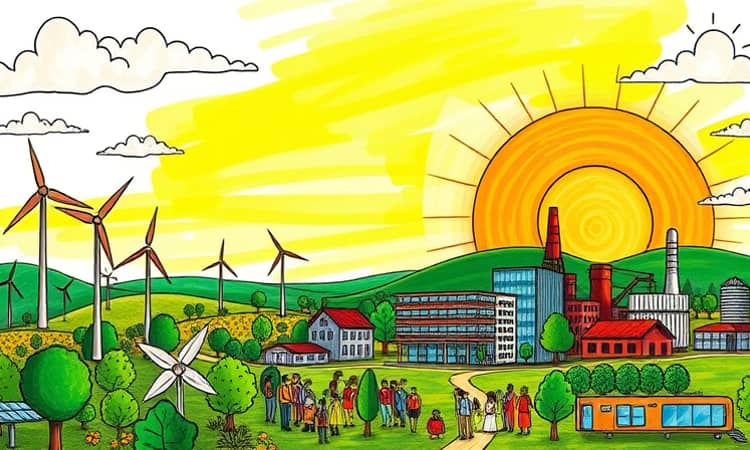
Global markets are entering an era defined by constraints on capital, labor, and natural resources. What once seemed like unlimited growth drivers are now signaling a major shift in investment paradigms. This article guides investors and business leaders on a journey from competition to opportunity and growth.
We outline actionable strategies across short-, medium-, and long-term horizons, illustrate real-world examples, and offer a mindset framework that fosters innovation and resilience in the face of mounting scarcity.
Understanding the Drivers of Scarcity
Three interlocking trends are reshaping the investment landscape. First, the end of near-zero interest rates has halted the ‘‘free money’’ era. Rising rates mean higher borrowing costs and lower valuations for leverage-dependent businesses. Second, tightened labor markets—exacerbated by demographic shifts and post-pandemic dynamics—are creating a global skills shortage. Third, ecological limits are pressing on industrial supply chains, with water scarcity threatening two-thirds of the world by 2025 and critical elements facing depletion this century.
These factors combine to increase volatility, slow recovery after shocks, and pressure traditional business models. Investors must transition from passive exposure to dynamic, resilience-focused allocations.
Short-Term: Reposition and Build Resilience
In the next 12 to 18 months, the priority is to fortify operations and investments against immediate shocks. Companies and funds that embrace adaptive models will outpace peers reliant on fragile, linear supply chains.
- Market Repositioning: Identify sectors growing despite low aggregate demand. For example, essential consumables and repair services often surge during downturns.
- Global Talent Expansion: Broaden recruitment beyond traditional hubs. Initiatives like English-first corporate policies and partnerships in Africa or Latin America tap expanding workforces.
- Diversified Supply Systems: Apply diversity, adaptability, and modularity by designing multiple sourcing pathways and buffer inventories to absorb disruption.
Investor strategies include allocating to modular manufacturing firms, VC funds specializing in automation, and ETFs that emphasize redundancy and low correlation.
Medium-Term: Innovate and Leverage Sustainability
Over a three- to five-year horizon, organizations can turn environmental and material constraints into competitive advantages. Sustainability scarcity premiums in green materials will emerge as regulatory and consumer pressures intensify.
Disciplined innovation is key. Coca-Cola and Pepsi are co-investing in recycled-plastic R&D and collection infrastructure. Outdoor gear brand Cotopaxi transforms fabric scraps into premium products, winning customers and reducing waste.
- Form strategic coalitions with suppliers, governments, and NGOs to secure scarce renewable inputs.
- Develop proprietary circular processes—recycling, remanufacturing, or closed-loop systems—that lock in differential cost structures.
- Advocate policy incentives to accelerate adoption of sustainable materials.
For investors, this translates into targeted exposure: green chemical producers, circular-economy platform providers, and private equity funds with strict ESG innovation mandates.
Long-Term: Dematerialize and Redefine Value
Looking out a decade or more, the most transformative strategies will dematerialize economic growth and embrace new wealth metrics. Traditional GDP growth driven by increased consumption is giving way to circular models and experience-based services.
Retailer Selfridges aims for 50% of transactions via resale, repair, rental, or reuse by 2030. Fast-casual chain Everytable fights food insecurity with variable pricing, aligning social impact and profitability.
Investors should seek:
- Digital and experience-based businesses that decouple value creation from material throughput.
- Funds benchmarked against inclusive wealth—accounting for natural, human, and produced capital alongside GDP.
- Long-duration assets in sustainable infrastructure and legacy-focused vehicles that honor intergenerational equity.
Mindset Shift: Cultivating an Abundance Perspective
Resources may be finite, but an abundance mindset multiplies opportunities. Drawing on personal finance frameworks, individuals and institutions can rewire scarcity-driven fears into proactive strategies.
Key steps include:
- Identify limiting beliefs—“I can’t afford to invest” or “Markets are too risky.”
- Define your abundance vision: set clear, measurable goals and automate savings or capital allocations.
- Reframe questions: replace “Why can’t we?” with “How can we achieve by X date?” to spark creative solutions.
- Practice delayed gratification on large purchases and cultivate gratitude for existing capital to reinforce positive financial behaviors.
An abundance orientation drives long-term focus, reduces reactionary decision-making, and unlocks value through persistent innovation.
Conclusion: Embracing a Resilient Future
The transition from scarcity to sustained abundance demands agility, foresight, and a willingness to challenge entrenched mindsets. By deploying resilience tactics in the short term, pioneering sustainable innovations in the medium term, and dematerializing growth in the long term, investors and businesses can thrive amid constraints.
Ultimately, transforming constraints into catalysts for change is not just an investment thesis—it’s a roadmap to a more equitable, resilient, and abundant world.