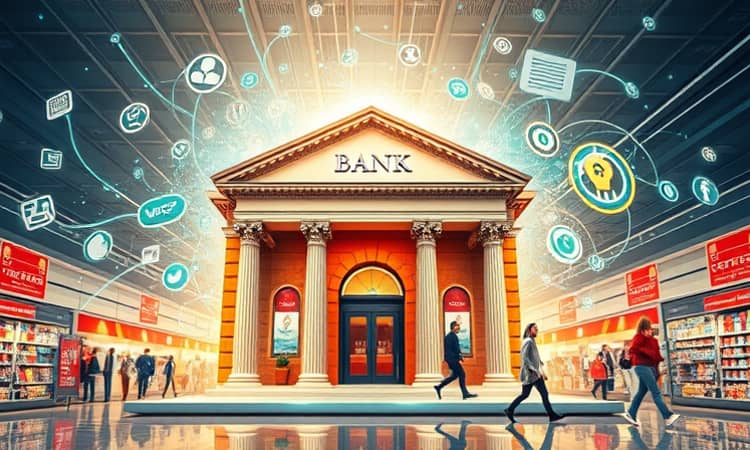
The journey of retail finance spans centuries, evolving from cash-stuffed branches to data-driven digital ecosystems. This narrative explores that transformation, revealing lessons and opportunities for businesses and consumers alike.
Conceptual Framing: What “From Bricks to Clicks” Means
In the early days, finance lived in mortar-and-brick buildings, with ledgers, passbooks, and face-to-face service at its core. Physical branches housed tellers handling cash, checks, and in-store credit desks.
Today, those branches share space with smartphones, apps, and embedded payment systems. always-on, device-agnostic, omnichannel experience has become the new standard as finance integrates directly into shopping and daily life.
The shift from “bricks” to “clicks” encapsulates the move from branch-centric interactions to digital-first, API-led ecosystems that deliver embedded and invisible finance at every checkout and tap.
Historical Evolution of Retail Banking
The story begins in medieval Italy, where temples and merchant banks offered deposit and lending services as early as 2000 BC. Over time, these institutions blossomed into the modern banks we know today.
Between 1870 and the 1950s, retail banking served only elites, focusing on deposit-taking, lending, and settlements. It was profitable but limited in reach, leaving the mass market largely unserved.
The post-war era, however, brought a consumer boom. Branch networks multiplied, and banks introduced current and savings accounts as loss leaders for cross-selling. Credit cards emerged, with Diners Club in 1950 and BankAmericard (later Visa) in 1958, marking the dawn of non-cash retail payments.
With computerization in the 1960s and 1970s, banks invested heavily in mainframes, SWIFT messaging, and ACH networks, laying the foundations for real-time electronic payments.
Deregulation in the 1980s accelerated credit growth, followed by crises in the early 1990s and a rebound into the digital era. Early internet banking pilots foreshadowed the fintech revolution that would upend incumbents.
The Parallel Evolution of Retail Commerce
Retail itself transitioned from open-air bazaars to department stores and enclosed shopping malls in the mid-20th century. In-store credit became a fixture, with layaway plans and store cards fueling consumer spending.
The rise of big-box chains and mail-order catalogs set the stage for e-commerce giants like Amazon. This shift demanded new payment experiences, giving rise to card-not-present transactions, digital wallets, and marketplace-owned lending models.
Today’s omnichannel strategies—click-and-collect, curbside pickup, and buy-online-pickup-in-store—exemplify how physical and digital channels merge. Finance must follow suit, offering seamless payment and credit options wherever the customer shops.
Current State of Retail Banking and Finance Economics
In 2023, global retail banking return on equity reached about 12%, the highest level since the financial crisis. Yet margins face headwinds, with forecasts projecting a 5–10% decline by 2026 due to rising costs and competitive pressures.
Operating expenses are climbing. Banks and retailers cite four main drivers:
- Wage growth across the industry
- Increased frequency of financial crime
- Escalating technology investment needs
- Higher credit risk and provisions
These challenges spur the push toward digital wallets and BNPL solutions, as organizations seek efficiency and new revenue streams through technology and data monetization.
Retail CFO Priorities and Strategic Investments
Recent surveys highlight pressing priorities among retail and finance leaders:
- 74% plan to increase investment in disruption detection and innovation processes
- 64% intend to join industry consortia to co-develop emerging technologies
- 58% will offer products through online platform providers and social media channels
- 46% see finance transformation as a top priority to boost competitiveness
These figures underscore an industry-wide recognition that digital transformation is no longer optional but essential for survival and growth.
Core Capabilities Driving Digital Finance
At the heart of this transformation are five pillars of capability:
- API-driven architectures enabling rapid integration
- Advanced data analytics and AI for personalized services
- Cloud-native platforms for scalable operations
- Robotic process automation to streamline back-office functions
- Robust cybersecurity frameworks ensuring compliance and trust
Together, these technologies empower organizations to deliver branch-centric retail banking and in-store credit services in digital form, redefining customer engagement and operational models.
Looking Ahead: Future Themes and Opportunities
As finance continues its digital metamorphosis, several forward-looking themes emerge:
1. Embedded Finance Everywhere: From social media apps to ride-hailing platforms, financial services will be woven into non-financial journeys.
2. Hyper-Personalized Offerings: AI-driven insights will craft bespoke credit, savings, and investment products in real time.
3. Sustainable Finance Integration: ESG metrics and carbon-tracking features will become integral to retail finance solutions.
4. Decentralized Finance (DeFi) Interfaces: Blockchain-based alternatives may offer new models for payments and credit, challenging traditional rails.
Conclusion: Embracing the Next Wave
The arc from bricks to clicks illustrates not just technological progress but a profound shift in how consumers and businesses interact with money. Organizations that embrace data-driven finance strategies will unlock new value, foster loyalty, and thrive in an increasingly digital economy.
For consumers, the promise is greater access, convenience, and personalized control over financial lives. For institutions, the challenge is to reimagine their legacy systems, cultures, and business models in pursuit of agility and innovation.
As we stand at the cusp of the next wave—where AI, embedded services, and sustainable finance converge—the journey from bricks to clicks offers a roadmap to navigate change, capture opportunity, and deliver lasting impact.