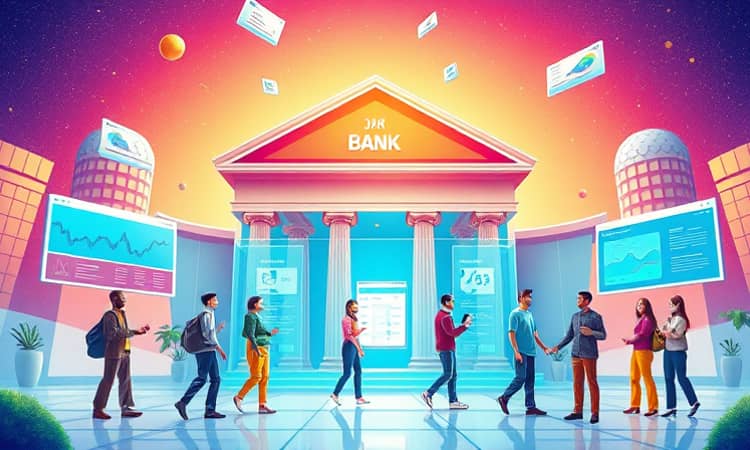
In recent years, the financial industry has witnessed a profound evolution as institutions move beyond traditional branch networks and embrace a new era of digital banking. What once required in-person visits and paper forms can now be accomplished with a few taps on a smartphone or clicks in a web browser. This transformation is not merely a trend but a fundamental shift, driven by changing consumer habits, competitive pressure, and technological breakthroughs.
By reimagining service delivery and operational frameworks, banks can unlock new efficiencies, elevate customer experiences, and remain relevant in a fast-paced, digital-first world.
Rising Demand for Digital-First Services
Customers today expect seamless, instantaneous interactions across channels. Gone are the days when a loan decision took days or opening an account required a visit to a branch. Modern consumers demand speed, personalization, and 24/7 access, setting a high bar for traditional institutions.
At the same time, fintech startups, neobanks, and large technology firms have introduced agile platforms that cater to these expectations. As a result, established banks face pressure to innovate or risk losing market share.
Regulatory requirements further underscore the urgency of the digital shift, as accurate data management and real-time compliance become critical to operational integrity.
Pillars and Technologies Driving Change
Successful digital transformation rests on interconnected pillars: unified platforms, data-driven automation, and open ecosystems. Below is a snapshot of key technologies and their roles in modern banking.
By adopting these technologies, banks can embrace cloud-native core modernization and build resilient, future-ready foundations that support continuous innovation.
Quantifiable Benefits of Digital Transformation
Beyond theory, the shift to digital channels produces tangible gains across operational, growth, and customer satisfaction metrics.
- Operational efficiency and faster decision making reduces manual tasks, lowering cost-to-serve and accelerating decisioning.
- Revenue growth and cross-sell lift boosts portfolio size, while mobile-first strategies lift deposits by 10-15%.
- Improved risk detection and compliance enhance fraud protection and ensure robust audit trails.
- Customer loyalty through personalized engagement fosters higher engagement and retention.
- Market agility via open API ecosystems allows rapid rollout of new services and partnerships.
These outcomes prove that a well-executed digital transformation can deliver mobile-first strategies for deeper engagement and measurable return on investment within months.
Navigating Challenges and Risks
While the promise of digital banking is compelling, the path to transformation is strewn with obstacles. Legacy infrastructure, data silos, and uneven readiness rates hinder progress. Many institutions find themselves in pilot phases, unable to scale due to fragmented systems and cultural resistance.
Data quality issues can persist even after cloud migration, making it essential to invest in robust governance, master data management, and change management protocols. Moreover, banks must differentiate hype from practical value, focusing on proven applications like cybersecurity and AI-assisted operations.
Mitigating these challenges requires a holistic approach, combining strong leadership, agile methodologies, and clear prioritization of initiatives that offer the highest strategic impact.
Preparing for the Future: Trends into 2026
Looking ahead, several themes will define the next phase of banking’s digital evolution. Cybersecurity will remain a top priority as threat landscapes grow more complex. Real-time payment rails and global sandbox environments will reshape cross-border transfers and remittances.
AI scaling will transition from limited proofs-of-concept to enterprise-wide deployment, driving enhancements in underwriting, customer support, and proactive risk monitoring. Banks that build real-time data and analytics capabilities now will gain a decisive edge in crafting personalized experiences at scale.
Embedded finance and super apps will blur the lines between banking and everyday life, creating new revenue streams and customer touchpoints.
Strategies for Success
To harness the full potential of the digital shift, banks should consider the following strategic imperatives:
- Modernize core systems with a cloud-native focus to eliminate silos and boost agility.
- Build an AI-ready data foundation to enable AI-driven underwriting and cross-selling.
- Adopt open APIs to integrate banking services into third-party platforms and super apps.
- Balance automation with human-centered design to preserve trust and empathy in customer interactions.
- Cultivate a culture of continuous learning and innovation, ensuring teams remain adaptable.
By implementing these strategies, institutions can position themselves as digital leaders, delivering secure, seamless, and highly personalized outcomes that resonate with the next generation of customers.
A Call to Action
The digital shift is not a distant horizon—it is happening now. Banks that move decisively to reimagine their operating models, technology stacks, and customer engagement approaches will emerge stronger, more resilient, and better positioned to thrive in a rapidly evolving marketplace.
Embrace the journey from physical branches to browser tabs and unlock legacy systems and siloed data to drive transformative impact. The future of banking belongs to those who innovate with purpose, agility, and unwavering commitment to customer success.