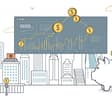
Imagine owning a slice of a luxury beachfront villa or a share in a bustling commercial office, all without the daunting price tag of full purchase.
This dream is now a reality through fractionalized real estate ownership, a model that democratizes property investment for everyone.
By allowing multiple investors to buy deeded shares, it opens doors to high-quality assets previously reserved for the wealthy.
In this article, we'll explore how this innovative approach can transform your financial portfolio and lifestyle.
The Evolution of Fractional Ownership
Fractional ownership isn't new, but its application to real estate has surged in recent years.
Driven by rising demand from young professionals and high-net-worth individuals, it represents a shift towards passive and diversified investing.
Post-2024, this model has grown sharply, offering stable income without full commitment.
It's revolutionizing how people think about wealth-building through property.
How Fractionalized Real Estate Works
The process is straightforward and designed for simplicity.
Investors purchase shares or fractions in a property via specialized online platforms.
Here’s a step-by-step breakdown:
- Buy shares starting as low as $100, making it accessible to many.
- Property management companies handle all operations, from maintenance to tenant management.
- Income is generated through monthly rental revenue and capital gains upon sale.
- For vacation properties, owners coordinate personal usage schedules.
- Exit options include selling shares on secondary markets, though liquidity can vary.
- Platforms vet properties, ensuring quality and managing legal compliance.
This hands-off approach removes the traditional burdens of property ownership.
Key Benefits of Fractional Ownership
The advantages of fractional real estate are compelling and numerous.
It provides a gateway to premium assets while mitigating common investment hurdles.
Below is a table summarizing the core benefits:
These benefits make fractional ownership an attractive option for many.
Understanding the Risks and Cons
While the pros are significant, it's crucial to consider the potential downsides.
A balanced view helps investors make informed decisions.
- Liquidity challenges: Sales on secondary markets aren't instant, often requiring a long-term hold.
- Shared decision-making: Coordination with co-owners on usage or sales can be complex.
- Market and asset risks: Property value drops or tenant issues still impact shares, even with diffusion.
- Regulatory and legal complexities: Zoning, taxes, and documentation require careful attention.
- Limited control: Investors have no full say in management or sales decisions.
Mitigation strategies include diversification and relying on platform management.
Fractional vs. Traditional Ownership: A Comparison
Understanding how fractional ownership stacks up against alternatives is key.
Here’s a quick comparison to highlight differences:
- Vs. Timeshares: Provides actual equity and potential appreciation, not just time-based usage.
- Vs. REITs: Offers more property type flexibility and direct ownership, unlike sector-specific REITs.
- Vs. Full Ownership: Reduces capital requirements and management duties while maintaining equity benefits.
This model is ideal for those seeking investment without full control.
Real-World Examples and Platforms
Fractional ownership is applied across various property types.
Examples include income-producing homes, luxury vacation villas, and commercial spaces like offices.
- Platforms like Realbricks and Fraxioned facilitate these investments with minimal effort.
- Properties are vetted for quality, such as Grade A commercial assets with long-term leases.
- Investors can access beachfronts, mountain lodges, or urban co-working spaces.
These real-world cases demonstrate the model's versatility and appeal.
Tax and Legal Essentials
Navigating the tax and legal landscape is vital for maximizing returns.
Key points include:
- Proportional tax benefits: Investors enjoy deductions similar to full owners.
- Holding periods: Over two years qualifies for long-term capital gains with indexation.
- Early sales: If sold earlier, gains are taxed at slab rates, so planning is essential.
- Legal compliance: Platforms often manage documentation, but seeking advice is recommended.
Understanding these aspects ensures a smoother investment journey.
Who Should Consider Fractional Real Estate?
This model isn't for everyone, but it suits specific investor profiles.
Ideal candidates include:
- Second-home buyers looking for lifestyle investments without full commitment.
- Beginners entering the real estate market with limited capital.
- Passive investors avoiding management duties and seeking steady income.
- Those aiming to diversify portfolios beyond stocks and bonds.
It's less suitable for control-seekers who prefer full autonomy.
Getting Started and Future Outlook
Starting with fractional real estate is simple and can be done in minutes.
Key steps include:
- Research platforms and properties to find the right fit.
- Sign up and purchase shares, often with low minimums.
- Monitor investments through platform dashboards for updates and income.
- Plan for long-term holds to maximize returns and tax advantages.
The future looks bright, with growth driven by increasing demand for accessible investments.
This trend is set to revolutionize luxury and commercial property markets.
By embracing fractional ownership, you can build wealth and enjoy unique assets.
It's a powerful tool for achieving financial freedom through smart, collaborative investing.