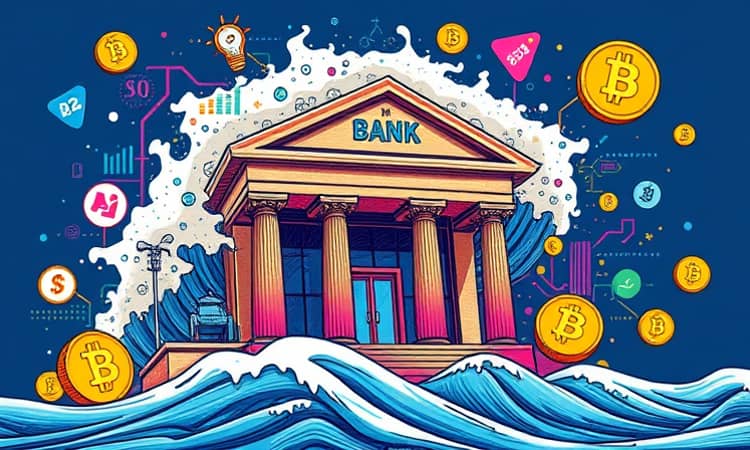
The financial technology landscape is poised for unprecedented disruption as we approach 2026.
Innovations are not just incremental changes but a fundamental shift in how we bank and transact globally.
This wave promises to enhance efficiency and inclusivity across economies, reshaping the status quo.
Businesses and consumers must prepare for this evolution to thrive in the new financial era.
The Explosive Growth of FinTech
Understanding the market's scale is essential to grasp the coming changes.
Projections show consistent high growth rates, with the market expanding rapidly into the next decade.
This table highlights the robust expansion trajectory of the fintech market.
With over 30,000 startups and digital payments exceeding $11 trillion, the momentum is undeniable.
Such growth signals a fertile ground for innovation and investment opportunities.
Core Trends Shaping the Future
Several overlapping trends are forming the next wave, shifting from niche apps to integrated systems.
These trends are redefining banking, payments, and infrastructure at production scale.
AI and Autonomous Operations
Artificial intelligence is becoming the backbone of financial services.
AI agents transforming banking operations autonomously handle full workflows.
- Hyper-personalization adapts interfaces in real-time based on user goals.
- AI-powered compliance and analytics are growing markets.
- Agentic commerce secures AI-driven transactions for reliability.
These advancements boost speed and efficiency dramatically across sectors.
Businesses can leverage AI to reduce costs and enhance customer experiences.
Embedded Finance and Infrastructure Platforms
Finance is increasingly integrated into non-financial platforms.
This trend enables seamless user experiences everywhere.
- Embedded finance market is projected to reach $7.2tn by 2030.
- Fintech-as-a-Service drives digital banking demand with scalable solutions.
- Open banking regulations mandate secure data access via APIs.
It shifts control to users and fosters innovation in everyday transactions.
Payments and Real-Time Settlement
Instant payments are becoming the standard for all transactions.
Speed and accuracy are now baseline expectations.
- Real-time payment systems like RTP and FedNow are mainstream.
- Cross-border transactions can be completed in minutes for efficiency.
- Programmable payments redefine business money movement with flexibility.
This evolution enhances liquidity management and operational smoothness.
Tokenization, Crypto, and Digital Assets
Digital assets are entering the mainstream with reliable infrastructure.
This represents a fundamental shift in asset management.
- Tokenized assets, such as bonds and funds, are gaining traction.
- Stablecoins cross the enterprise threshold for global transactions.
- Digital-native assets offer improved liquidity and settlement efficiency.
Institutions are adopting these technologies for enhanced security and access.
Regulatory and Inclusive Shifts
Regulations are evolving to foster innovation while ensuring security.
These changes promote financial inclusion and safety for all demographics.
- New rules for stablecoins and BNPL are emerging globally.
- Personalization tailors services for underserved groups effectively.
- Real-time compliance moves to instant monitoring for transparency.
Businesses must navigate these shifts to avoid irrelevance and build trust.
Drivers and Key Takeaways for Businesses
Several factors are propelling this fintech revolution forward.
Cloud-native systems enable scalability and 24/7 operations seamlessly.
Blockchain technology provides reliable infrastructure for digital assets.
Customer expectations for speed and personalization are rising steadily.
Businesses must embrace integration and innovation to stay competitive.
Prioritize embedded services to meet evolving consumer demands proactively.
Focus on inclusion to tap into new markets and drive growth.
Practical Examples and Use Cases
Real-world applications demonstrate the tangible impact of these trends.
Big banks are adopting tokenization for asset management with success.
AI agents automate banking operations, reducing errors and costs significantly.
Embedded finance in e-commerce platforms simplifies transactions for users.
Real-time cross-border payments enhance global trade efficiency dramatically.
These examples showcase the transformative power of fintech advancements.
By learning from them, businesses can implement similar strategies effectively.
Conclusion: Embracing the Wave
The fintech industry is at a pivotal moment of transformation now.
By understanding and leveraging trends, businesses can disrupt the status quo.
Adaptability and forward-thinking are essential in this evolving landscape.
Embrace the next wave to shape the future of finance with confidence.
Start integrating AI and embedded solutions today for tomorrow's success.
The journey ahead is challenging but filled with opportunities for growth.