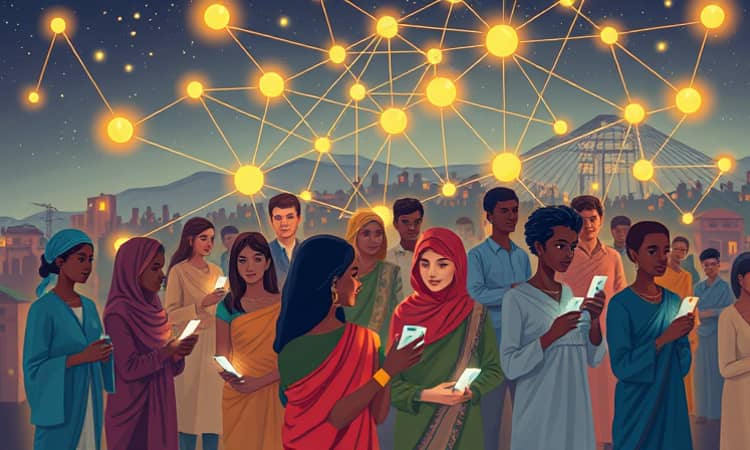
Imagine Maria, a smallholder farmer in a remote village, carefully counting cash under the shade of a mango tree. Each transaction carries risk, time, and uncertainty. Today, technology offers new hope: financial tools delivered through her smartphone could transform her life.
As we stand at the intersection of innovation and equity, fintech emerges as a powerful force breaking down barriers to financial access. Yet reaching the most marginalized remains complex.
The Current State of Global Financial Inclusion
By 2025, 79% of adults worldwide have an account with a bank or mobile money provider, up from 74% in 2021. In low- and middle-income economies (LMIEs), account ownership has climbed to 75%, representing an 80% increase since 2011.
Still, 1.3 billion adults are still unbanked globally. Half of them reside in just eight countries: Bangladesh, China, Egypt, India, Indonesia, Mexico, Nigeria, and Pakistan. Beyond mere access, another 300 million hold inactive accounts, revealing persistent access and usage gaps.
Those left behind are disproportionately women, poor households, and individuals with limited education or no formal employment. Many are smallholder farmers and women in rural areas, for whom digital outreach is challenging.
Digital Technologies Driving Inclusion Gains
Mobile phones and internet access have been catalysts in closing the financial divide. Around 900 million unbanked adults own a mobile device, and 530 million have smartphones, presenting an immense opportunity.
- Digital IDs and real-time payment systems reduce onboarding friction.
- Government-to-person transfers encourage digital account usage.
- Mobile money platforms enable secure, low-cost transactions.
- Instant payment interfaces like India’s UPI and Brazil’s PIX.
Sub-Saharan Africa leads in mobile money adoption, with account ownership rising from 49% to 58% between 2021 and 2024. These successes reflect low-cost, instant payment systems that adapt to local contexts.
Beyond opening accounts, fintech drives active usage. Over 60% of adults in LMIEs now make or receive digital payments. Formal savings via accounts jumped 16 percentage points in just three years, the fastest increase seen in a decade.
Fintech Innovations Empowering the Excluded
Fintech firms have matured from rapid expansion into an era of sustainable growth and impact. Customer bases grow by 37% annually, revenues by 40%, and profits by 39%, while explicitly targeting underserved segments.
Key services include:
- Digital wallets and e-money accounts with minimal fees.
- QR-code and contactless payments for informal merchants.
- Cross-border remittances leveraging blockchain or mobile rails.
Lending innovations like Buy Now, Pay Later (BNPL) reached $350 billion globally in 2024, while peer-to-peer platforms facilitated $62 billion. In emerging markets, fintechs shifted 88% of their funding toward micro and small enterprises, up from 13% in 2020.
Alternative data and digital footprints—such as e-commerce activity and mobile usage—enable scoring of thin-file customers, overcoming traditional credit barriers. These approaches extend credit to rural borrowers, youth, and informal workers.
In Latin America and the Caribbean, a 340% increase in fintech players since 2017 has yielded striking outcomes: 75% of users now rely less on cash, 72% save transaction time, and 59% plan finances more effectively. Nearly 50% accessed products previously unavailable, and 28% opened their first account through a fintech.
Challenges and Structural Barriers
Despite gains, significant obstacles remain. Financial and digital literacy correlate strongly with successful service use. Low skills raise vulnerability to over-indebtedness and predatory lending, as well as to fraud and cybercrime.
- Uneven internet connectivity and device access.
- Gender disparities in deposits and loan balances.
- Trust deficits and security concerns among new users.
- Regulatory complexities hindering innovation at scale.
Women hold only 64% of men’s deposit amounts and 46% of their loan balances. Rural populations face geographic and cultural barriers, deepening the divide despite pervasive phone ownership.
Path Forward: Collaboration and Practical Steps
To reach the “last mile,” stakeholders must embrace public-private collaboration and partnerships. No single actor can close the gap alone.
- Invest in community-based digital literacy programs, especially for women and rural users.
- Expand interoperable payment infrastructures to reduce costs and broaden reach.
- Leverage open APIs and data-sharing standards to foster innovation.
- Build trust through transparent practices and consumer protection measures.
Policymakers should align digital ID initiatives with financial services, while fintechs tailor products to local languages and use cases. Financial education integrated into platforms can boost confidence and sustained usage.
Every incremental advance—whether a village kiosk offering mobile wallet top-ups or a digital credit score built on mobile airtime data—brings us closer to universal inclusion. By uniting technology with empathy and rigorous policy, we can unlock the potential of the 1.3 billion still without a gateway to formal finance.
The journey ahead demands persistence, creativity, and shared vision. As fintech continues evolving, it must remain anchored in the lives of those it seeks to empower, transforming distant hope into tangible progress.