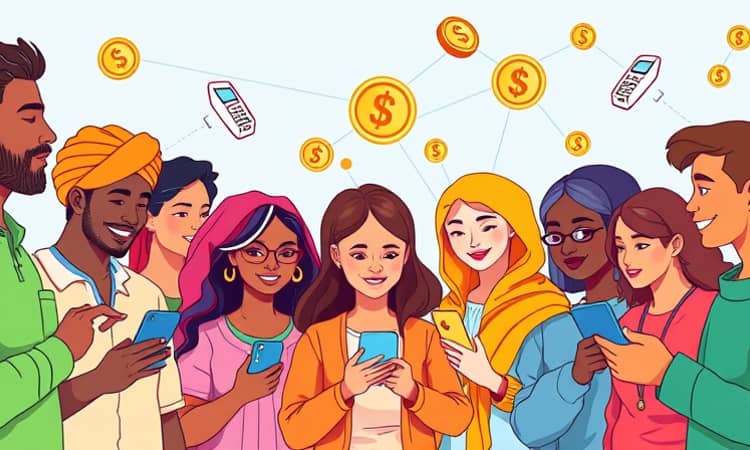
Mobile technology has sparked a global shift, delivering unprecedented financial empowerment to communities across continents. From bustling cities to remote villages, these digital innovations have bridged gaps, inviting billions into the formal economy. This article explores the sweeping progress, the challenges that remain, and practical steps for individuals and institutions to harness this revolution.
The Dawn of a Financial Revolution
Just over a decade ago, only half of the world’s adults held a financial account. Today, nearly 80% enjoy secure access to banking services. This surge reflects a combination of policy initiatives, technological advancements, and public-private partnerships aimed at reducing poverty and enhancing economic participation.
Key milestones include:
- Global account ownership rising from 50% in 2011 to almost 80% in 2025.
- Mobile money savings growing by 5 percentage points since 2021.
- Daily flows of $4.6 billion through mobile wallets worldwide.
World Bank President Ajay Banga captures the spirit: “Financial inclusion has the potential to improve lives and transform entire economies... Digital finance can convert this potential into reality.” His words remind us that technology is only a tool; the ultimate goal is human progress.
Bridging the Unbanked Gap
Despite remarkable gains, 1.3 billion adults remain unbanked. Yet hope emerges from the fact that 900 million of them own a mobile phone, over half of which are smartphones. This untapped potential offers a roadmap for reaching even the most remote corners.
Key drivers of inclusion include:
- Mobile money accounts that enable savings, transfers, and microloans without traditional bank branches.
- Digital identification and biometric systems that simplify account opening.
- Government cash-transfer schemes delivering welfare benefits directly into mobile wallets.
In Sub-Saharan Africa, account ownership climbed from 49% in 2021 to 58% in 2025. Formal savings rose by 12 points, fueling local businesses and agricultural investments. Similarly, South Asia witnessed women’s account ownership nearly double to 73%, narrowing the gender gap and fostering inclusive economic growth.
Regional Insights at a Glance
This table highlights disparities and progress, guiding policymakers and investors toward regions where mobile connectivity can yield the highest social impact.
Catalysts for Future Growth
The momentum shows no signs of slowing. Projections indicate 5.5 billion mobile internet users by 2030, with digital wallets reaching 5 billion users by 2026. Advances in AI, personalized financial tools, and real-time payments will further democratize access.
Innovations to watch:
- Buy Now Pay Later plans tailored for low-income consumers.
- Microinsurance products bundled with mobile accounts.
- Agentic AI chatbots providing personalized financial advice.
Bill Gates underscores the imperative: “More people than ever have the financial tools to invest in their futures... The case for investing in inclusive financial systems... is clear.” His vision calls on stakeholders to deepen collaboration and fuel sustainable development.
Overcoming Challenges and Seizing Opportunities
Security remains a pressing concern. Nearly half of users in low- and middle-income economies do not secure their devices with passwords. Robust identity verification, consumer protection regulations, and digital literacy programs are critical to building trust.
Actionable steps for stakeholders:
- Financial institutions should offer user-friendly mobile apps with multilayered security features.
- Governments must invest in digital infrastructure and data privacy frameworks.
- NGOs and community groups can deliver targeted financial education workshops to underserved populations.
Practical Tips for Individuals
1. Choose a secure mobile-money provider: Look for platforms with two-factor authentication and clear fee structures.
2. Automate savings: Use recurring transfers to build an emergency fund effortlessly.
3. Leverage budgeting tools: Many apps offer spending analytics that help you track progress toward goals.
4. Stay informed: Follow reputable sources for updates on new financial products and regulatory changes.
Conclusion: A Path Toward Shared Prosperity
The story of financial inclusion through mobile technology is one of hope, resilience, and collaboration. By expanding access to digital financial tools, we empower individuals to save, invest, and weather economic shocks. The journey ahead demands sustained effort from banks, fintech innovators, governments, and civil society.
As we embrace this digital transformation, we inch closer to a world where every adult, regardless of geography or income, can participate fully in the economy. The future is mobile, and with it, the promise of shared prosperity for billions.