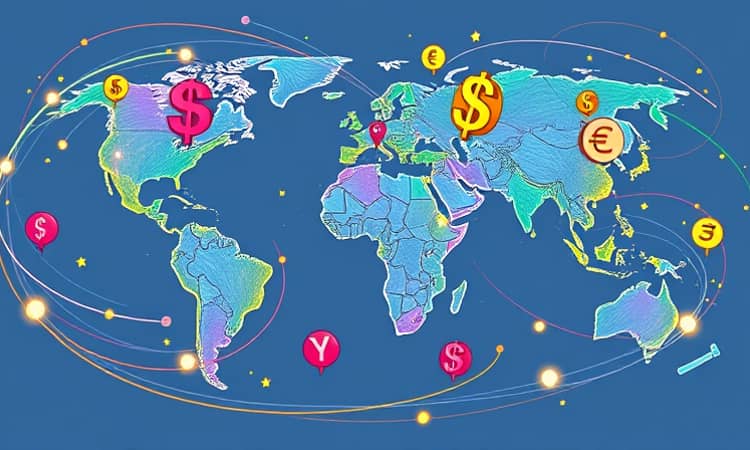
Exchange rates shape the backbone of international trade and personal finance. When you travel abroad, shop online from foreign merchants, or invest in global markets, the exchange rate determines the value of your money. For businesses, managing currency risk effectively can mean the difference between profit and loss. This article guides you through the essentials of exchange rates, unveils the forces behind their constant movement, and offers actionable strategies to harness these fluctuations for your advantage.
Fundamentals of Exchange Rates
An exchange rate is the price at which one currency can be exchanged for another. It represents the relative strength of two economies and influences cross-border spending. Traders and policymakers monitor several key rates:
- Spot exchange rate: Current rate for immediate settlements.
- Forward exchange rate: Agreed price today for future delivery.
- Nominal vs. real rate: Official figures versus inflation-adjusted values.
Using the spot rate, you can convert euros to dollars instantly, while forward rates allow importers and exporters to lock in prices and reduce uncertainty. The real exchange rate adjusts for inflation differences, reflecting true purchasing power across borders.
Exchange Rate Regimes and Their Implications
Currencies operate under different regimes, each with unique benefits and challenges. Governments and central banks choose a regime based on economic goals and market stability concerns.
Fixed (pegged) regimes anchor a currency to another stable unit, such as the US dollar or a basket of currencies. This approach provides predictability for trade partners but may limit domestic monetary policy flexibility. Countries maintain large foreign reserves to defend the peg against speculative pressures.
Floating regimes let market forces determine value. In a free float, supply and demand drive rates with minimal intervention. A managed float combines market determination with periodic central bank actions to smooth excessive swings.
Drivers of Currency Fluctuations
Exchange rates can be volatile, responding to a tapestry of economic, political, and psychological factors. At its heart, the forex market is a global auction where currencies are bought and sold around the clock, Sunday evening through Friday evening GMT. Imbalances between supply and demand cause appreciation or depreciation.
For example, when the Federal Reserve raises interest rates, the US dollar often strengthens as international investors seek higher yields. Conversely, political unrest can spark capital flight, pressuring a currency downward.
Economic Impacts of Rate Movements
Fluctuating exchange rates ripple through trade, inflation, and investment landscapes. A weaker currency makes exports more competitive abroad but raises the cost of imports, potentially fueling inflation. Stronger currencies curb import prices and tame inflation, yet they can hurt export-oriented industries.
Emerging markets often feel these swings more acutely due to reliance on foreign capital and export earnings. Sudden depreciations can increase local debt burdens when denominated in foreign currencies, triggering financial stress.
Measurement and Real-World Examples
Quotation methods vary by region. In a direct quote, the domestic currency value per foreign unit is stated (for instance, USD per EUR). An indirect quote expresses the foreign currency per unit of the domestic currency. Cross-rates derive one rate from two others when no direct quote exists.
The real exchange rate change can be calculated as the nominal appreciation minus the inflation differential. If the euro appreciates by 2%, euro inflation is 1%, and US inflation is 0.5%, the real gain is 2% + (1% – 0.5%) = 2.5%.
Practical Strategies to Navigate Fluctuations
While you cannot control global markets, you can employ tactics to protect your finances and seize opportunities:
- Hedge with forward contracts to lock in exchange rates for future transactions.
- Diversify your currency exposure across multiple accounts or assets.
- Monitor economic calendars for key data releases and central bank announcements.
- Use limit orders in forex platforms to automate optimal conversion levels.
- Stay informed on geopolitical events that can trigger rapid market moves.
For travelers, preloading a multicurrency card before a trip can shield you from sudden swings. Businesses can adopt a currency risk policy, specifying acceptable exposure levels and hedging procedures.
Inspiring Confidence Through Knowledge
Mastering the dynamics of exchange rates empowers you to make informed decisions, whether you are sending money overseas, budgeting travel expenses, or managing multinational investments. By understanding real exchange rate dynamics and implementing practical safeguards, you harness volatility as an opportunity rather than a threat.
Developing a disciplined approach—combining ongoing education, timely analysis, and strategic hedging—builds resilience against unpredictable market forces. Over time, you cultivate the confidence to navigate the global financial arena with clarity and purpose.
Conclusion
Exchange rates are more than abstract numbers; they reflect the ebb and flow of economies, policies, and human sentiment. With structured risk management practices and a grasp of core drivers, you transform uncertainty into actionable insight. Embrace the ever-changing world of currencies, and use these fluctuations to reach your financial goals with foresight and determination.