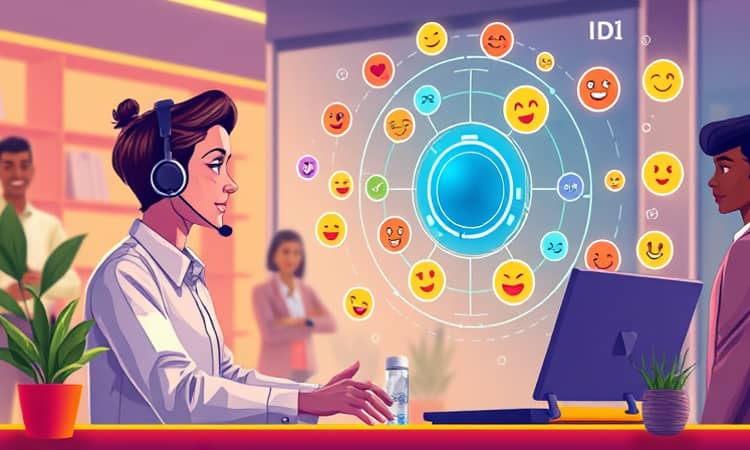
Emotion AI, often called affective computing, is revolutionizing how businesses connect with their customers. By sensing and adapting to feelings in real time, it creates deeper bonds and more effective resolutions. This article explores the core technology, applications, measurable benefits, and best practices for integrating Emotion AI into customer service.
What is Emotion AI?
Emotion AI refers to systems that detect, analyze, and respond to emotions through various human cues. These cues include vocal tone, pitch, rhythm, facial expressions, text sentiment, word choices, and even typing patterns. The goal is to infuse digital interactions with empathy and personalization, elevating standard support into emotionally aware service.
At its foundation, Emotion AI employs multiple detection methods to gauge sentiment. By leveraging machine learning models trained on vast datasets, it can interpret subtle emotional signals with remarkable precision.
- Voice analysis for stress and satisfaction using pitch and tone variations.
- Facial and visual recognition of nonverbal cues during video interactions.
- Advanced text-based sentiment analysis via natural language processing.
- Multimodal fusion of voice, text, and visuals for holistic insights.
When these methods converge, organizations gain a comprehensive real-time view of customer emotions, enabling more human-centric service delivery.
Transforming Customer Service Experiences
Emotion AI is unlocking new levels of responsiveness and personalization across support channels. Contact centers, chatbots, and field technicians all benefit from accurate real-time sentiment gauging that drives adaptive strategies and interventions.
- Real-time escalation of frustrated calls to senior agents for faster resolution.
- Chatbots that adjust tone and language to match user emotions.
- Personalized offers and recommendations when detecting customer excitement.
- Technician guidance in field service based on pre-visit emotional cues.
- Proactive churn prevention by identifying dissatisfaction early.
These applications do more than improve metrics—they foster trust by showing customers that brands can understand and respect their feelings.
Measuring Impact: Core Benefits
Organizations adopting Emotion AI report significant gains in customer satisfaction, operational efficiency, and overall business performance. By combining AI insights with human expertise, companies can achieve:
These gains illustrate how enhanced customer satisfaction and loyalty translate into measurable business advantage. Beyond financials, operational teams experience relief as AI handles routine tasks and flags high-stress interactions, reducing burnout and turnover.
Overcoming Challenges and Best Practices
Implementing Emotion AI demands careful planning. Organizations must select the right technologies, integrate them with existing systems, and train staff in interpreting AI-driven insights. Data privacy and accuracy must be prioritized to maintain customer trust and regulatory compliance.
Balancing automation with human judgment is essential. While AI excels at spotting patterns and signals, human agents bring nuance, discretion, and creativity to complex cases. Best practices include:
- Defining clear escalation protocols to preserve human oversight.
- Regularly retraining models with diverse, high-quality datasets.
- Establishing transparent privacy policies and opt-in mechanisms.
By following these guidelines, businesses can harness Emotion AI’s power without sacrificing the authentic human touch that customers crave.
The Future of Emotion AI
As generative AI and predictive modeling evolve, the next wave of Emotion AI will proactively anticipate customer needs and emotions. Advanced systems will blend historical interaction data with real-time signals to offer solutions before issues arise, creating proactive issue resolution capabilities that delight users.
Future contact centers and service networks will operate with an even greater emphasis on empathy, personalization, and scale. Companies that embrace this shift will differentiate themselves as truly customer-obsessed, driving loyalty and long-term growth.
Emotion AI is not just a technological upgrade—it is a transformative approach to human-AI collaboration. By combining machine precision with human empathy, organizations can build more meaningful relationships, resolve problems more effectively, and create service experiences that resonate on an emotional level.
As you explore Emotion AI, remember that its power lies in enhancing—not replacing—the human element. With thoughtful implementation and a commitment to empathy, you can unlock its full potential and lead your customer service into a more emotionally intelligent future.