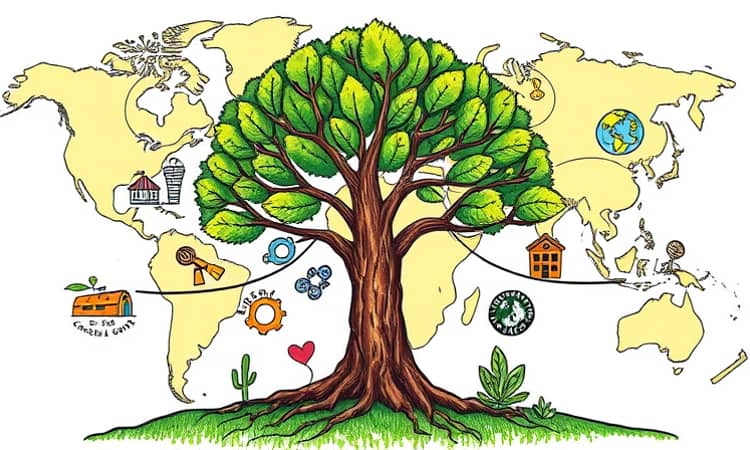
In an era of rapid change and uncertainty, nations worldwide face the pressing challenge of building economies that can thrive amidst volatility.
The answer lies in economic diversification, a powerful strategy that transforms reliance on a single sector into a resilient, multi-faceted foundation for growth.
By embracing this approach, countries can unlock sustained prosperity and reduced vulnerability, paving the way for a brighter future for all citizens.
What is Economic Diversification?
Economic diversification involves shifting an economy from dependence on one primary sector, such as oil or agriculture, to multiple sectors, products, services, and markets.
This process enables structural transformation and resource reallocation, fostering innovation and integration into global value chains.
At its core, it moves labor from low-productivity activities to higher-productivity urban roles, driving overall economic advancement.
The Many Forms of Diversification
Diversification takes various shapes, each offering unique pathways to strength.
Here are key types to consider:
- Product Diversification: Developing new industries or value-added goods, like upgrading raw materials into finished products.
- Trade Diversification: Expanding into new markets or improving export quality to stabilize revenues and enhance global integration.
- Sectoral Shifts: Transitioning from commodities to services, such as knowledge-intensive fields like finance or renewable energy sectors.
These approaches work together to create a robust economic ecosystem that can adapt and flourish.
Why Diversify? The Compelling Benefits
Diversification drives numerous advantages that inspire hope and progress.
It leads to higher per capita incomes and significant poverty reduction, improving living standards through better education and health access.
By spreading risk across sectors, economies become more resilient to shocks like price volatility or global crises, ensuring stability in turbulent times.
Additional benefits include:
- Economic stability through inter-business synergies, where different industries support each other for mutual gain.
- Faster technological advancement and improved global market positioning, enhancing competitiveness.
- Job creation, especially quality employment opportunities that absorb labor in youth-heavy populations.
- Cross-industry cooperation that fosters productivity gains and supply chain resilience.
To illustrate these impacts, here is a table summarizing key benefits:
Navigating the Challenges
Despite its benefits, diversification is not without hurdles.
High initial investments and resistance from entrenched industries can slow progress, requiring careful planning and commitment.
Transition risks, such as job losses in traditional sectors, must be managed with long-term strategies and supportive policies.
Key challenges include:
- Complex implementation and time-intensive discovery of viable opportunities in new sectors.
- Market failures that necessitate government intervention through industrial policies or incentives.
- Short-term disruptions that can deter immediate action, emphasizing the need for visionary leadership.
Overcoming these obstacles is crucial for unlocking the full potential of a diversified economy.
Lessons from the Field: Global Case Studies
Real-world examples offer valuable insights into successful diversification efforts.
Countries like Chile have reduced reliance on copper by diversifying into fisheries and agriculture, while Costa Rica has shifted to high-quality services for export growth.
Other inspiring cases include:
- Vietnam's transition from an agrarian to an industrial economy, boosting manufacturing and exports.
- India's leverage of skilled labor to develop software clusters, driving technological innovation.
- The Caribbean's use of marine resources and creative exports to enhance tourism resilience post-COVID-19.
- Corporate examples like Apple Inc., which expanded from PCs into tablets and smart devices, demonstrating innovation through product diversification.
These stories highlight the transformative power of embracing variety in economic planning.
Building a Resilient Economy: Strategies and Policies
To achieve successful diversification, nations must adopt comprehensive strategies that foster growth and inclusion.
Macroeconomic stability, human capital investment in skills and training, and robust infrastructure are foundational elements.
Effective approaches include:
- Reducing trade barriers to lower costs and boost exports to new markets, enhancing global competitiveness.
- Implementing green policies to promote renewables and sustainable agriculture, aligning with climate goals.
- Developing digital and financial access for small businesses, enabling innovation and entrepreneurship.
- Liberalizing services in energy and logistics to improve competitiveness and support e-commerce growth.
Tools like the UNCTAD Productive Capacities Index help track progress, identifying over 45,000 potential export products based on global demand.
Regional cooperation, such as South-South trade, offers easier market entry through similar standards, serving as a springboard to global opportunities.
Public investments and regulatory reforms further support this journey, ensuring that diversification drives job-producing growth and economic stability.
Conclusion: Embracing the Path Forward
Economic diversification is not merely a strategy; it is a vision for a resilient and prosperous future.
By learning from global examples and implementing thoughtful policies, nations can transform their economies to withstand shocks and thrive in a dynamic world.
The journey requires patience and collaboration, but the rewards—sustained growth, reduced poverty, and enhanced innovation—are well worth the effort.
Let us move forward with courage, embracing the strength that comes from variety and building economies that uplift all people.